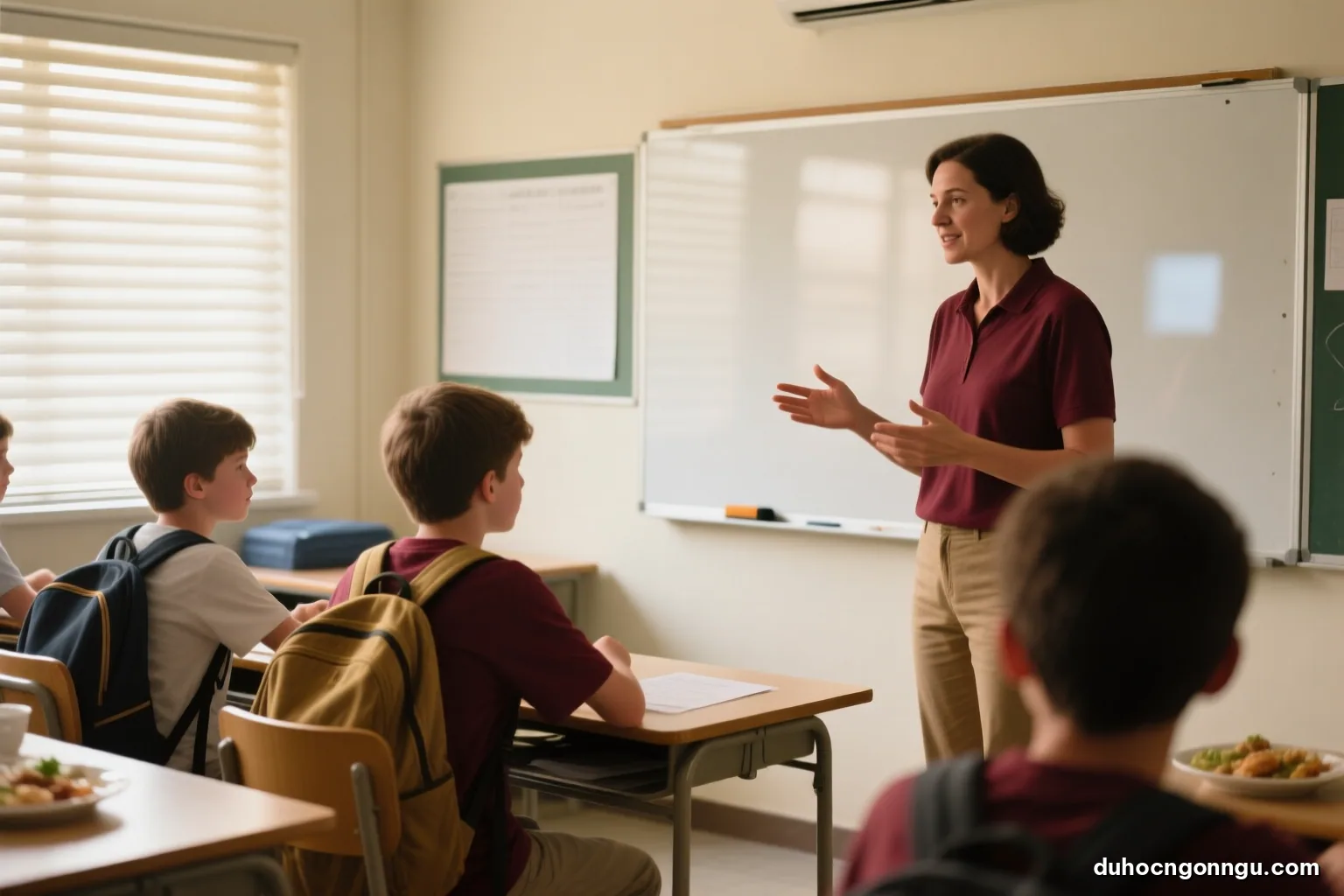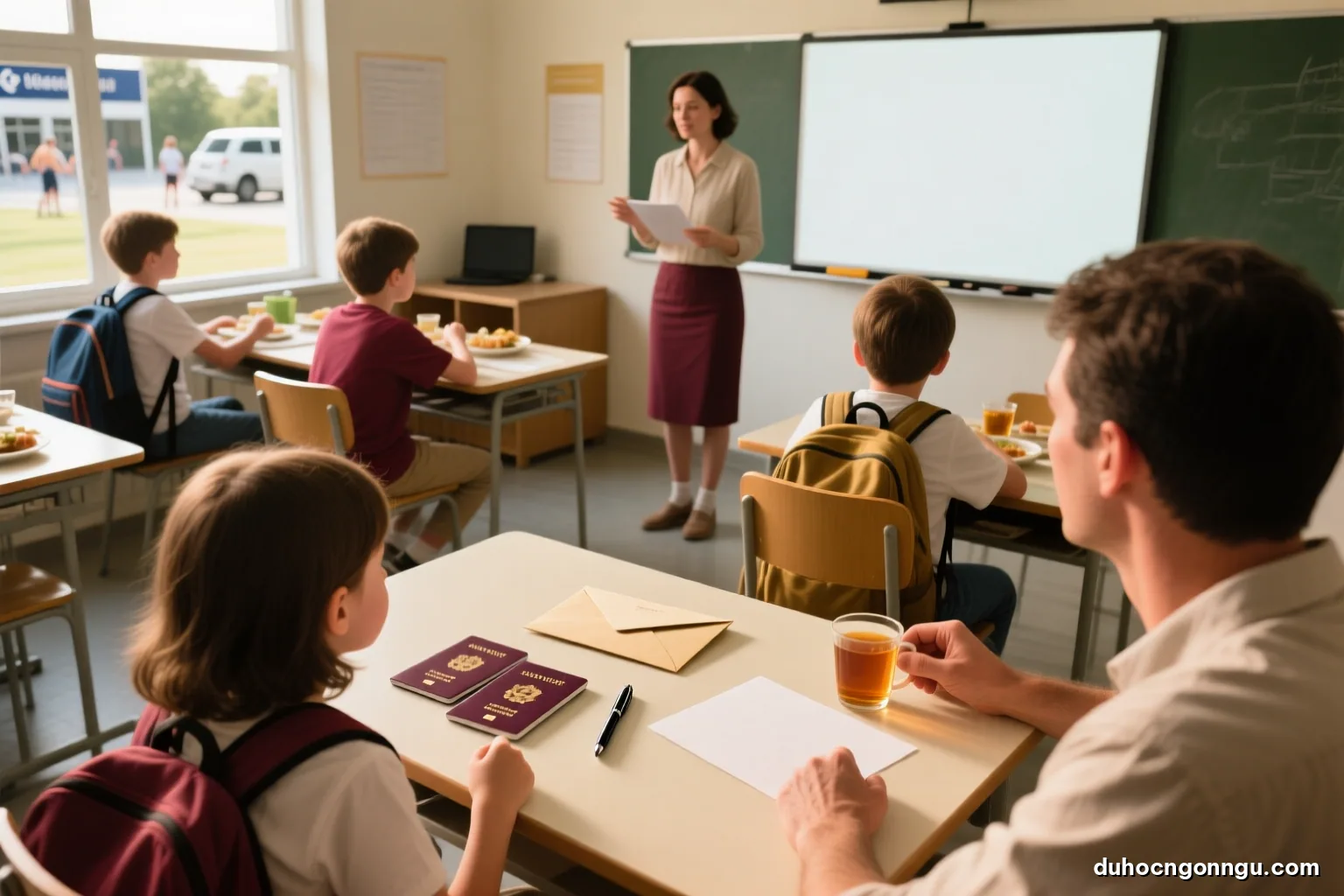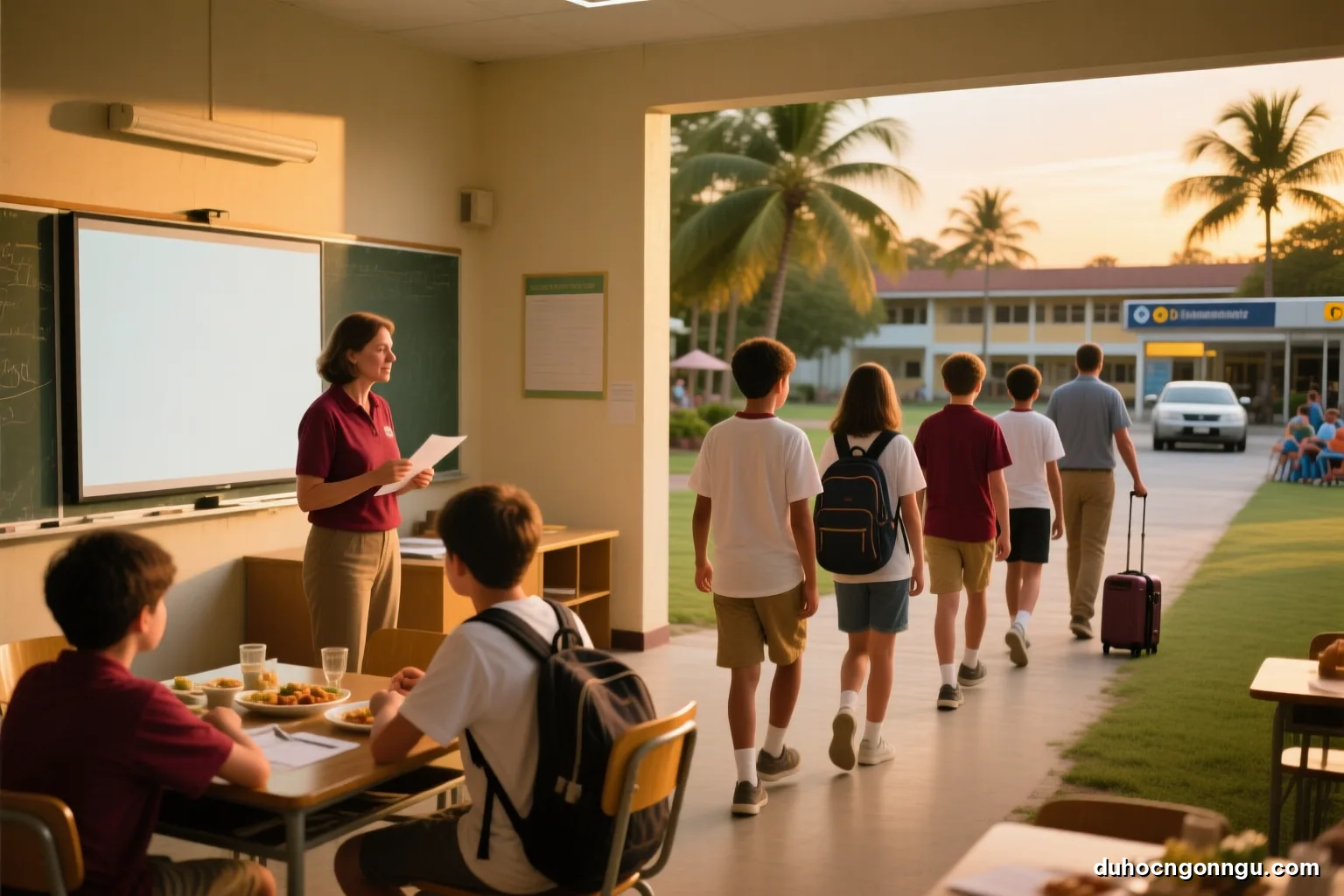
Children under eighteen learning English in the Philippines should go one of two ways: join a junior camp with guardians on duty around the clock, or study at a regular school but live in a separate area for minors with a manager on night duty; children under fifteen travelling without their parents also need a Waiver of Exclusion Ground (WEG) under Philippine law. The key question is not "is the school safe" but "who is responsible for my child at ten o'clock at night and on a Saturday afternoon".
This article covers the Philippine side of the story: how junior camps differ from regular classes, what the school's guardians do, what the WEG is, and the rules on going out and on healthcare. Vietnamese exit procedures for children and the general principles of guardianship are covered in the Safety and guardianship section of this site; they are only mentioned here where needed.
How junior camps differ from regular classes
Many language schools in the Philippines offer both. The difference is not in the teachers but in how life around the lessons is organised.
| Aspect | Junior camp | Regular class with younger students |
|---|---|---|
| Timing | Seasonal, usually a few weeks in the summer or winter holidays | All year round, with weekly intakes |
| Classmates | The same age group, many Asian nationalities | Mixed with adults in group classes |
| Schedule | Lessons alternating with activities, sport and excursions | The same timetable as adults |
| Supervision | Staff assigned to each group, on duty day and night | Depends on the school; usually a dormitory manager for the minors' area |
| Going out | Only in groups with adults | According to the rules; may need parents' written consent |
| Suits | Children aged eight to fifteen, away from home for the first time | Independent sixteen- and seventeen-year-olds going outside camp season |
For children under twelve, a junior camp is almost the only sensible option if no parent is going along. Some schools do not accept very young children in regular classes, or only accept them when a parent stays with them.
The WEG: a Philippine procedure for children under 15
Philippine immigration law includes a child protection rule: foreigners under fifteen who enter the country without their father or mother, or who are not coming to join a parent living in the Philippines, may be refused entry unless they have a waiver. That document is called a Waiver of Exclusion Ground, or WEG.
In practice, a WEG application usually includes the parents' consent, copies of the parents' documents, the child's birth certificate and details of the adult travelling with the child or receiving them in the Philippines. Depending on the period, the waiver may be arranged in advance at the Philippine Embassy or paid for at the border on arrival. The exact list of documents, and whether translation, notarisation or legalisation is needed, must be checked with the Philippine Embassy in Hanoi at the time you apply.
Many parents think that travelling in a group with a group leader is enough. In fact the group leader is not a parent, so children under fifteen travelling in a group still need a WEG. Experienced schools and group organisers will mention this early and usually guide families through the preparation. If nobody mentions it, that is a sign parents should ask more questions themselves.
What a school guardian does in a day
Waking students, taking attendance, getting them to class. At a junior camp, the group supervisor usually wakes the children, checks that they eat breakfast and are in class on time. With young children, this seemingly simple task prevents oversleeping, skipped meals and missed lessons in the first week.
Watching health and mood. The guardian notices which children are eating little, coughing, feverish, sad or crying from homesickness; takes them to the clinic or hospital when needed, and informs the parents. Ask whether the school has medical staff on site and how far away the nearest hospital is.
Managing money and belongings. Many camps hold pocket money for the children, letting them withdraw it weekly, and keep passports in a safe. This reduces the risk of loss, especially for children not yet used to managing money.
Accompanying outings. Every trip out of school, whether to the supermarket or a weekend excursion, has adults going along, with a head count on the way out and on the way back.
Keeping in touch with families. The guardian or group leader usually sends photos and updates to the parents' group on a schedule, and is the person parents call in an emergency.
Going with a group from Vietnam or joining a camp alone
There are two common ways for Vietnamese children to join a junior camp in the Philippines. The first is to go with a group organised by a company in Vietnam, with a Vietnamese group leader who flies with them and stays throughout the course. The second is for the family to register directly with the school; the child flies alone or is taken over by the parents, and the school meets them at the airport and hands them over to its own guardians.
Going with a group has the advantage that your child has someone who speaks Vietnamese to confide in, parents have a familiar point of contact, and documents are usually prepared together. The disadvantage is that the group has many Vietnamese students who easily speak Vietnamese to each other, so a good group leader has to take the initiative in splitting up rooms and meal tables and reminding everyone of the language rules.
Joining a camp alone immerses your child more deeply in English, but requires your child to be old and confident enough, and the family has to communicate with the school in English themselves. Airlines offer services for children travelling alone, with their own age conditions and fees; ask the airline before booking. For children under twelve away from home for the first time, going with a group or being taken by the parents is the safer way.
Weekends and activities outside school
Weekends are when risks most easily arise for teenagers, because there is no timetable to hold them. Good junior camps usually fill Saturdays and Sundays with organised activities: sightseeing, sport, cooking, crafts and excursions. Each activity has adults along, a head count and transport hired by the school.
Water activities such as sea swimming, boat trips and snorkelling are very popular in the Philippines, especially around Cebu. Parents should ask whether every child gets a life jacket, whether there are lifeguards, and what the ratio of adults to children is in the water. If your child cannot swim, tell the school clearly so they are given another activity or individual supervision.
Older teenagers in regular classes may be allowed out in groups at weekends. In that case, agree with your child beforehand: who they go with, what time they come back, no getting into unknown vehicles, not carrying the original passport, and always keeping the phone charged. An organised activity is sometimes less appealing than going out alone, but it is much safer for a child who does not know the place.
Healthcare, insurance and things few people mention
The health side of a child far from home should be worked out in advance, not asked about only when something happens:
- Travel insurance with medical and repatriation cover for the whole length of the course; read the exclusions carefully, such as pre-existing conditions and water sports.
- A health summary for your child in English: allergies, chronic conditions, current medication and blood group if known; one copy for the guardian, one for your child.
- Enough of the usual medication for the whole course, in boxes with the original labels, plus the doctor's prescription if it is a prescription drug.
- Ask your doctor in Vietnam about vaccinations and mosquito protection, because dengue fever is present in the Philippines as it is in Vietnam.
- A consent form for emergency medical treatment signed by the parents, if the school or group organiser requires one, so the guardian can take your child to hospital in time.
Ask the school whether it has dealt with a student being hospitalised before, what the procedure was and who pays the hospital fees up front before the insurance pays out. The answer tells you whether they have real experience or only a policy on paper.
Preparing your child emotionally before departure
Most problems at junior camps are not accidents but homesickness, conflicts with roommates and not being used to the food. Preparing your child emotionally in advance helps them get through the first week more easily:
- Tell your child in advance about the daily schedule, the rules and how to call home, so nothing comes as a surprise.
- Practise a few English phrases they will need straight away: saying they feel unwell, saying they do not understand, asking to see the person in charge.
- Agree on a fixed call schedule, not too frequent; calling constantly in the first week sometimes makes children more homesick.
- Tell your child beforehand that feeling sad and homesick for the first few days is normal, and that they can talk to the guardian about it.
- Discuss with your child what to do if they do not get on with a roommate: tell the person in charge rather than putting up with it alone.
Parents also need to prepare themselves: fewer messages than usual do not mean something is wrong. A clear line of communication with the guardian lets parents feel reassured without disturbing their child.
A list of guardianship questions to send the school
Before booking a course for a minor, send the school or organiser the following list and ask for written answers:
- What is the ratio of guardians to teenage students, and who is on duty at night?
- How many children share a room, are they ever placed with adults, and how are the boys' and girls' areas separated?
- What are the rules on going out, and is parents' written consent needed for each trip?
- Is there medical staff on site, where is the nearest hospital, and who goes with your child to hospital?
- When something happens, how quickly does the school inform parents, through which channel and in which language?
- Does the school provide guidance on the WEG and exit documents for children?
A school used to taking teenagers will have answers ready for most of these questions. If many of them get vague answers, consider another school or an arrangement where a parent goes along.
Frequently asked questions
Can a sixteen-year-old study in regular classes like adults?
Many schools accept students from about sixteen in regular classes, but usually require the parents' consent and place them in the area for minors. Parents should ask the school about the separate curfew and who is responsible for students under eighteen.
Does a fourteen-year-old travelling with her aunt need a WEG?
Under Philippine rules, children under fifteen travelling without their father or mother usually need a WEG, even when travelling with another relative. For a specific case, ask the Philippine Embassy in Hanoi which documents are needed and whether it should be arranged in advance or at the border.
Can parents stay with their child at a junior camp?
Junior camps usually have no accommodation for parents. Some schools have family programmes in which the child studies while the parents study too or stay in a separate area on campus. If parents want to stay nearby, they can rent accommodation outside, but ask the school whether this affects the rules and how well your child settles in.
What should we do if our child is homesick and asks to come home after three days?
The first three or four days are the hardest. Talk to the guardian so they keep a closer eye on your child, agree with your child to try one more week, and ask about the refund policy in case your child really has to come home. Most children get through it after the first week, once they have made friends and got used to the routine.
Should my child bring their own phone?
Yes, to call home and for emergencies. Save the numbers of the guardian, the group leader and the Vietnamese Embassy in the Philippines in advance. Talk to your child about the school's rules on phone use, and consider a data plan that is just enough rather than unlimited.
Does the school check the backgrounds of guardians and teachers?
This is a question worth asking directly. Schools that take their work with children seriously usually have selection procedures, background checks and a code of conduct for dealing with minors, such as not meeting a student alone in a closed room. Ask to see this code in writing if there is one.