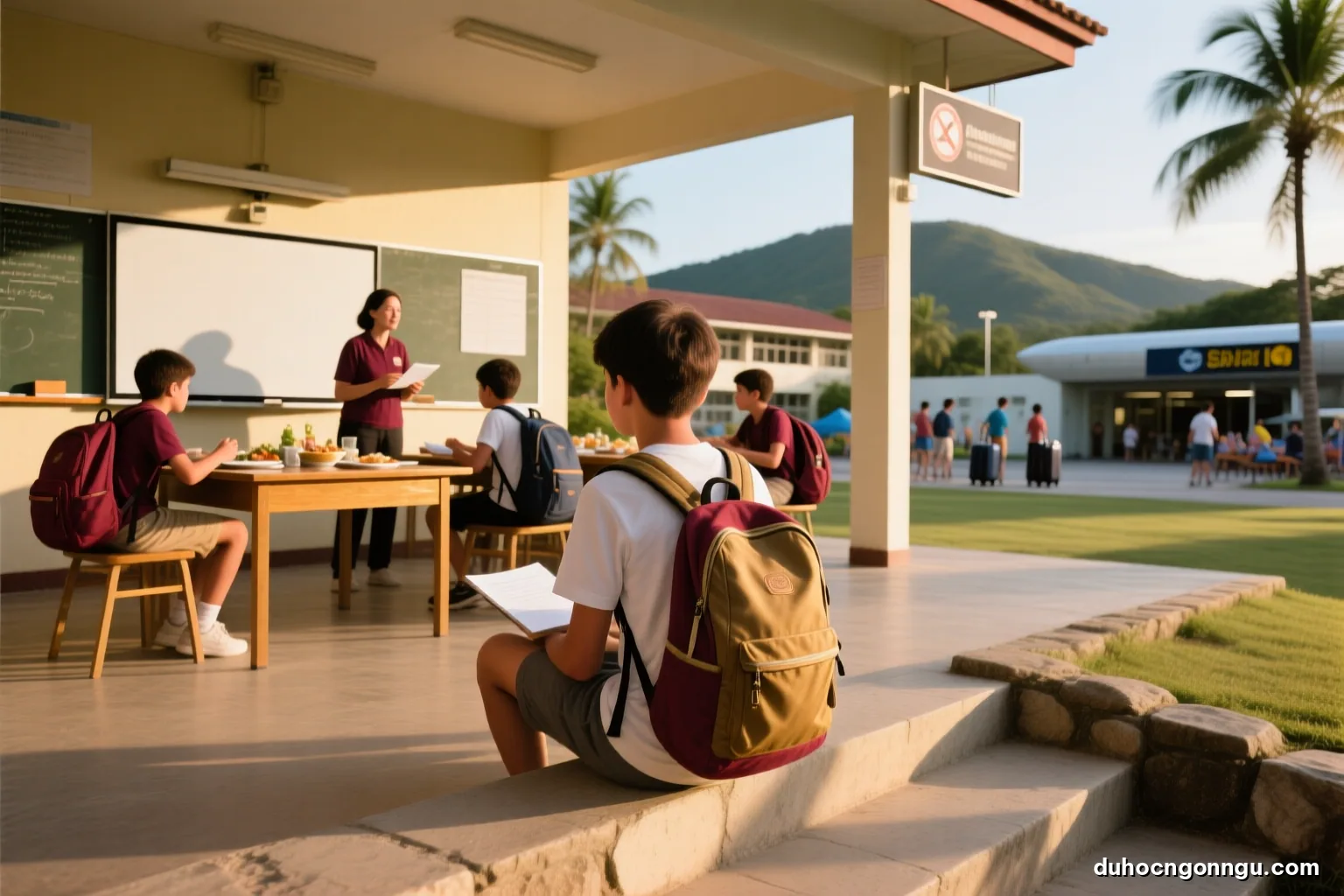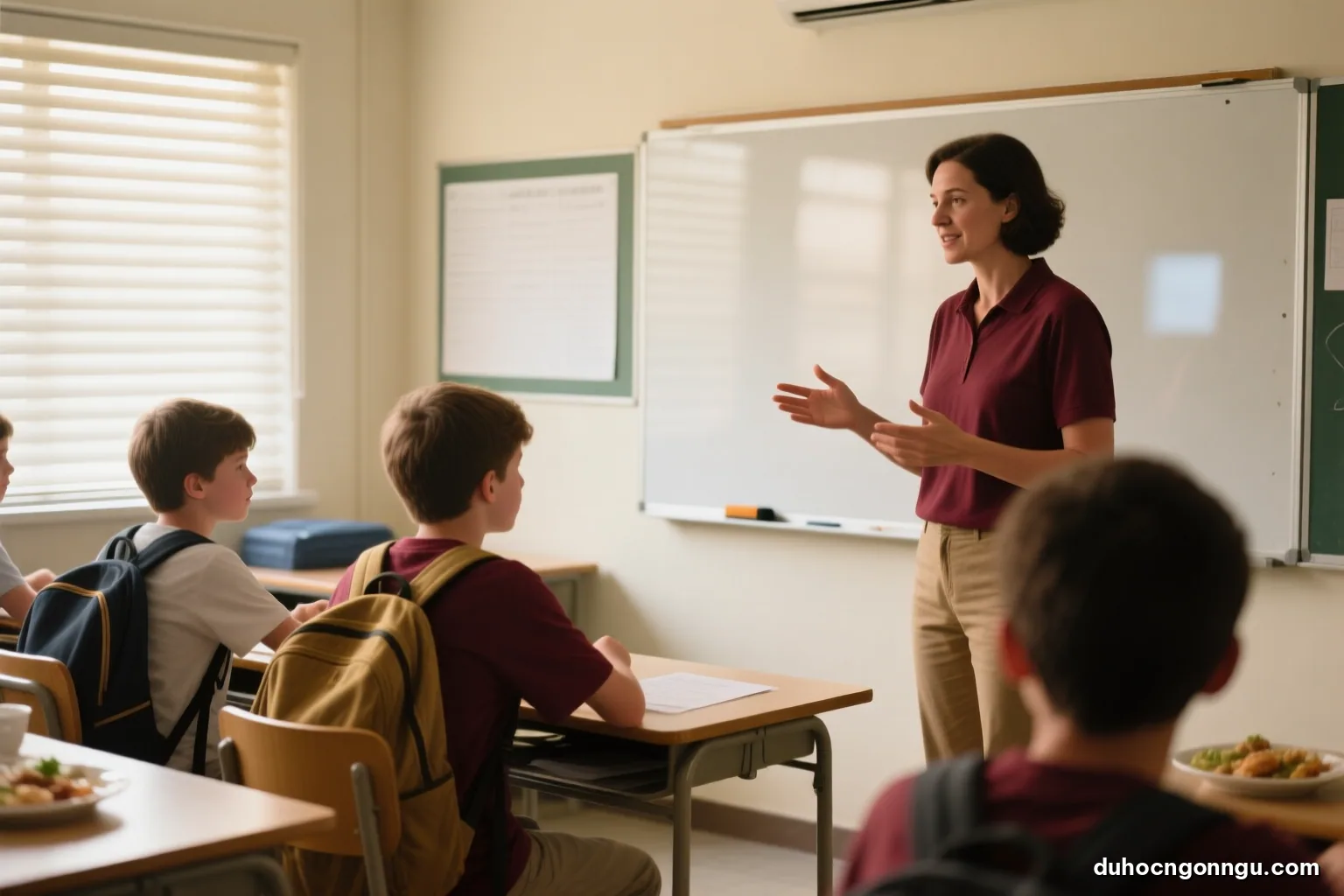
Most teachers at language schools in the Philippines are Filipinos with a university degree who have spoken English fluently since childhood, because it is the language of instruction in schools, and who receive additional training from the school in teaching foreign students; their accent is usually close to American English and easy for Vietnamese learners to follow. Quality varies between teachers as in any teaching profession, so what matters is knowing how to recognise a good lesson rather than passing a general verdict on "Filipino teachers".
Many parents wonder: if the teacher is not a native speaker, is the English correct, and will my child pick up the wrong accent? The answer needs a little understanding of how linguists view English today, of the difference between accent and intelligibility, and of the skills a good teacher needs beyond speaking well.
Below we go from the place of Philippine English in the English-speaking world, to accent and intelligibility, the pronunciation mistakes teachers commonly correct in Vietnamese learners, how schools recruit and train teachers, and finally the signs that help parents tell whether their child is being taught well.
Philippine English is a variety, not "substandard" English
The linguist Braj Kachru, in his three circles model published in the mid-1980s, divided English-using countries into the inner circle (where English is the mother tongue of the majority, such as the UK, the US and Australia), the outer circle (where English is an official or institutional language because of colonial history, such as India, Singapore and the Philippines) and the expanding circle (where English is a foreign language, such as Vietnam and Japan). The Philippines belongs to the outer circle, with English used in the courts, parliament, the press and schools.
From this perspective, researchers in the world Englishes tradition see Philippine English as a variety with its own features of pronunciation, vocabulary and usage, not as incorrect English. In classes for foreigners, teachers are required to use an international standard, usually following American English for spelling and pronunciation, and to avoid expressions only Filipinos would understand.
Understanding this helps parents ask the right question. Not "is the teacher a native speaker", but "does the teacher speak clearly, correctly and consistently to one standard, and do they know how to teach beginners". A native speaker with no teacher training will not necessarily teach better than an experienced Filipino teacher.
Accent and intelligibility: what the research says
Many parents worry that their child will pick up a Filipino accent. Research by Murray Munro and Tracey Derwing from the mid-1990s separated three concepts that are often lumped together: accentedness (how foreign the accent sounds to the listener), intelligibility (how much the listener actually understands) and comprehensibility (how much effort the listener has to make). The results showed that someone can have a clearly foreign accent and still be very easy to understand, and that the realistic goal for most learners should be intelligibility, not erasing their accent entirely.
For Vietnamese students, the mistakes that most hinder understanding are usually dropping final sounds, putting word stress in the wrong place and speaking in a flat way without sentence rhythm. These are exactly the things a one-to-one teacher can correct effectively, whatever the teacher's own accent. A course of a few weeks rarely changes your child's accent noticeably in any direction, but it can help them speak much more clearly.
In the long run, your child will listen to and speak English with people from many places. Exposure to many accents, from Filipino teachers, Korean and Japanese classmates, and British and American films, makes your child's ear more flexible. What to avoid is learning from a single source for many years, not avoiding one particular accent.
If the family wants their child to follow a particular standard, for example British English because they plan to study in the UK later, tell the school from the start. Teachers will pay attention to spelling and some pronunciation differences, although most course materials in the Philippines follow the American standard.
Pronunciation corrections for Vietnamese learners: the usual suspects
In pronunciation lessons, Filipino teachers experienced with Vietnamese students usually focus on a familiar group of errors. Knowing them in advance helps your child and you follow specific progress:
- Final sounds: Vietnamese speakers often swallow or drop final consonants such as t, d, k, s and z, so that "light", "like" and "life" sound the same. This is the error that affects intelligibility most.
- Consonant clusters: clusters such as str and spl, and final groups such as -sts and -lps, are hard for speakers of Vietnamese, which has no consonant clusters; learners often insert an extra vowel.
- The th sounds: the two sounds in "think" and "this" do not exist in Vietnamese and are often read as t or d.
- Word stress and sentence rhythm: in Vietnamese each syllable has its own tone, while English puts the stress on one syllable and glides over the others; giving every syllable equal weight makes sentences hard to follow.
- Linking: native and fluent speakers join the end of one word to the start of the next; practising linking helps your child understand better when listening, not only sound better when speaking.
On the other side, some Filipinos in everyday speech have their own features, such as pronouncing f close to p and v close to b. Teachers trained to teach foreigners usually keep these features well under control in class. If your child does hear them, encourage them to ask for the standard pronunciation; that is also a form of active learning.
How schools recruit and train teachers
Entry qualifications. Teachers at language schools usually hold a bachelor's degree, many in education, English, communication or a related field. Some have certificates in teaching English to speakers of other languages such as TESOL or TEFL; a few have the CELTA. Parents can ask what proportion of teachers hold an English teaching qualification.
In-house training. Well-run schools have training for new teachers covering the course materials, how to correct errors, how to teach each level and the code of conduct with students. New teachers usually observe colleagues' lessons before teaching on their own.
Regular evaluation. Many schools have an academic manager who observes lessons, reviews student feedback and evaluates teachers every month. This is an important mechanism for maintaining quality; ask the school whether it does this, and how.
Experience with children. Teaching teenagers is different from teaching adults. Good teenage camps choose teachers who are used to children, who know how to keep the pace and switch activities when children lose focus. Ask the school whether your child's teacher has taught children of the same age.
Signs of a good one-to-one lesson
Parents are not in the classroom, but they can ask their child specific questions to find out how lessons are going. The table below sets good signs against signs to watch out for.
| Aspect | Good sign | Watch out for |
|---|---|---|
| Who talks most | Your child talks for most of the time | The teacher talks for almost the whole lesson |
| Error correction | Errors are corrected, explained and your child is asked to say it again | No correction at all, or correcting everything so your child is afraid to speak |
| Materials | There is a lesson and a goal for each session | Free conversation with no direction |
| Homework | Short homework, checked the next day | None, or homework that nobody checks |
| Record keeping | The teacher notes your child's progress and errors | Each lesson feels like starting again from scratch |
| Attitude | Patient, encouraging, punctual | Often late, uses their phone during class |
Good questions to ask your child each week: what mistakes did your teacher correct today; what topic did you talk about the longest; what is the homework? If your child can answer specifically, the lessons have real content.
Teachers teaching many lessons a day: the downside to know about
Because the one-to-one model needs a great many teachers, each teacher usually teaches many lessons back to back during the day. By late afternoon even the best teachers can be tired and have less energy than in the morning. This is not an individual failing but a feature of the model, and good schools schedule breaks between lessons for teachers.
Another downside is staff turnover. At some schools, teachers leave or move fairly often, possibly in the middle of your child's course. Ask the school how long teachers stay on average, and when a teacher leaves, who the student is moved to and whether progress notes are handed over.
Parents should also know about the code of conduct between teachers and students, especially for minors: no private contact through social media, no meeting privately outside class, no accepting valuable gifts. Serious schools have these rules in writing. This protects both students and teachers, and is a sign that the school is professionally managed.
Should you look for a school with native-speaker teachers?
Some schools in the Philippines also have native-speaker teachers from the US, the UK, Australia or elsewhere, usually teaching group classes or some one-to-one lessons for an extra fee. This combination gives students many one-to-one hours with Filipino teachers and also a chance to hear native accents and the communication culture of other countries.
Lessons with a native-speaker teacher are not a requirement for learning well. For beginner and intermediate students, well-trained Filipino teachers usually explain grammar and correct pronunciation very thoroughly, because they themselves learned English systematically at school. For advanced students who want to practise natural expression, idioms and communication culture, a few lessons with a native speaker may be worth considering.
When a school advertises native-speaker teachers, ask clearly: how many teachers, which lessons they teach, whether your child can take them or has to pay extra, and whether the teacher has a teaching qualification. A native speaker without teacher training in front of a class usually gives an interesting experience but is less effective than a properly trained teacher.
Frequently asked questions
Can Filipino teachers teach international exam preparation?
Many schools have teachers who specialise in exam preparation classes such as IELTS, TOEIC and TOEFL, trained specifically for each test format. Ask the school how long the exam teachers have been teaching it and whether they have taken that test themselves. Detailed exam strategy requires an intensive course, not just a general conversation course.
Can I ask to see a teacher's profile before the course?
Schools do not usually publish teachers' personal profiles in advance, but they can tell you their recruitment standards, the proportion with qualifications and the average years of experience. Once your child has been placed, they can ask the teacher directly about their experience in the first lesson, which is also a good speaking exercise.
My child says they like their teacher because they are fun. Is that enough?
Being fun helps your child feel comfortable speaking, which is a plus. But also ask whether your child is being corrected and is making progress. A good teacher both creates a pleasant atmosphere and asks your child to speak more accurately every day. Having only one of the two is not enough.
Do teachers speak Korean or Japanese, and does it matter?
Some teachers know a few phrases of Korean or Japanese from teaching students from those countries for many years, but they still use English in class. This does not affect Vietnamese students. If a teacher uses another student's mother tongue in a group class your child is in, raise it with the school.
How can I tell whether the course has affected my child's accent badly?
Record your child speaking for a short time on the same topic before leaving and after returning. Listening back will show clearly whether they speak more fluently and pronounce final sounds more clearly. The most significant changes are usually confidence and speed of response, while the underlying accent changes very little after a few weeks.
Should we give the teacher a present at the end of the course?
A small souvenir, such as a Vietnamese handicraft or a card your child has written themselves, is usually received warmly. Avoid valuable gifts or cash, as many schools forbid teachers from accepting them. A handwritten thank-you note in English is also a meaningful exercise for your child.