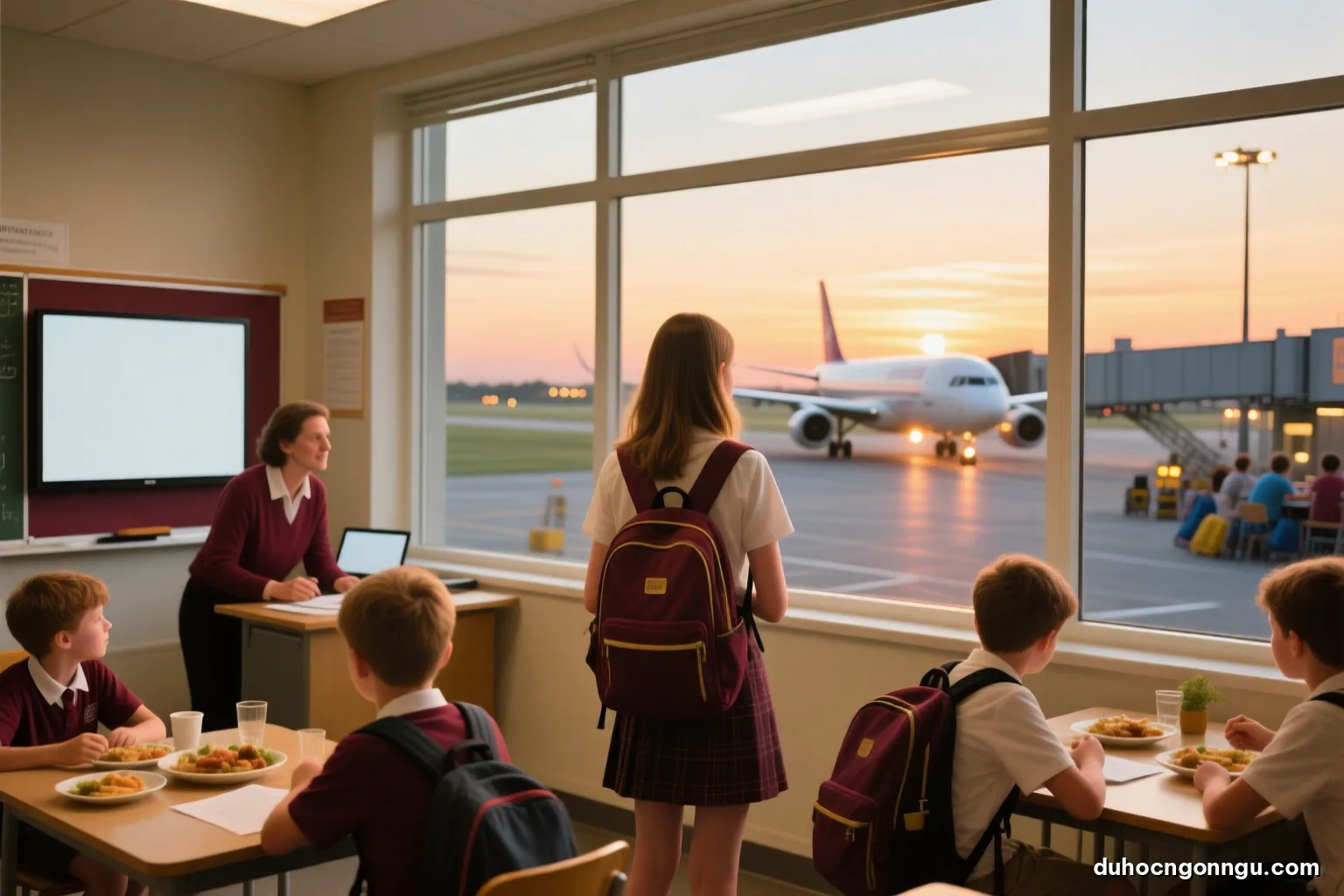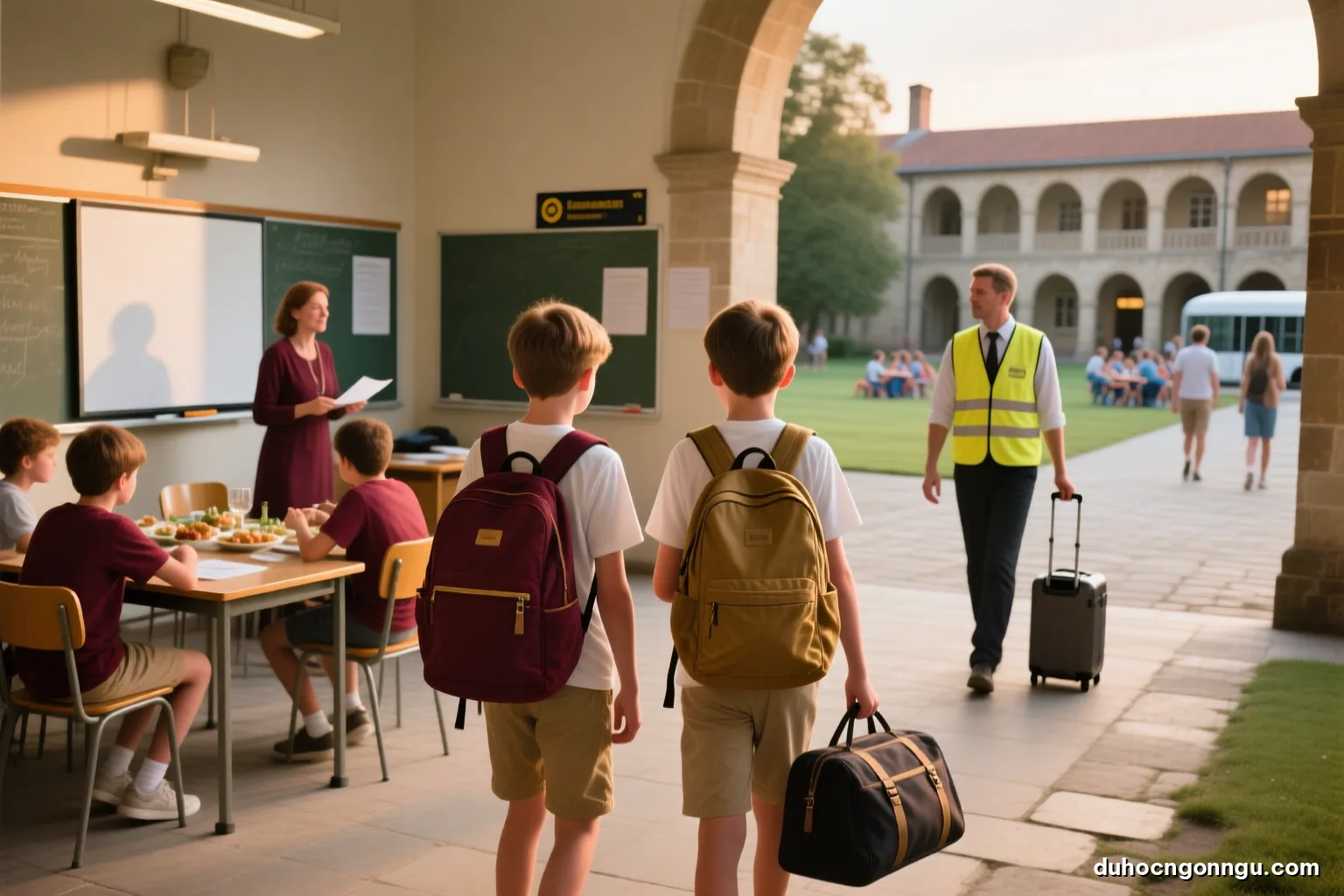
For pupils aged 11–13, the most common and sensible choice for a first independent language trip is a residential camp for young people with supervisors living in the same building, or a group trip from Vietnam with a group leader. A homestay on their own is less common at this age and usually comes with strict transport arrangements. This is often the first time a child spends several weeks away from their parents, so a clear daily framework matters as much as the quality of the lessons.
The start of lower secondary is also when many children begin puberty, want more independence, become sensitive to how friends see them and start to be shy about making mistakes in front of others. These traits decide whether a trip succeeds more than how famous the school is. This article goes through three ways of going, what to ask about supervision and room allocation, phones, and a table dividing tasks between home and school.
Why the start of lower secondary is often the first time away
In many Vietnamese families, around grades 6–8 is when parents begin letting children do bigger things on their own: going to school alone, managing pocket money, staying home alone for a few hours. Developmentally, this is also when the need for independence clearly increases. Erik Erikson described adolescence as a period of searching for identity; in its early years, children want to prove they can do things without their parents.
A first independent language trip meets exactly that need, and so it can leave a strong mark: packing their own things, getting to class on time, making new friends on their own. But at 11–13, a child's ability to regulate themselves is not yet firm. The prefrontal cortex, the area involved in planning and self-control, continues to develop into the early twenties. A 12-year-old may be eager to be independent during the day and then badly need an adult in the evening, or have so much fun that they forget to sleep, drink water or put on sunscreen.
So a programme that suits this age must have two things at once: enough freedom for your child to feel trusted, and enough structure for someone to notice when they are not all right. When reading a camp's materials, look at whether both sides are described clearly. A camp that only stresses "freedom to explore" or only stresses "strict discipline" does not give enough information to decide.
Three ways of going for pupils aged 11–13
The table compares three common ways of going. Each school has its own rules on the ages at which it accepts homestays or individual students, so use the table as a framework for questions.
| Junior residential camp | Group trip from Vietnam | Homestay with transport | |
|---|---|---|---|
| Who is directly responsible | The school's supervision team, living in the same building | A Vietnamese group leader together with the school's team | A local family outside lessons, the school during lessons |
| Language environment | International friends from many countries, English all day if the nationality mix is good | Easy to cluster and speak Vietnamese if the group is large | Hearing the local language in family life |
| Strengths | A clear daily framework, organised activities | A familiar Vietnamese speaker when your child needs one | Seeing the real life of a family |
| What to ask | Supervision ratio, room allocation, phone policy | Number of children in the group, where the group leader is at night | Who provides transport, what time to be home, how many students live in the house |
| Suits | Children who have slept away from home before and like group activities | Children going away for the first time, with limited language | Calm, independent children with fairly good language |
Many trips combine two of these: travelling with a group from Vietnam and then joining an international residential camp, with the group leader staying on the same campus. This keeps a familiar person for your child, but you need to ask carefully how the school divides classes and rooms, so that the children in the group are not all placed together.
Roommates, classmates and the nationality mix
At 11–13, friends shape most of the experience. A 2005 study by Margo Gardner and Laurence Steinberg showed that teenagers make decisions quite differently when peers are present. At language camps, this effect is very concrete: a room with Italian, Spanish and Japanese students forces everyone to speak English from lights out to breakfast; a room with four Vietnamese children means Vietnamese wins.
So the question of nationality mix is not a minor detail. Many schools have policies limiting the proportion of one nationality in a class or building, and deliberately mix nationalities in rooms. Ask: in the week you plan to go, which countries are students coming from, and which group is largest; does the school mix nationalities in rooms; if your child wants to stay with a friend from Vietnam, how does the school handle it?
One point deserves sympathy for your child: on the first day, being with friends from the same country feels safer. Many children ask to change rooms to be with a Vietnamese friend. The family should discuss with their child beforehand that the purpose of the trip is to make new friends who speak other languages, and that a mixed-nationality room is part of the trip, not a punishment. By the second week, most children have their own group of international friends.
Also ask about gender and age differences in rooms. Junior camps usually separate rooms by gender and group children of similar ages. An 11-year-old sharing a room with a 15-year-old may feel out of place; ask the school what the age range is in each room.
Phones and social media: agree before the trip
Phones are the most contentious topic at junior camps today. Many schools collect phones during lessons and at night and only return them at fixed times. Some let students keep them all day but ban them in class. Every rule has a reason: phones pull children back to friends and social media at home, cutting into time they should spend talking with new friends.
The family should read the phone rules before enrolling and explain them clearly to their child. If your child cannot accept having their phone held for a few hours a day, that is something to know early. Some family agreements to discuss with your child: call home at a fixed time each day or every other day; do not post photos of other children online without asking; no games at bedtime; message parents or tell a supervisor straight away when a stranger sends messages that make them uncomfortable.
There is another side that is rarely mentioned: parents calling too often. Every long call while your child is sad can prolong homesickness, because it reminds them of what they are missing. Usually a few minutes each time, at the agreed time, asking your child about one good thing in their day, helps more. If your child cries on the phone, tell the supervisor so they can keep a closer eye on them, rather than immediately thinking about bringing them home.
Realistic language goals for early secondary
At 11–13, most Vietnamese pupils going on language courses are at about A2 to B1 on the CEFR, depending on the school and extra classes. On a three- to four-week course, a realistic goal is for your child to speak more fluently in familiar situations: introducing themselves, saying what they did during the day, asking and answering about interests, handling shopping and asking for directions. Moving fully from A2 to B1 usually needs more study time than a summer course.
The strength of this age is that abstract thinking has begun, so lessons can explain grammar briefly and then go straight into practice. Good lessons for this age combine language study with group projects: making a short film, preparing a presentation about their own country, interviewing passers-by in supervised groups. These activities make your child speak more than a traditional lesson.
One thing to tell your child before the trip: at this age, shyness about making mistakes in front of friends becomes noticeable, and it is the number one reason students stay silent in international classes. Remind your child that the foreign students are also learning the language and also make mistakes, and that the person who asks the most questions learns the fastest. A specific goal such as "ask the teacher one question every day" usually works better than a general goal like "speak more English".
When to wait another year
Waiting is not failure. At 11–13, the difference in maturity between two children in the same class can be very large, and one year is often enough to change a great deal. The signs below suggest considering postponing an independent trip, or choosing a format with a relative going along.
- Your child has never slept away from home for more than one or two nights, and on those occasions they cried to come home or slept very badly.
- Your child still needs reminding to shower, change clothes or take medicine; they often leave things at school and do not go back for them.
- Your child clearly says they do not want to go, even after looking at the materials together and talking with a friend who has been.
- Your child is going through a big change this year: changing school, moving house, a family crisis, or a health problem that needs monitoring.
- Your child understands almost nothing when a stranger speaks English slowly and clearly, and the programme has no support in Vietnamese.
- Your child has a history of anxiety about being away from home and has not yet had professional advice on how to prepare.
With one or two of these signs, your child can still go on a family course or with a group whose leader is close by. With many of them, a year of practising independence at home, with short trips within Vietnam, usually prepares your child better than any camp. Next year your child will be 13–14, and the options will be wider too.
Dividing tasks between home and school for the first trip
Many misunderstandings on the first trip come from the family thinking the school will handle something and the school thinking the family has already told the child. The table below suggests a division; ask the school to confirm each line.
| Task | Usually handled by the family | Usually handled by the school or group leader |
|---|---|---|
| Regular medication | Bring enough, with a prescription and instructions in English, declared in advance | Keep the medicine if the rules require it, remind your child when to take it |
| Allergies, diet | Declare honestly on the enrolment form | Inform the kitchen, keep an eye on meals |
| Pocket money | Decide the amount, teach your child to look after money | Some schools hold it and hand it out weekly |
| Contact | Agree a call schedule with your child | Report immediately when there is an incident, with a 24-hour emergency number |
| Homesickness, sadness | Prepare your child emotionally beforehand, do not promise to bring them home | Watch for signs, talk with your child, inform the family if it goes on |
| Rules and discipline | Read them with your child before the trip | Apply the rules, inform the family of serious breaches |
Exit documents, authorisation for the accompanying adult and insurance are covered in the safety and guardianship section. Here just remember one principle: everything the family knows about your child's health and temperament that affects safety should be told to the school, including things the family feels awkward about saying.
Frequently asked questions
Should a 12-year-old stay in a homestay alone?
Some schools accept homestays from age 12, usually with transport arrangements and a fixed time to be home. For a first time away, a residential camp or a homestay shared with another international student of the same age is usually easier. Ask carefully who takes your child to school, what time they must be home, and how long the local family has been hosting students.
Should our child go with a close friend from class?
Going with a close friend reassures your child, but if the two share a room and a class they will speak a lot of Vietnamese. They can travel on the same trip and then ask the school to put them in different rooms and different classes if their levels allow. Discuss this with both families and both children before the trip.
Does puberty and moodiness affect the trip?
It does, but it is not a reason not to go. The family should talk with their child beforehand about bodily changes they may experience, pack the necessary personal items, and tell the school if there is anything to watch for. Supervisors at junior camps are usually used to this age group.
How many children in a group from Vietnam is about right?
There is no standard number. A small group lets the group leader keep an eye on each child, but more important is whether the school spreads the group's children across different classes and rooms. Ask the number of children in the group, the ratio of group leaders to students and how the school places the group in classes.
What should the family do if our child is teased by others at camp?
First listen to your child's whole account, then contact the school's person in charge or the group leader and ask them to explain the procedure for dealing with it. Schools with junior programmes usually have an anti-bullying policy. Avoid contacting the other child's family directly without going through the school.
Will a three-week summer course move our child up a CEFR level?
Usually not a whole level, because each level needs more study hours than a summer course. What is usually seen is that your child speaks more fluently, reacts faster in familiar situations, and dares to ask and answer. If you want to measure it, use the same type of test before and after to compare.