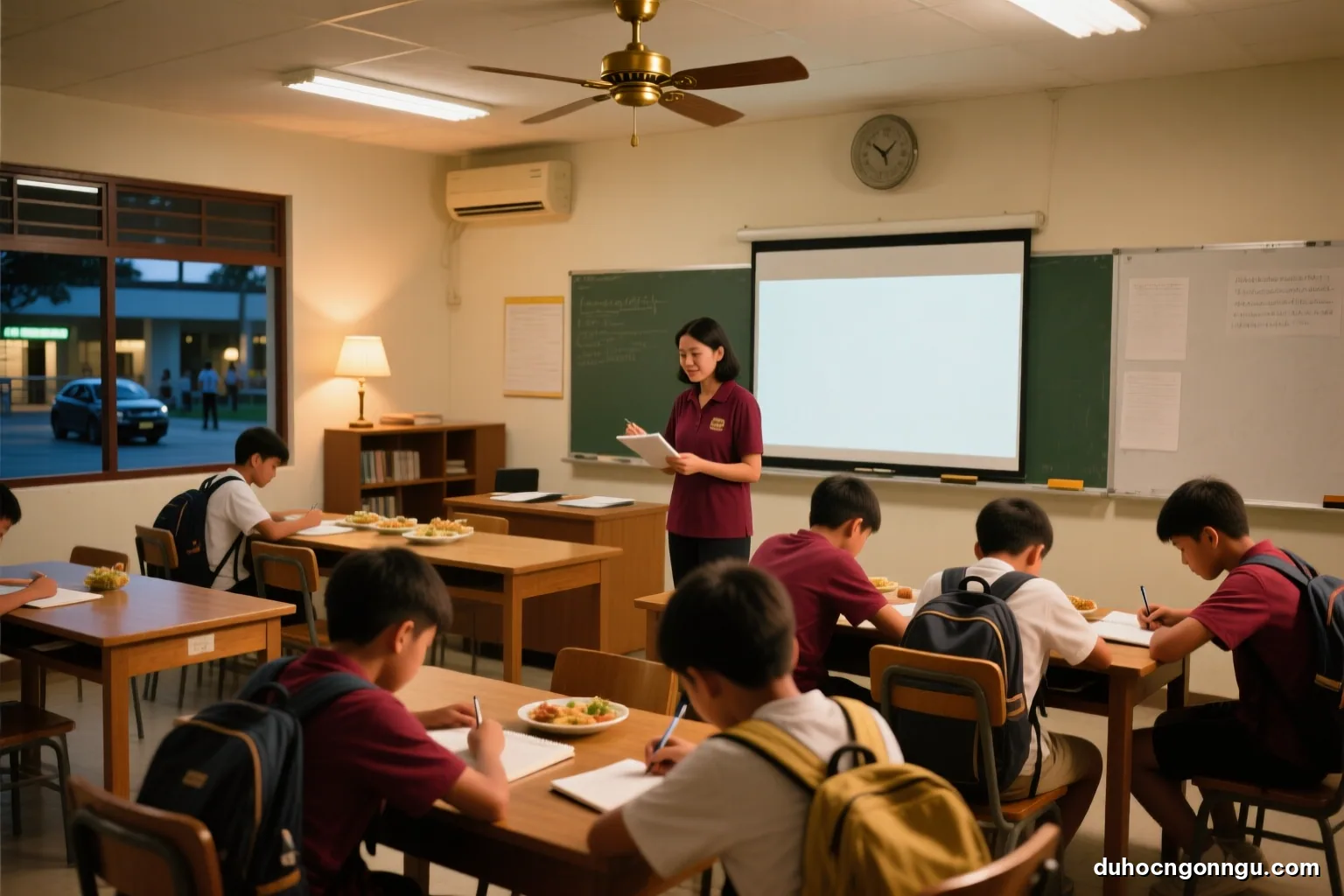
Sparta, semi-sparta and free are the three levels of discipline at English schools in the Philippines: sparta schools make evening self-study compulsory, ban going out on weekdays and set an early curfew; semi-sparta schools keep a full timetable but allow students out at set times; free schools let students manage their own time outside class. For students under eighteen, most families choose sparta or semi-sparta, because it is the rules themselves that keep their child in an English-speaking environment.
The name "sparta" is industry shorthand, borrowed from the ancient Greek city-state famous for its discipline; it is not a standard recognised by any authority. Two schools that both call themselves sparta can be quite different. This article breaks down each element that makes up the level of discipline so parents can compare for themselves, then suggests which level suits which age and personality.
One thing to keep in mind throughout: the level of discipline is only the framework. What decides how much your child learns is still the teachers, the materials and whether your child really uses English in the hours outside class. The right framework makes those things more likely to happen, but does not create them on its own.
How the three models differ
The table compares them the way schools usually describe themselves. Use the rows as a list of questions when reading a school's actual rules.
| Element | Sparta | Semi-sparta | Free |
|---|---|---|---|
| Evening self-study | Compulsory, with attendance taken | Usually compulsory on some evenings or depending on level | Not compulsory |
| Going out on weekdays | No, except in special cases | Allowed after classes, with a return time | Free |
| Curfew | Early, including at weekends | Early on weekdays, later at weekends | None, or very late |
| Regular tests | Usually weekly | Weekly or monthly | Monthly or on request |
| English-only policy | Usually, with some form of reminder or penalty | In teaching areas | Rarely enforced |
| Suits | Teenagers, people who need to be kept to a rhythm | Older students, university students | Working adults, highly self-disciplined people |
When comparing, do not stop at the word "sparta" in the brochure. Ask specifically what time the curfew is, how many minutes of self-study there are, what happens at weekends and who checks. Two schools with the same label can differ by several hours of free time a week.
Why discipline matters in language learning
Discipline may sound like it is only about keeping order, but in language learning it is directly linked to how much English your child is exposed to. Stephen Krashen's input hypothesis, put forward in the late 1970s and still much debated, holds that learners progress through large amounts of comprehensible input. Later researchers such as Merrill Swain added that being made to speak and write, that is, output, helps learners notice their own gaps.
A school with an English-only policy and compulsory self-study is in effect increasing both input and output in the hours outside class. If, on the other hand, after five in the afternoon your child can go into town with friends from home, eat out and speak Vietnamese until late, the real number of English hours each day drops considerably compared with the figure on the timetable.
Discipline has another, less talked-about benefit: it reduces the number of decisions your child has to make. A teenager away from home for the first time who has to choose between studying and going out every evening will be more tired than one who already has a set schedule. For many children, a fixed timetable makes them feel more secure rather than more restricted, as long as there is enough rest and something fun at the weekend.
How English-only policies work in practice
Most language schools in the Philippines have some form of English-only policy, but the way it is applied varies a great deal. At its strictest, the rule applies across the whole campus, including the canteen and the dormitory corridors, with teachers or staff checking, and violations are recorded and added up. At its lightest, the rule applies only in the classroom area and relies on students' own discipline.
Smart enforcement usually combines rewards and reminders. Some schools hand out point cards and reward students who keep them for the whole week; some put students of different nationalities in the same dormitory room so that English naturally becomes the shared language. Mixed-nationality rooms work better than any form of punishment, but only when the school has enough students from many countries at the same time.
For Vietnamese students travelling in a large group, the language rule is most easily broken at mealtimes and in the evening. Parents can talk to the group leader beforehand about splitting up tables and rooms, and agree with their child that Vietnamese is only for calls home. An agreement your child has consented to usually lasts longer than a rule imposed from outside.
The downsides of sparta that parents should anticipate
Exhaustion after the second week. Ten lessons a day plus evening self-study is very demanding. Many children are enthusiastic in the first week, then in the second week start dozing in class, lose their appetite and become irritable. This is a normal reaction, not laziness; a good school will notice and adjust.
Penalties not suited to children. Some schools use fines, point deductions, written self-criticism and expulsion for repeated violations, especially of the rule against speaking one's mother tongue. Parents should read this section carefully. For children under fifteen, reminders through a reward points system usually work better than punishment.
Little time for experiences. Sparta keeps your child on campus almost all week. If the family wants their child to learn more about life and culture in the Philippines as well as studying, ask what weekend activities the school organises and whether staff go along.
Pressure from weekly test scores. Weekly tests help track progress, but for an anxious child, scores that go up and down can be discouraging. Tell your child to treat the weekly result as information about what to study next, not as a ranking.
Semi-sparta: the middle ground that is often misunderstood
Semi-sparta is the category with the most variations. At one school it means students may go out after classes but must be back by a set time; at another it means students at lower levels must do compulsory self-study while higher-level students do not. Some schools even split their campus: the teenagers' dormitory follows sparta rules and the adults' area follows semi-sparta rules.
So when a school is described as semi-sparta, parents should ask three things: which set of rules applies to their child, what time students must be back, and whether going out requires permission and must be done in groups. For sixteen- and seventeen-year-olds who are already fairly independent, semi-sparta can be a balanced choice: there is still self-study and a return time, but your child gets to practise managing themselves within a safe framework.
For younger children, going out mostly happens in groups accompanied by adults, so the line between sparta and semi-sparta for this age group is usually not great. What matters more than the label is that a guardian is present whenever your child leaves the school.
Suggestions by age and personality
There is no level of discipline that is right for everyone. The table below is a starting point; then adjust it according to what you know about your child.
| Group | Level that usually suits | Reason |
|---|---|---|
| 8 to 12 years old | A supervised junior camp with a shortened timetable | Needs adults managing the whole day, not just rules |
| 13 to 15 years old, not very self-disciplined | Sparta | A fixed timetable keeps the rhythm and limits Vietnamese |
| 13 to 15 years old, self-disciplined, prone to anxiety | Semi-sparta with compulsory self-study | Still a framework, but less pressure |
| 16 to 17 years old | Sparta or semi-sparta | Depends on your child's goals and independence |
| University students, working adults | Semi-sparta or free | Already used to managing themselves, need flexibility |
A simple test: ask yourself how long your child studies at home on a day off when nobody reminds them. If the answer is hardly at all, a sparta framework will help more than it restricts.
Ask your child before choosing: a conversation worth having
Parents often choose the level of discipline on their child's behalf, but a thirteen- or fourteen-year-old is old enough to take part in this decision. When your child understands why there is compulsory self-study and why the school limits going out, they accept it more easily and are less likely to feel they have been sent to a "boot camp". A child put into a sparta school without explanation, by contrast, often spends their energy resisting the rules instead of studying.
The conversation can cover a few questions: what does your child want to get out of the trip; what worries them most; do they think they can cope with a fully packed day of study; what would they like to do at weekends. The answers help you know whether your child needs a firm or a softer framework, and also give the school information to set a suitable timetable.
Show your child a sample timetable and the actual rules, not just the photos of the swimming pool and playground in the brochure. If your child reads them and is still willing, that is a good sign. If they are frightened, you could start with a shorter course at semi-sparta level, then think again next year.
Reading the school rules: lines worth paying attention to
When you receive the rules, read them carefully rather than skimming. The following lines decide what your child will actually experience:
- The curfew for each day of the week and what happens when students are late.
- Rules on phones: are phones collected in the evening, and at what times can your child call home?
- The language policy: where it applies, who supervises it and how violations are handled.
- Rules on going out: whose permission is needed, whether students must go in groups, and whether staff accompany students under eighteen.
- Rules on alcohol, smoking, visitors in the dormitory and movement between the boys' and girls' areas.
- The levels of disciplinary action and when the school contacts parents.
Read the rules together with your child before the departure date. When your child knows and agrees to them in advance, following them is much easier than when they discover the rules after arriving and feel they are being forced.
Frequently asked questions
Do sparta schools ban phones completely?
Usually not completely, but many schools collect phones during classes or self-study, especially for teenage students. Some only ban phones in class. Parents should ask when their child can use their phone so they can agree on times to call home and avoid worrying when their child does not answer.
Can my child switch from sparta to semi-sparta in the middle of the course?
Some schools run both systems and allow a switch, especially once a student has shown self-discipline over the first few weeks. A switch usually needs the parents' consent if your child is under eighteen. Ask about this policy in advance, because not every school offers it.
Should adult students choose sparta?
Adults choose sparta when they know they are easily distracted or need to be pushed towards a near-term goal. Even so, working adults are usually already used to managing themselves and need time for their own affairs, so semi-sparta or a free school is usually more comfortable. What matters is being honest with yourself.
Are free schools lower quality than sparta schools?
Not necessarily. The level of discipline is about time outside class, not about the quality of teaching. A free school with good teachers and a clear curriculum can teach better than a sparta school that does things half-heartedly. It is just that a free school puts more responsibility for using time on the learner.
Is sparta suitable for an anxious child?
It may not be, if the rules rely heavily on penalties and tests are frequent. For an anxious child, choose a place with a friendly staff member in charge of students, gentle reminders and time to adapt. Tell the school honestly about your child's personality so they can assign suitable teachers.
What do the weekly tests at sparta schools measure?
Usually a short test on the skills your child is currently studying, sometimes in the familiar format of international exams. The results help teachers adjust their lessons and give the school figures to report to parents. See them as a thermometer for tracking progress, not as an end-of-term mark.