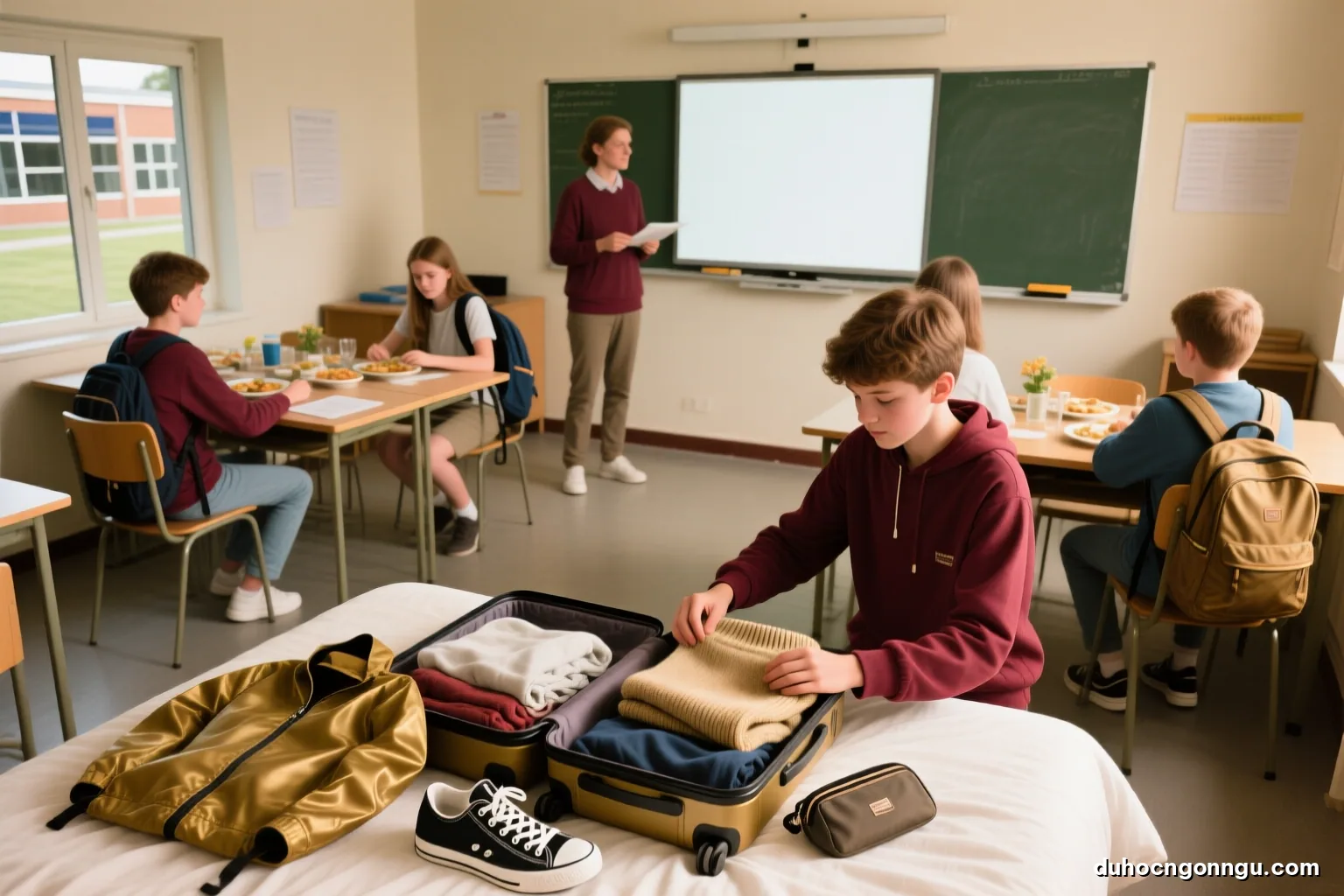
For a short language course abroad, start preparing about 6 months before the flight, and no later than 4 months if the destination requires a visa. The sensible order is: choose the course and book a place first, then check the passport, then apply for the visa and buy tickets, then deal with health, insurance, money and luggage. Reversing the order, for example buying tickets before having a visa, is the source of most situations where money is lost.
The timeline below is divided into monthly milestones, each with a group of tasks with clear prerequisites: the next task is only done once the previous one is complete. The times are suggestions; summer is peak season for schools, visa application centres and airlines alike, so for travel in June or July, shift the whole timeline earlier.
Six months before: choose the course and check the passport
The first milestone is deciding where to go, what to study and for how long. This is also the time to check the things that take the longest, so problems are not discovered too late.
- Decide the country, city, type of course (residential camp, homestay, family course) and number of weeks. Draw up a rough budget across five spending groups.
- Check your child's passport: how long it is valid as of the return date. Many countries require a passport to be valid for a period after leaving the country; the specific requirement is on the destination's official website.
- Under the 2019 Law on Exit and Entry of Vietnamese Citizens, ordinary passports issued to children under 14 are valid for 5 years and cannot be extended. If your child's passport was issued when they were small, it may well be close to expiry.
- If a new passport is needed, you can apply online through the public services portal or at the immigration office. Do it at this milestone, because a visa cannot be applied for without a passport.
- Ask the school for the list of enrolment documents and the registration deadline for the weeks you plan to go. Summer courses at schools taking young students often fill up early.
If the parents are travelling too, check their passports as well. Quite a few trips are postponed because the adults forgot that they also need a visa.
Five months before: book a place and receive the letter of acceptance
Once the course is chosen, the next step is to register and pay a deposit to hold the place. Before paying, read the refund terms carefully, especially the visa refusal section, because at this point the family does not yet know for certain whether the visa will be granted. Ask the school whether the deposit is refunded if the visa is refused, what documents are needed as proof, and how long the refund takes.
After the deposit, the school sends a letter of acceptance (often called a letter of acceptance or confirmation of enrolment). This is the central document of the visa application, so check every detail: full name exactly as in the passport, date of birth, course start and end dates, hours of study per week, type of accommodation, and the name of the guardian or group leader if there is one. One wrong letter in the name is enough for the application to be queried.
Also this month, if your child is under 18, ask the school for the forms for parents: consent to take part, a medical form, permission for activities off the premises, emergency contact details. Some forms need the signatures of both father and mother, and some need translation or certification. Do them early so there is time to correct them.
Four and three months before: visa, flights and insurance
This is the stage most likely to run late, because it depends on other organisations' appointment schedules. The table below lists the tasks in order with the prerequisites needed before doing each one.
| Task | Needed first | Notes |
|---|---|---|
| Identify the visa type or visa exemption | Destination, number of days, purpose of taking a short course | Read the destination government's website, and note the date you checked |
| Book an appointment to submit the application, and give biometrics if the destination requires it | A valid passport | In summer, appointments fill up early; book as soon as you have the documents |
| Prepare the visa application | Letter of acceptance, proof of funds, documents showing the parent–child relationship | Translation and certification take a few days |
| Buy travel or medical insurance | Expected departure and return dates | Some visa types require the insurance certificate to be submitted with the application |
| Reserve a cancellable or changeable flight | Course dates | Only issue non-refundable tickets once the visa is granted |
| Tell the school the arrival time to arrange a transfer | Planned flight schedule | Young students are usually required to use the school's pick-up service |
Visa processing times differ by country and season; the official figures are on the visa authority's website and may change. The safe principle is to apply as early as possible within the period in which advance applications are allowed.
Two months before: health, money and your child's skills
Once the visa has been granted or is awaiting a decision, the work shifts to preparing your child. Take your child for a general check-up and to the dentist: dental treatment abroad is usually expensive and many travel insurance policies do not cover routine dental care. If your child takes long-term medication, ask the doctor for a prescription and a summary of their condition in English, and work out enough medicine for the whole trip plus a few extra days.
For money, decide in what form your child will carry it: a little foreign cash, a debit card or a parent's supplementary card, or deposited with the school. Open the card and test an online payment beforehand, because some cards take a few days to activate for use abroad.
Two months is also enough to teach your child a few skills they may be missing: washing their own clothes, packing a suitcase, topping up a phone, reading flight times, ordering food in English. If your child has never slept away from home, a few nights at the grandparents' or a short camping trip helps both your child and the parents know in advance how they react to being apart.
For university students or working adults travelling on their own, the two-month mark is the time to confirm leave with their university or employer in writing. Leave confirmation and proof of employment and income are usually also part of the visa application, so if they were obtained at the three- or four-month mark, now just check that the dates on them still match the flights. Adults travelling alone should also make their own emergency contact list and send a copy to family at home.
Four weeks to one week before: finalise documents and luggage
There should be no big tasks left in the final weeks. If there is still no visa by now, discuss with the school the option of moving the dates or deferring the course, rather than waiting until the last moment.
- Collect the passport with the visa, and check the name, passport number, validity dates and number of entries on the visa.
- Issue the flight ticket if it was only reserved before; check that the name on the ticket matches the passport.
- Print and organise a hand-luggage document folder: copies of the passport and visa, the letter of acceptance, the accommodation address, the insurance certificate, the parental consent letter, the school's emergency contact number. Also save photos on your child's and the parents' phones.
- Send the school the confirmed flight details and reconfirm who will meet your child.
- Pack according to the list, weigh the suitcase, and put medicine and important documents in hand luggage.
- Change a little foreign cash for the first few days, and keep the rest on a card.
- Install messaging apps, offline maps and the airline's app; agree with your child on when to call home in the first week.
The night before the flight, do a final check by letting your child read the list aloud and point out where each item is. A child who knows where their things are will panic less at the airport.
Tasks that often run late, and how to avoid it
A passport that has expired or is about to expire. This is usually discovered once the course has been chosen and the visa application is being prepared. To avoid it, check the passport in the very first week of planning, before paying any deposit.
Visa appointments fully booked. In summer, application centres in big cities may be booked up for weeks. Book an appointment as soon as you have the documents; do not wait to "make it perfect".
Documents needing both parents' signatures. If one parent is away on business or abroad, getting their signature and certification takes longer than expected. Work out early which documents need whose signature.
Buying non-refundable tickets before having a visa. Tickets really are cheaper when bought early, but one visa refusal can mean losing the whole fare. A changeable ticket or a time-limited reservation is the safer choice while waiting.
Long-term medicine and the doctor's letter. Book the appointment too late and there will not be time to get a prescription in English. Have the check-up at the two-month mark.
Flight details not sent to the school. A young student arriving with nobody to meet them is a difficult situation for both sides. Send the flight details as soon as the ticket is issued and ask the school to confirm by email.
A shortened timeline when only three months remain
Not every family decides early. If there are only about three months left before the planned flight, it can still be done, but priorities have to change. The first task in the first week is to check the passport and find out whether the destination requires a visa and how long processing usually takes. If visa processing time plus passport processing time exceeds the time left, choose another country or postpone to the next holiday rather than gambling.
Once you are sure the paperwork is feasible, register for the course and request the letter of acceptance as quickly as possible, telling the school clearly that you need it urgently for the visa application. In parallel, translate documents and prepare proof of funds in the same week. Reserve a changeable flight but do not issue the ticket yet.
Health, money and luggage tasks are packed into the last three or four weeks. A shortened timeline leaves no room for mistakes, so each document should be checked independently by two people in the family. And accept that some popular summer courses will already be full; a course that still has places is not necessarily a poor one, but it needs to be read as carefully as any other.
Frequently asked questions
If the destination is visa-free for Vietnamese citizens, do we still need to prepare this early?
The visa part becomes lighter, but the passport, a place on the course, peak-season flights and documents for minors still need time. Four months is still a comfortable milestone. Check the visa exemption rules again on the official website before travelling, as rules can change.
Should we book the course before knowing whether the visa will be granted?
You usually have to book first, because the visa application needs the letter of acceptance. What matters is reading the deposit refund terms for visa refusal carefully before paying, and keeping the refusal letter if it happens, as the basis for claiming a refund.
How long does it take to get a passport for our child?
The processing time follows the immigration authority's current rules and may differ between online and in-person applications. Families should check on the public services portal when applying and allow a few spare weeks for additional documents or waiting for a visa appointment.
If our child travels with a group, which tasks in this timeline do parents still have to do themselves?
Group organisers usually handle booking the course and flights and give guidance on the visa. Parents still need to handle the passport, personal and financial documents, signatures on consent forms, the health check-up, medicine, pocket money and luggage. Ask the organiser for a clear division of responsibilities.
When should we tell our child's school in Vietnam about the trip?
If the course overlaps with school days or exams in Vietnam, tell the school as soon as the dates are chosen. Some visa applications also need confirmation that your child is a current student, so ask for this document at the three- to four-month mark before the flight.
Where should we keep the preparation timeline so the whole family can follow it?
A shared spreadsheet or note on the phone is enough, with columns for the person responsible, the deadline and the status of each task. What matters is having one person ultimately responsible for checking everything before each milestone.