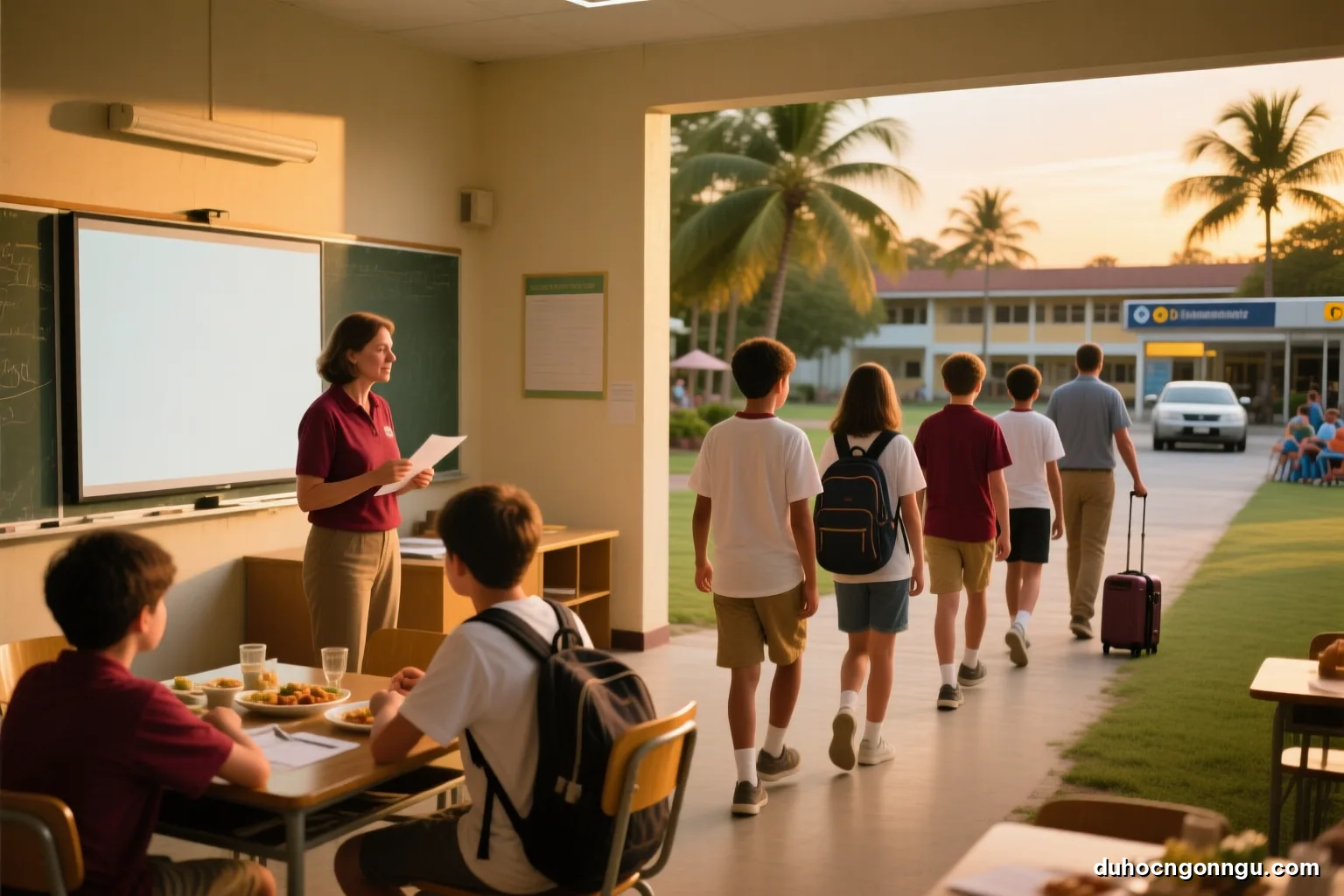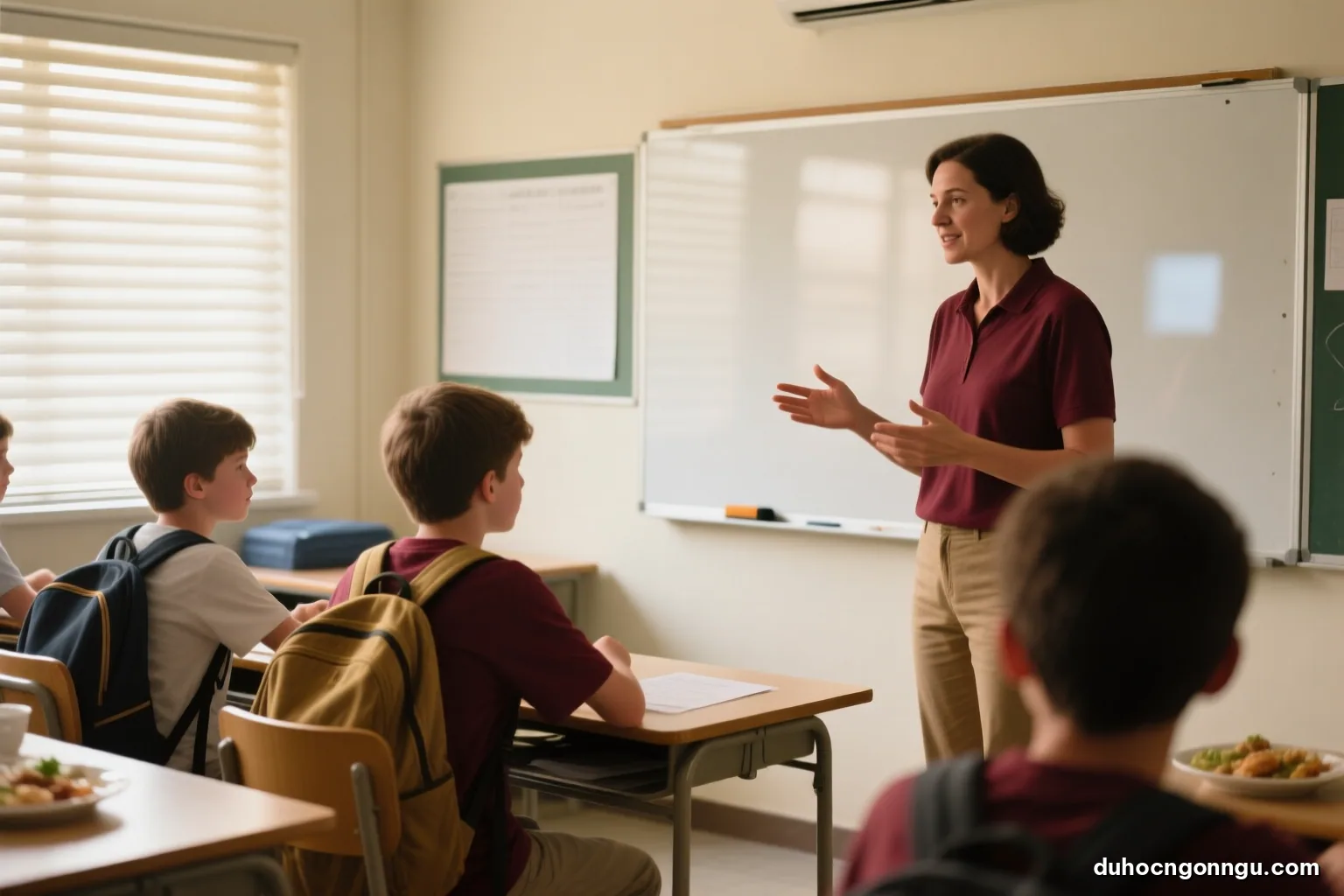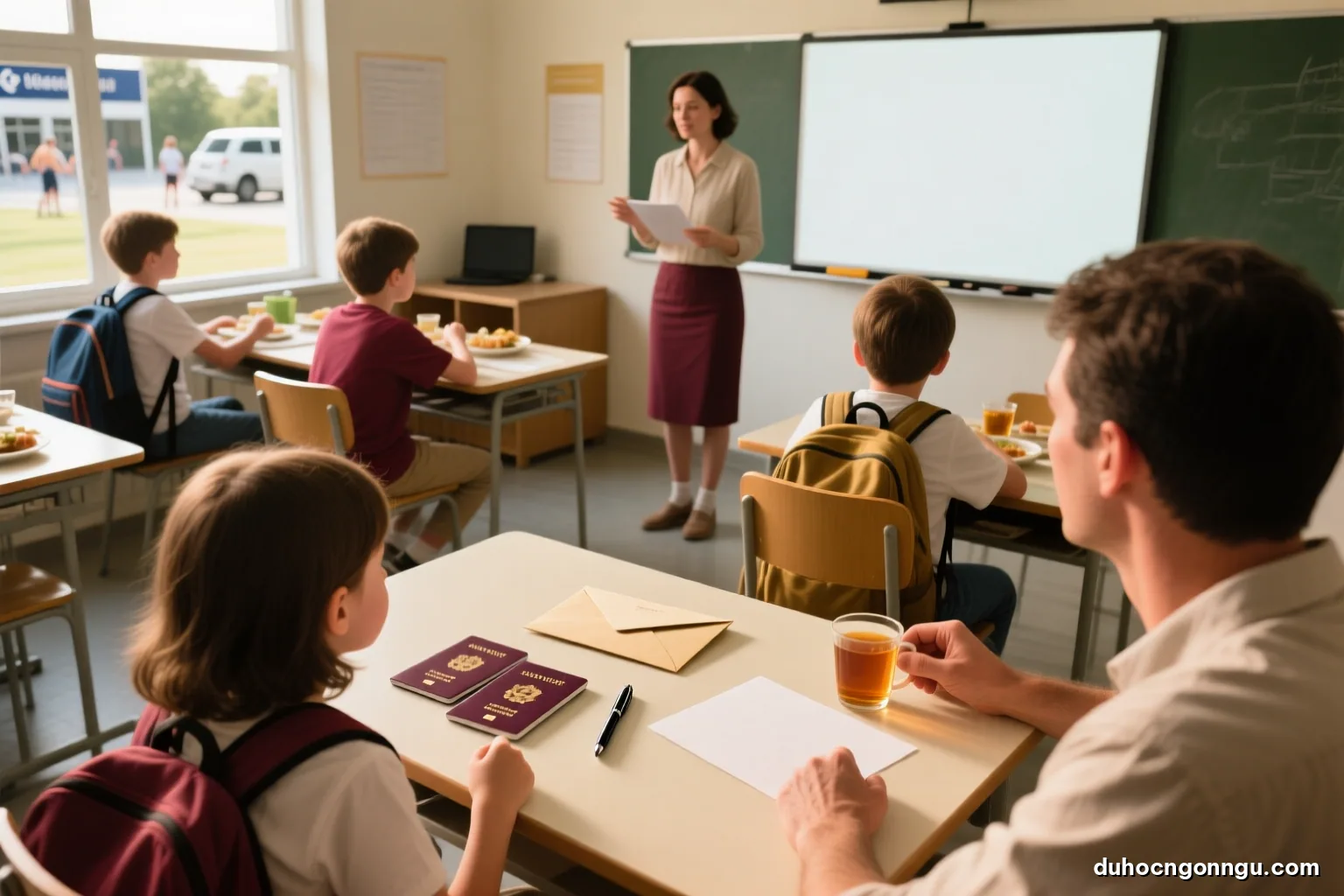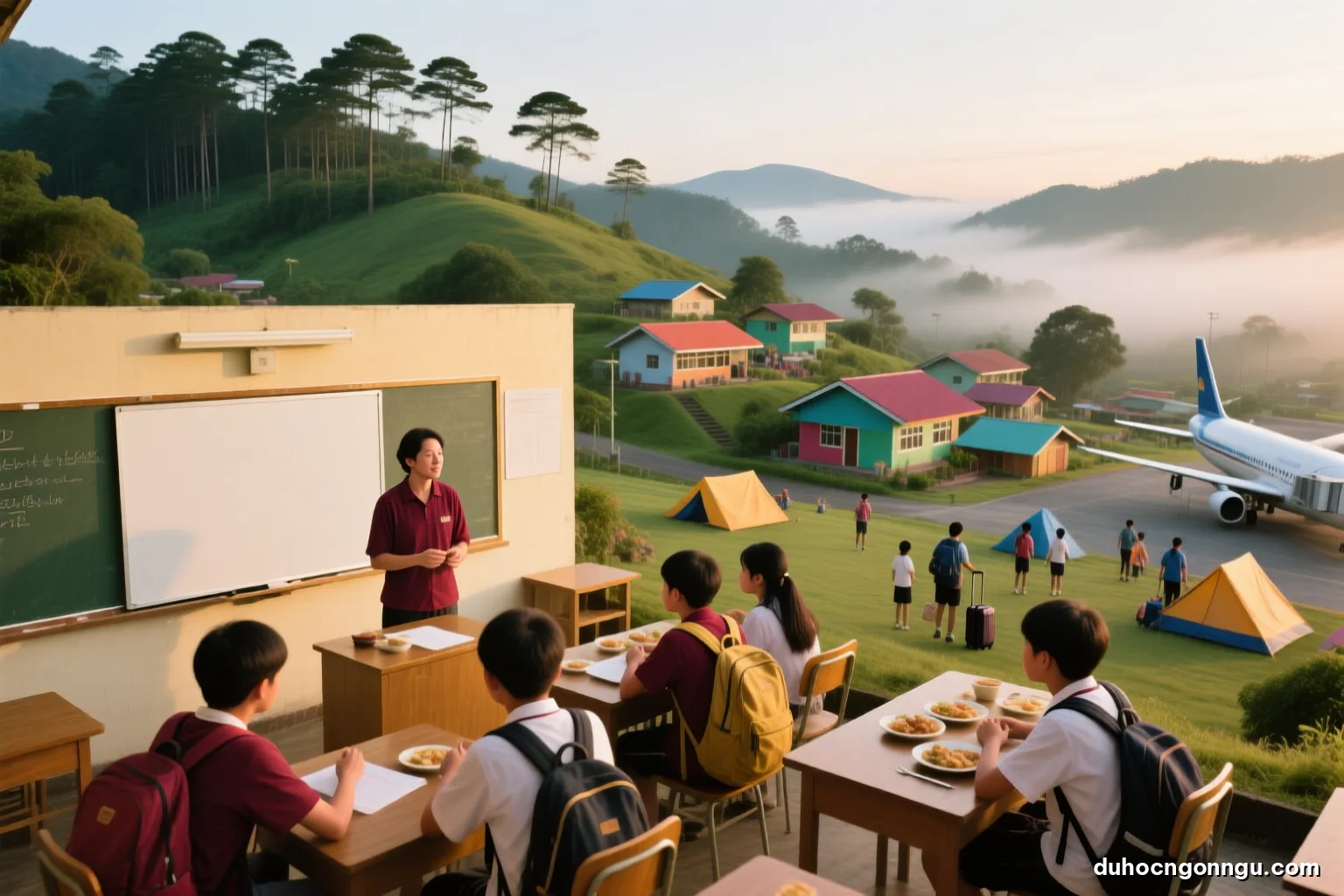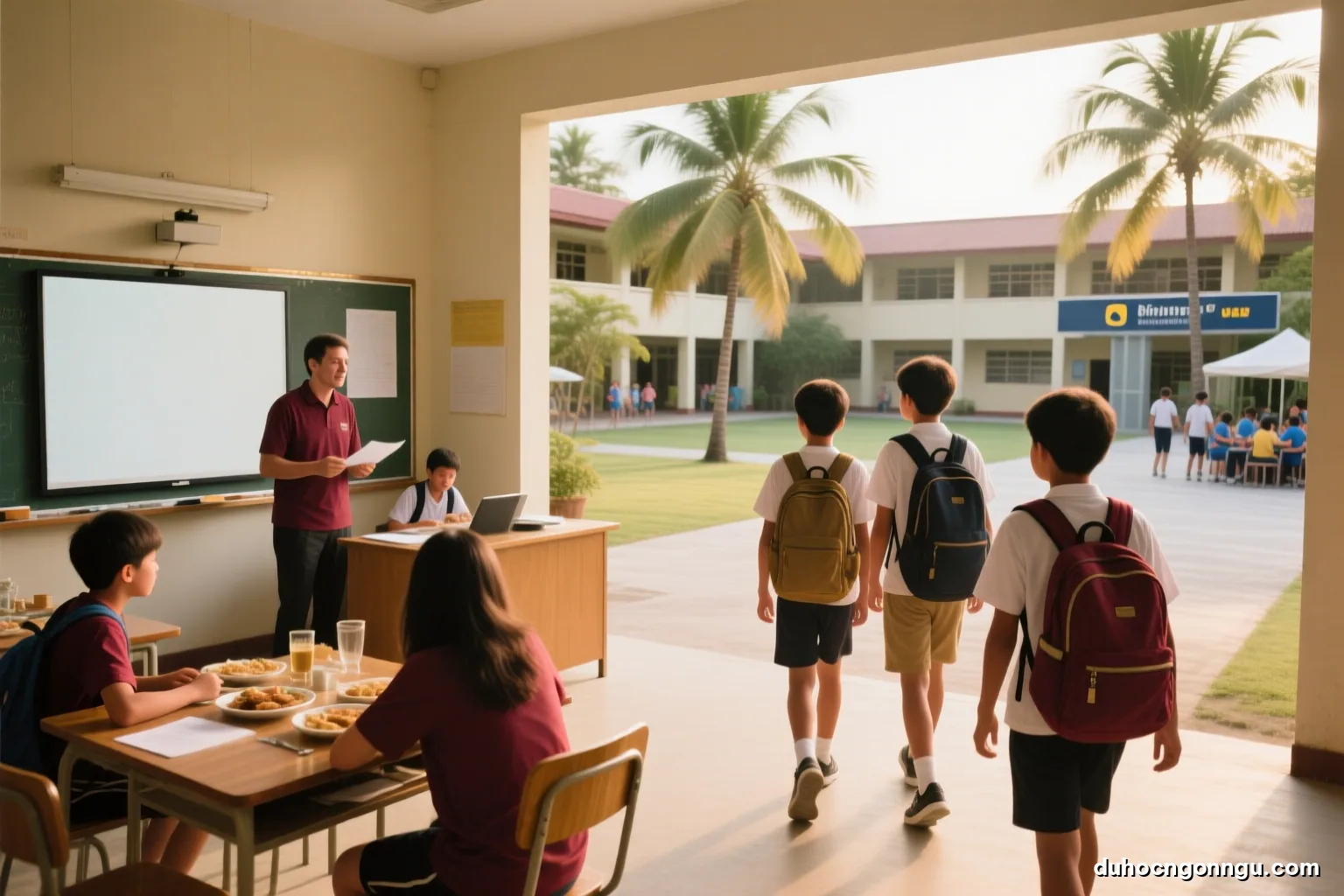
Learning English in the Philippines is good at one very specific thing: over a few weeks, your child speaks English with teachers for many hours a day, mostly in one-to-one classes, so the fear of speaking drops quickly. The weakness is just as specific: outside the school gate, Philippine society uses Tagalog or local languages more, and there are often many students of the same nationality, so full "immersion" exists only on campus, and only if the school enforces its rules.
So the right question is not "is the Philippines good" but "what does my child need from this trip". If your child needs speaking time and someone to correct them on the spot, the Philippines fits very well. If your child needs to live inside an English-speaking culture, from the market to the bus, look at native-speaking countries instead. The sections below go through each layer: why this model came about, what your child gains, where its limits are, who it suits, and the questions parents should ask before booking a course.
Why the Philippines became a place to learn English for many Asian families
English in the Philippines is not an extra subject. The 1987 Constitution names Filipino and English as the two official languages for communication and instruction, and the school system has taught in English since American rule in the early twentieth century. The result is a large workforce of university graduates who speak English fluently, many of them working in call centres and customer service for foreign companies.
From that workforce a particular type of school emerged: language schools (usually called ESL schools) that take foreigners for short courses, with dormitories, three meals a day and a fixed timetable from morning to afternoon. The first and largest group of students were Korean, followed by Japanese, Taiwanese, Chinese and, more recently, Vietnamese students. Many schools were set up by Korean investors, so they are organised in much the same way: a placement test on the first day, an individual timetable, regular tests and rules on hours.
This explains why, when Vietnamese parents ask "what is studying in the Philippines like", the answer is almost always residential study with many hours of one-to-one classes. It is the product of an education service industry for foreigners, not of the Philippine public school system. Understanding this helps you judge correctly: the quality lies with each school, not with the name of the country.
What your child really gains from a course here
Speaking hours that are hard to gather at home. A pupil in Vietnam learning English in a class of thirty or forty gets to say a few sentences per lesson. In a one-to-one class, your child has to listen and respond almost the whole time. Real speaking time is the scarcest thing for English learners in Vietnam, and it is what this model provides in greatest abundance.
Feedback on the spot. The teacher sitting opposite listens to every sentence, corrects pronunciation, suggests more natural ways of saying things and makes your child say it again. Research on corrective feedback in second language acquisition shows that timely feedback, given just as learners are trying to express something, helps them notice the gap between what they said and the correct form.
Losing the fear of speaking. After a few days of having to use English to ask the way around school, order food in the canteen and ask a roommate from another country for help, many children stop being afraid of making mistakes. This confidence is hard to measure in scores, but it is often the first thing parents notice when their child comes home.
A steady study routine. A full, regular timetable makes your child live by the clock: get up, study, eat, self-study, sleep. For some children used to scattered extra classes, it is their first experience of focused, high-intensity study and of managing their own time away from their parents.
Limits parents should know about before setting expectations
The Philippines uses English widely, but it is not a native-speaking country in the sense that the whole of society lives in English. On the streets of Manila people speak Tagalog, in Cebu Cebuano, in Baguio Ilocano and many other local languages. People still understand and reply in English, but your child will not "soak up" English from billboards, TV programmes or conversations at the market the way students in London or Sydney do every day.
The second limit is classmates of the same nationality. During the summer holidays in Vietnam, Korea or Japan, a school may have many students from one country. If the school does not enforce an English-only rule, breaks and evenings easily turn into mother-tongue time. This is why many parents ask for the nationality mix for each month, not the average over the whole year.
The third limit is time. A few weeks of intensive study help your child speak more fluently, but they cannot replace hundreds of hours of building up vocabulary and grammar. According to Cambridge English estimates, moving from one CEFR level to the next takes in the order of a few hundred hours of guided learning. A short course is like a push, not the whole journey; if your child does not keep up the rhythm after coming home, the gain in fluency fades fairly quickly.
How it differs from an English course in a native-speaking country
Teacher–student ratio. Language schools in the UK, Ireland, Malta, Australia or Canada mainly teach group classes, often with a dozen or more students per class; one-to-one lessons exist but are a separate, less common package. In the Philippines it is the other way round: one-to-one classes are the main part and group classes are secondary. If what your child lacks most is speaking time with someone correcting them, this difference is huge.
The environment outside class. In a native-speaking country, every train ticket bought, every question about directions and every conversation with the host family is a natural lesson. In the Philippines, most English outside class time happens on campus. One is strong on hours of structured teaching, the other on natural input from daily life.
Type of accommodation. In the Philippines it is mainly on-campus dormitories, with three meals cooked by the school. Native-speaking countries tend to use homestays or separate residences, and your child has to travel by public transport. For young children, the closed model is easier to manage; for older teenagers, getting around independently is part of the experience.
Distance and time difference. The Philippines is a few hours' flight from Vietnam with only a one-hour time difference, so families can easily stay in touch, visit or bring their child home if needed. This is the practical reason many parents choose it for their child's first trip.
Who this way of learning suits, and who it does not yet suit
The table below brings together the situations parents often face. It is a starting point for thinking, not a rule; every child has a different personality and level of readiness.
| Your child's situation | Fits the Philippines | Worth weighing further |
|---|---|---|
| Has fairly good grammar and vocabulary but speaks slowly and is shy about speaking | Very well: one-to-one classes target exactly the weak point | Choose a school that enforces an English-only rule |
| A beginner with very little vocabulary | Fits if there is a foundation class and patient teachers | A course that is too short may not get past greetings |
| Wants to experience Western culture and live with a local family | Not the right match | Look at courses in native-speaking countries with a homestay |
| Aged 8 to 12, away from home for the first time | Fits a junior camp with guardians | Should not be placed in classes with adults |
| A high-school student who needs a foundation before long-term study abroad | Fits as a stepping stone for speaking and writing practice | Needs a measurable goal on the CEFR |
| A working adult who needs English for the job | Fits: many schools have business English classes | Choose a school with fewer restrictions on hours |
Looking at the table, what the best-suited groups have in common is an existing foundation and a need to turn knowledge into speaking reflexes. A child without that foundation can still go, but parents should set expectations at getting used to the language and gaining confidence, not at jumping a level.
Questions to ask the school or adviser before booking a course
The answers to the questions below tell you more about quality than any brochure. Ask for written answers and keep them.
- How many one-to-one and how many group lessons your child has each day, how long each lesson lasts, and whether compulsory self-study is counted in the number of lessons.
- What the nationality mix of students is in the exact month your child goes, and what the school does to stop students speaking their mother tongue.
- Whether the school is accredited by the Philippine Bureau of Immigration to accept foreign students, and whether its programmes are registered with TESDA.
- How teachers are recruited and trained, whether your child can change teacher if it is not a good fit, and how long a change takes.
- Where students under 18 live, who supervises them at night and at weekends, and what the rules are for leaving the school.
- What scale the entry and exit tests use, whether results are mapped to the CEFR, and how often parents receive a report.
- The refund policy if your child falls ill and has to come home early, or if the family cancels before departure.
A decent provider will answer each question clearly, including unfavourable ones such as peak months with many Vietnamese students. Vague answers on rules and supervision are a signal to stop and ask more.
Signs a programme may not be trustworthy
As the flip side of the questions above, there are a few signs parents should be wary of when reading adverts for courses in the Philippines:
- Promises such as "speak like a native after four weeks", or a guaranteed rise to a specific exam score without saying where your child starts from.
- No specific school name, only "a partner school in Cebu" or "a top school", and no rules or sample timetable can be sent.
- Everything bundled into one all-in price, without separating tuition, dormitory, study permit fee and visa extension fee, so you do not know what you are paying for.
- No clear answer on who supervises minors, or a reply along the lines of "your child is old enough to look after themselves".
- School rankings such as "the biggest" or "number one" without any verifiable source.
None of these signs on its own proves a programme is poor, but if you see two or more, ask for more information before transferring any money.
Frequently asked questions
Will learning English in the Philippines give my child an odd accent?
Teachers at language schools usually speak with a neutral accent close to American English, because the Philippine education system and media have long been influenced by the US. A course of a few weeks rarely changes your child's accent much; what matters more is that your child speaks clearly, with the right stress, and is understood by others.
From what age can a child go to learn English in the Philippines?
Many schools take children from about eight if they join a junior camp with guardians or travel with their parents. Students travelling alone in classes with adults are usually sixteen or eighteen and over, depending on the school. Parents should ask each school about its age policy, as there is no common threshold.
Does my child need IELTS or another certificate before studying in the Philippines?
No. Short language courses accept students of all levels, and the school runs its own placement test on the first day. A certificate is only needed if your child enrols in an exam preparation course with an entry requirement, and in that case the school will state the minimum level.
How is studying in the Philippines different from online lessons with Filipino teachers?
Online lessons give your child speaking time with a teacher, but they still live in a Vietnamese-speaking environment, usually with only one or two sessions a day. On site, your child studies for many hours in a row, has to use English for daily life and has no escape into their mother tongue during class time. The two can complement each other: online lessons beforehand to get used to it, and afterwards to keep up the rhythm.
Should my child go with a close friend to feel less homesick?
Going with a close friend eases the first few days, but the two can easily end up speaking Vietnamese all day. If you choose this option, ask the school to put them in different rooms and different classes, and agree with your child beforehand about speaking English on campus.
Can a course in the Philippines replace learning English at home?
No. A short course is like an acceleration phase, mainly for speaking and listening. Vocabulary, reading and writing still need steady build-up. The effective approach is to place the course within a longer plan: preparation before going and a schedule for keeping the language after coming home.