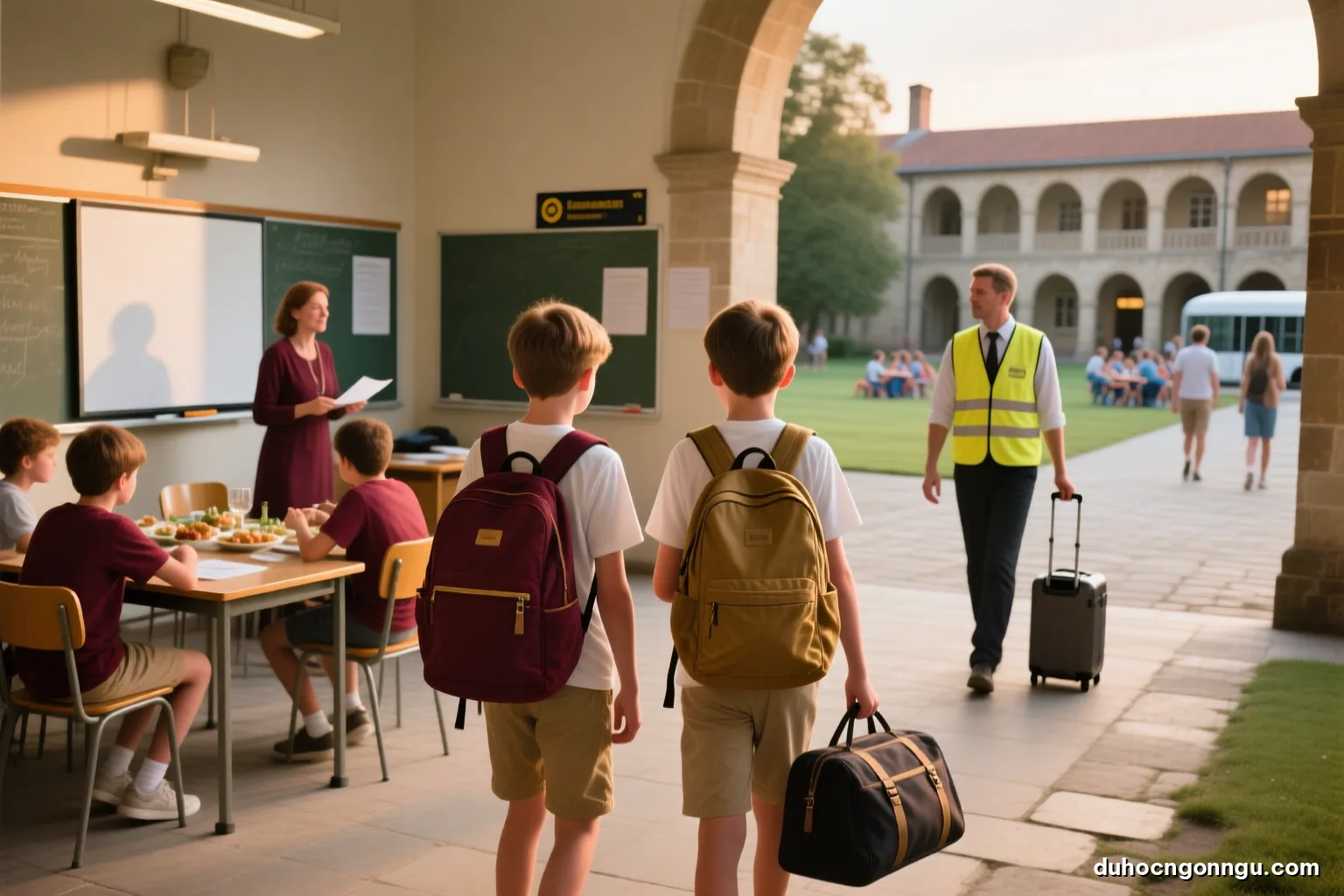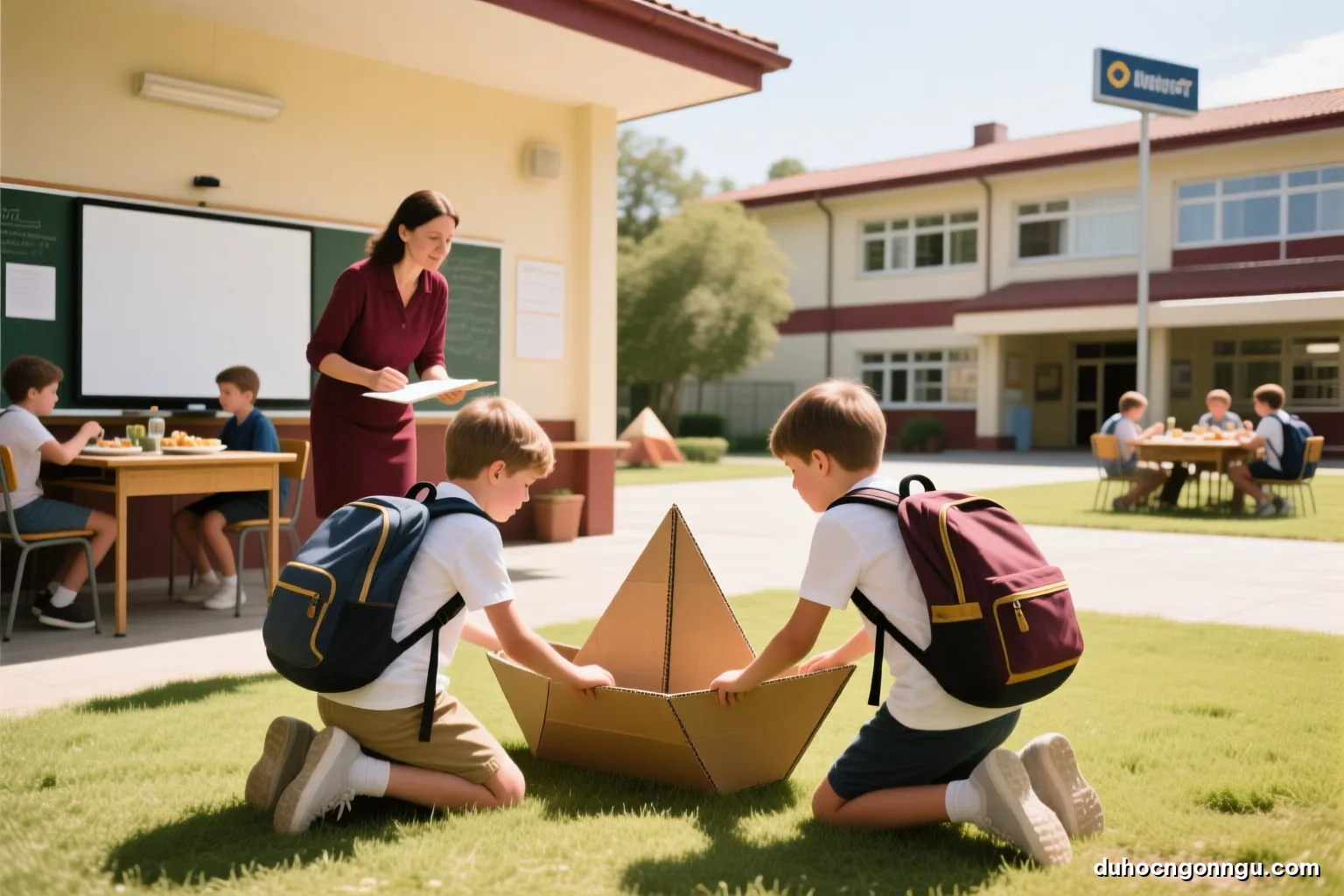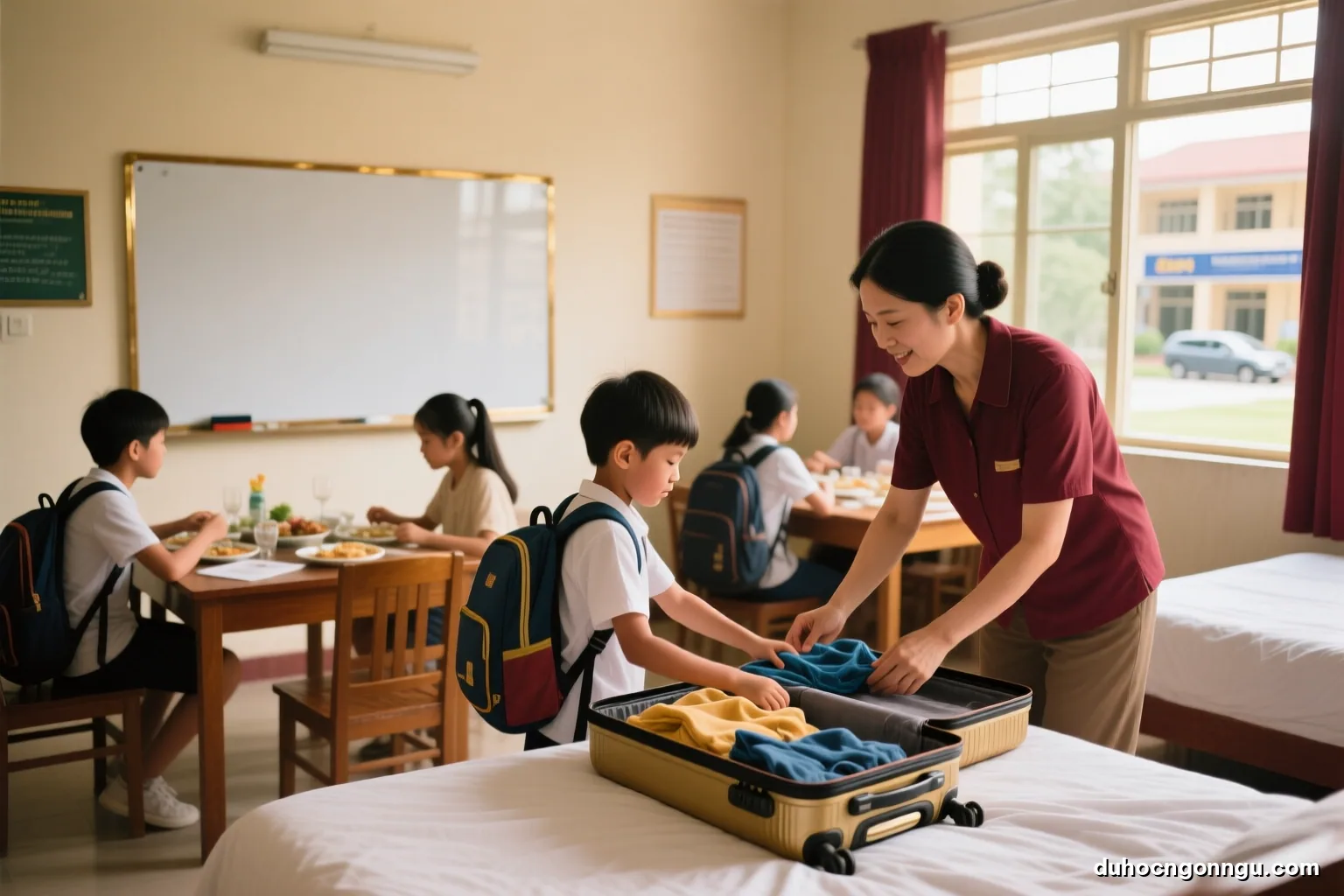
Your child is ready to go away to learn a language when they can handle basic daily routines, can say when something is wrong, have already managed a few nights away from their parents, and genuinely want to go themselves. Age and English scores are secondary. An independent 10-year-old may be more ready than a 14-year-old who has never washed their own clothes or slept alone.
This article sorts what to observe into five groups of skills, gives a self-check table for each age group, suggests how to practise at home over a few months, discusses situations that need extra thought such as chronic illness, allergies or particular learning needs, and sets out the options when the answer for now is "not yet". The table is not for grading your child; it is for choosing a format of trip that suits them at this point.
Five groups of skills to observe
Looking after their own body. Showering, washing hair, brushing teeth, getting dressed, choosing clothes for the weather, noticing when they need the toilet or a drink. At camp, supervisors give reminders to the whole group; they do not follow each child individually. A child who needs reminding about every single thing will be worn out and more likely to fall ill after a few days.
Managing belongings and money. Knowing which things are theirs, keeping them in a fixed place, finding them when lost, keeping important documents in a separate pouch. For older children, being able to spend a small amount of money over a week without using it all on the first day.
Recognising and saying when something is wrong. Knowing that they are tired, in pain, hungry or sad, and being able to tell an adult, in simple English or through an interpreter. This is the most important skill for safety, and many children who are well behaved at home are weak here because they are used to their parents guessing for them.
Being away from home and managing their feelings. Having slept away from home for a few nights and knowing what to do when homesick: writing, asking a friend to play, talking to an adult. It does not mean never feeling sad; it means feeling sad and still carrying on with the day.
Getting along with strangers. Saying hello first, joining in with a group, accepting the group's rules, sharing a room with someone they have not met. Introverted children can do this too; they just need a longer warm-up and one or two friends rather than a large group.
One thing not on the list: English scores. Language level affects which course to choose, but it is not what decides whether to go. The school places students using a test; what matters is that your child can say a few survival sentences when they need help.
Self-check table by age
Read each row and mark one of three levels: your child does this consistently, does it when reminded, or cannot do it yet. The milestones in the table are general suggestions; every child develops at their own pace.
| Skill | Ages 8–10 should | Ages 11–13 should | Ages 14–17 should |
|---|---|---|---|
| Self-care | Shower, brush teeth and dress on their own; notice when they are cold or hot | Wash small items of clothing, keep track of their own morning routine | Handle all daily routines, set their own alarm, go to a doctor with someone accompanying them when needed |
| Belongings, money | Know which things are theirs, keep them in a fixed place | Manage weekly pocket money, keep documents in a separate pouch | Make a simple spending plan, keep their own passport when allowed |
| Saying when something is wrong | Tell an adult when they are in pain, hungry or scared | Find a supervisor on their own when there is a problem and explain clearly what happened | Deal with small things themselves, know when to tell an adult straight away |
| Being away from home | Have slept away from home for one or two nights | Have been away for several nights in a row | Have been on a trip of a few days with friends or school |
| Getting along | Play with new friends once an adult gets things started | Make friends with one or two new children on their own initiative | Work in a group with people from other cultures, sort out small disagreements themselves |
| Minimum spoken English | A few sentences asking for help, introducing their name | Ask for directions, describe their day in short sentences | Explain a problem to an adult in English |
How to read the result: if most rows in your child's age column are "does this consistently", they can go in the format that is usual for that age. If many rows are "when reminded", a format with a relative or group leader nearby is a better fit for the first time. If many rows are "not yet", a few months of practice at home often changes quite a lot.
Practising at home before the trip
A report by Christopher Thurber and Edward Walton on homesickness in children, published in the journal Pediatrics in 2007, recommends that parents let children practise short periods away from home before going to camp. The reason: each successful time away helps a child believe they can cope, and that belief is one of the factors that most clearly reduces homesickness.
A sensible sequence over two or three months: start with one night at the grandparents' or a relative's without the parents; then two or three nights in a row; then a trip of a few days with the school or a group of friends with an adult in charge. After each one, talk with your child: what was easy, what was hard, what they would like to do differently next time.
Daily-living skills can also be practised in a few weeks. Hand over part of the daily routine to your child, such as getting their things ready for the next day, washing their own underwear, managing weekly pocket money. The skill of saying when something is wrong is practised by parents guessing less on the child's behalf: when your child seems tired, ask "how are you feeling?" rather than drawing your own conclusion. For English, role-playing a few survival situations for ten minutes a day is enough for safety purposes.
What to avoid is turning these practice sessions into stressful tests. The goal is for your child to have successful experiences, not to grade them as pass or fail.
Telling "my child wants to go" from "my child does not dare say no"
Your child's wish is part of being ready. A trip your child really wants usually goes much more smoothly, because they have their own motivation to get through the difficult days. But children, especially well-behaved ones, often say "I want to" because they know that is what their parents hope for.
A few ways to tell: ask open questions rather than yes-or-no ones, for example "what do you think about the trip?" or "what worries you most?". Let your child read the materials themselves and see whether they ask more; children who are genuinely interested usually ask a lot. Watch how they react when the trip comes up at home: do they excitedly tell their friends, or go quiet and change the subject? Let someone else your child trusts, such as a teacher or an older cousin, talk with them.
If your child is anxious but still wants to go, that is normal; feeling nervous before something new is not the same as not being ready. If your child says they want to go but every other sign suggests they are scared, talk more and make it clear that they are allowed to say "not yet". A child whose opinion was respected about their first trip is more likely to go willingly next time than a child who was pushed to go before they wanted to.
Situations that need extra thought
Children with a chronic condition such as asthma, diabetes, epilepsy, a severe allergy with a risk of anaphylaxis, or who take regular medication can still go abroad to learn a language in many cases, but need more preparation. Discuss the trip with the treating doctor, ask for written instructions, and bring enough medicine with the prescription. Declare everything honestly to the school from the time of enrolment and ask specifically how they handle it: who keeps the medicine, who knows how to use emergency medication, how far away the nearest hospital is.
For food allergies or special diets, ask how the school kitchen deals with them and whether there is a separate menu. Abroad, food labels are in another language, so your child needs to know how to ask about ingredients in English.
Children with particular learning or developmental needs, such as ADHD, specific learning difficulties or autism spectrum conditions, can still have a good experience if the school is told in advance and has experience. Ask the school directly whether it has taken students with similar needs before and what adjustments it makes to classes and daily life. A school that honestly declines because it cannot yet provide support is more trustworthy than one that accepts without asking anything.
In these situations, a first trip with parents or a relative nearby is usually the safer choice.
Parents' readiness needs checking too
The first trip is a first for both the child and the parents. Many trips run into difficulty not because the child was not ready, but because the parents were not ready to let go: calling several times a day, constantly tracking their child's location, messaging the school whenever the child does not reply immediately. These things come from love, but they send your child the message that they cannot cope on their own, and make it harder for them to settle into the rhythm of the new place.
A few questions parents can ask themselves before deciding: can I accept not talking to my child for a day or two; how far do I trust the school's procedures, and have I asked enough to trust them; if my child calls home crying, how will I react; who in the family is the main contact with the school, so that everyone is not asking different things?
Agree within the family before departure: the schedule for contact with your child, the main contact with the school, which situations require parents to step in and which your child should resolve with the supervisor. For very anxious parents, talking with a family whose child has already been on the same programme usually helps more than reading more documents. Incident procedures, contact and insurance are covered in the safety and guardianship section of this site.
When the answer is "not yet": other options
"Not yet" does not mean losing a year. There are many ways for your child to still have a language experience while preparing for an independent trip later.
- Family courses. Your child joins a junior class while the parents stay with them. They still have an international environment in classes and activities, but come back to familiar faces in the evening.
- A group trip with a Vietnamese group leader. There is a familiar person your child can turn to when needed, which helps them feel less lost.
- A shorter trip. One or two weeks instead of four, so that your child has a successful experience first.
- A closer destination. Less time difference, a short flight, parents can get there quickly if needed.
- A year of practising independence at home. School trips of a few days, nights away from home, more responsibilities. Combine this with keeping up English regularly so that next year's trip has a better foundation.
Go back over the self-check table after six months or a year. Children at this age change fast, and today's "not yet" rows may become "does this consistently" sooner than parents expect.
Frequently asked questions
Should an introverted child go away to learn a language?
Being introverted is not a reason not to go. Introverted children usually need a longer warm-up and prefer one or two close friends to a large group. Choose a camp with small classes and a quiet corner to rest, and tell the school about your child's personality so supervisors understand that sitting alone does not mean they are unhappy.
Is a camp in Vietnam enough to count as being ready?
A camp in Vietnam is valuable experience of being away from home, but going abroad adds a time difference, unfamiliar food, another language and parents who are further away. If your child has been to a camp in Vietnam for a few days and coped well, that is a good sign; it is still best to choose a short course or one with a group leader for the first trip abroad.
What should we declare to the school about our child's health?
Declare anything that could affect safety: chronic conditions, allergies, current medication, psychological history, special educational needs, diet. Many families hesitate to declare things for fear of being turned down, but a school that does not know cannot prepare, and the risk falls on the child.
Is it a problem if a 13-year-old is still afraid of sleeping alone?
It is not unusual, and it does not mean there is a problem. At residential camps, children usually share a room with others, so they do not sleep alone. You can practise gradually at home and talk with your child about how rooms are allocated at camp. If the fear is very strong and affects daily life, consult a psychologist.
Should we ask the form teacher's opinion about our child going away?
It helps. The form teacher sees your child in a group setting every day and knows how they fit in, look after themselves and deal with disagreements with friends, which parents at home rarely see. Ask the teacher about specific situations rather than just whether your child can go.
What should parents do if they are more anxious than their child?
This is quite common. Parents' worries easily pass to the child, especially younger children. Finding out the school's safety procedures in detail, talking with families whose children have been, and agreeing a clear contact schedule usually help parents feel more at ease. Avoid showing excessive worry in front of your child.