For a short English course in the UK, Vietnamese passport holders usually apply for a Standard Visitor visa. According to guidance on GOV.UK, the UK government's official website, people on this visa may study for up to 6 months at an accredited institution. English courses longer than 6 months and up to 11 months have their own category, the Short-term study visa, which is only for people aged 16 and over.
On quality, the main way to identify private English schools in the UK is Accreditation UK, the accreditation scheme run by the British Council in partnership with the association English UK. Schools that accept students under 18 are also inspected separately on the care and supervision of minors. The sections below explain each of these layers and how the family can check for themselves (rules are given as stated on GOV.UK at the time of writing, in 2026).
What the visitor visa does and does not allow you to study
The Standard Visitor visa is for people coming to the UK for a short time for purposes such as tourism, visiting family, business or short study. The core point is that the trip must genuinely be short term and the traveller must intend to leave the UK when the time is up. Study is allowed, but within the length of stay the visa allows and at an eligible institution.
This visa does not allow work, including unpaid work of a labour nature, and does not allow a long, formal course of study. Travellers also cannot extend it to turn a visit into a long period of study. If your child's course runs beyond the limit, or your child intends to stay on for secondary school, that is a matter for a long-term student visa and requires a completely different application from the start.
Vietnamese citizens must apply for a visa before travelling to the UK, applying online and then attending a visa application centre to give biometrics. Officers assess the application on the purpose of the trip, the financial means and, for children under 18, how the family has arranged the child's travel, reception and care during the stay in the UK. The school's confirmation of enrolment, accommodation documents and the parents' consent letter are parts that are often required. Current processing times and the list of documents are on GOV.UK, so read that page again at the time of applying rather than relying on the experience of someone who went the year before.
Children under 18 applying for a visitor visa: the parts parents often leave out
UK government guidance requires applicants under 18 to show suitable arrangements for their travel, reception on arrival and care during their stay. In concrete terms, the application needs to show which adult is responsible, where your child will stay, who will take them to and from places, and that the parents or legal guardians consent to the trip.
If your child is travelling with a group from a school or organiser, the details of the group leader and the group's accommodation are usually given in the invitation letter. If your child is travelling alone to a residential junior course, the school's confirmation letter needs to state clearly the airport transfer service and 24-hour supervision. If your child is staying with relatives in the UK, details of those relatives and their relationship to the family are needed.
A common mistake is submitting a consent letter signed by only one parent when both share parental responsibility, or documents that do not give the specific address where your child will stay. Another is financial documents that do not match the person named as paying. Experienced advisers usually have a checklist, but parents should still read the section for under-18s on GOV.UK themselves so they know what they are signing.
Accreditation UK: what this seal checks
Who runs it. Accreditation UK is managed by the British Council in partnership with English UK, the national association of English language centres. Schools that want accreditation must undergo regular inspections; all English UK member schools must hold this accreditation.
Which areas it checks. The criteria cover management, resources and premises, teaching, student welfare and support services. Teaching is assessed on teachers' qualifications as well as how classes are placed, how levels are tested and how progress is tracked.
The part specific to minors. Schools or courses that accept students under 18 are assessed against additional criteria on care, supervision, safety and accommodation. This is why a school may be accredited for adult courses while parents still need to ask whether its junior course falls within the scope of the accreditation.
How to check for yourself. The British Council has a search page for accredited centres by name and location, with summary inspection reports. Enter the school's exact name and check that the centre's address matches where your child will study, because one organisation may have several centres with different accreditation scopes.
What accreditation does not tell you. The seal shows that the school met the minimum standard at the time of inspection; it does not rank schools or promise a level of progress. Two accredited schools can still differ in class size, nationality mix and atmosphere.
Three common types of short course in the UK
They may all be called "English courses in the UK", but your child's experience will be very different depending on the type of course. The table below describes course types, not specific schools:
| Course type | Usually accepts | Where students stay | Suits when |
|---|---|---|---|
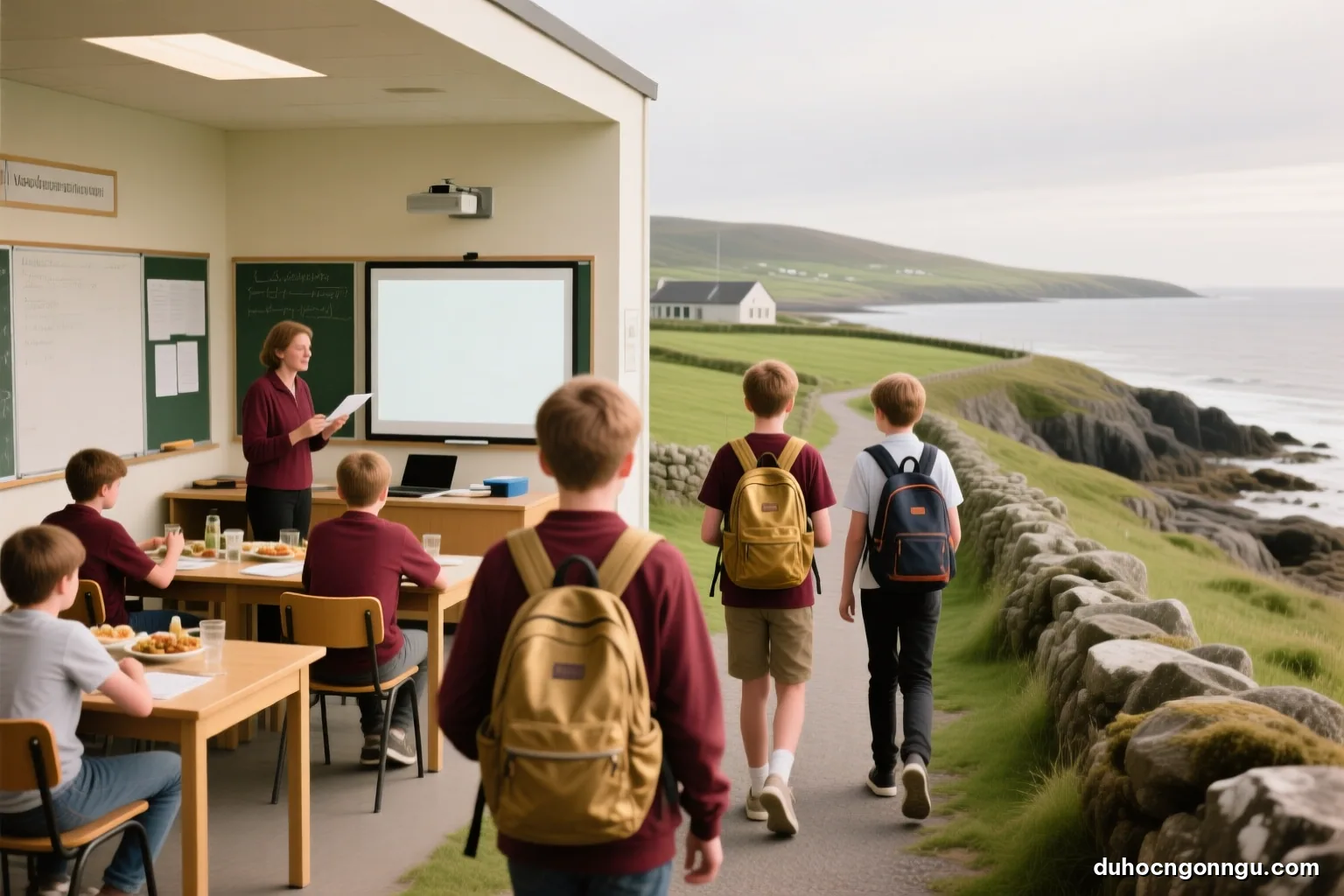
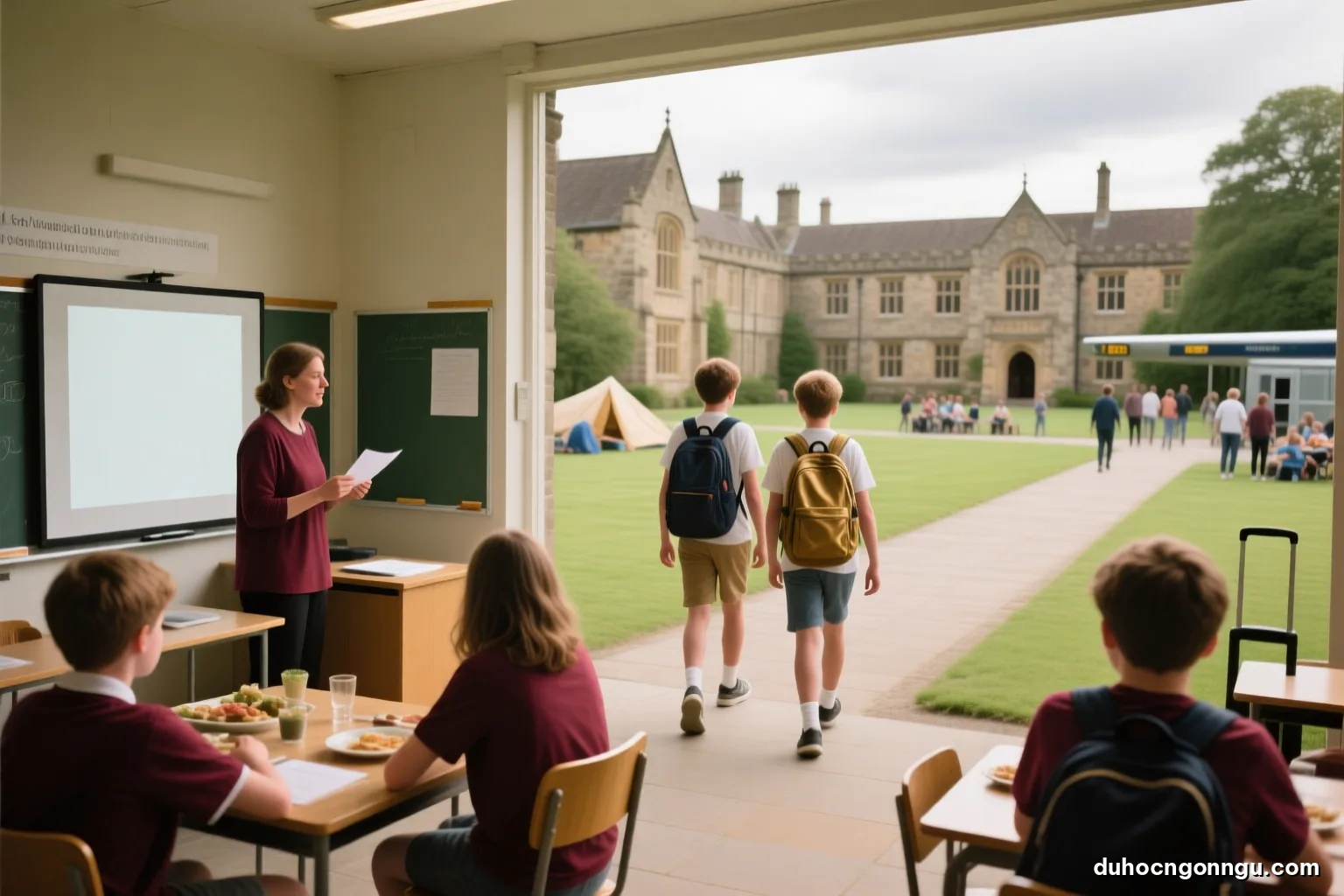
| Residential summer junior course | About 8–17, depending on the school | Boarding school or university residences, on campus | Your child is travelling alone for the first time and the family needs close supervision |
| Junior course with homestay | Usually from 12–13 upwards | A local family's home, travelling to school by bus or on foot with guidance | Your child is already independent and wants to hear and speak English within a family |
| Adult classes | Usually from 16 or 18 | Homestay, shared student houses, self-arranged accommodation | Older students, university students, working people |
| Studying in the teacher's home | Depends on the teacher; some accept young children travelling with a parent | Living and studying in the teacher's home | One-to-one tuition is needed for a very specific goal |
Residential junior courses usually include lessons in the morning, activities in the afternoon, evening entertainment and one or two full-day excursions a week. The balance of study and leisure varies a lot; the "number of lessons per week" is something to ask for in writing, together with the length of each lesson.
Things about life in the UK to tell your child beforehand
A few small differences that can throw Vietnamese students in their first week in the UK:
- Summer weather changes during the day, with drizzle followed by sunshine; a light waterproof jacket is more useful than an umbrella.
- Traffic drives on the left. When crossing the road, children used to looking left first, as in Vietnam, can easily look the wrong way.
- Sockets have three flat pins, a different type from Vietnam; bring an adapter.
- Dinner in British families is usually early, around 6–7 pm, and many people have a light lunch of sandwiches.
- Thank you, sorry and please are used a great deal in everyday communication; leaving them out can easily come across as rude even when that is not intended.
- On junior courses, curfews and rules on leaving the premises are very strict; breaking them can lead to being sent home under the school's terms.
These things sound trivial, but a child who knows them in advance will feel less awkward and more willing to speak up in the first few days, which is exactly the most important time on a short course.
A preparation timeline for a summer course in the UK
Summer junior courses in the UK fill up early, and visas take time to process. A sensible countdown from the course start date looks like this:
- About 6 months before: shortlist two or three schools, check their accreditation, compare the real number of lessons per week and read the refund terms. Ask what types of accommodation are still available for your child's age.
- About 4–5 months before: book a place and receive a confirmation of enrolment stating the course dates, accommodation, transfer service and supervision. Check that your child's passport is valid long enough for the whole trip.
- About 3 months before: prepare the parents' consent letter, birth certificate and financial documents, then submit the visa application online and book a biometrics appointment. Apply early so there is time to deal with any request for further documents.
- About 1–2 months before: buy travel insurance with suitable medical cover, book flights once the visa has been issued, and send the school the flight details so the transfer can be arranged.
- The last two weeks: take the online placement test if the school has one, pack a plug adapter, and agree with your child on times to call home and how to get in touch in an emergency.
Booking flights before the visa arrives is a habit many families fall into for fear of fares going up. If the visa is delayed or refused, the cost of changing the tickets can be more than the saving.
When to think about a Short-term study visa
The Short-term study visa is a separate visa for people aged 16 and over who want to take an English course longer than 6 months, up to a maximum of 11 months. It suits students who have just finished secondary school or university students who want to take a break to study English seriously before university, or working people taking a long break.
This visa also does not allow work, cannot be extended and cannot be switched to a long-term student visa from inside the UK. Applicants must show funds for both tuition and living costs for the whole stay, and the course must be provided by an accredited institution. For a 16- or 17-year-old, the application must also include the care arrangements required for the visitor visa.
Most families with children aged 8–15 will not need this visa; their summer courses fit within the visitor visa. It is mentioned mainly so that parents of older students know there is a route to longer English study without enrolling in a formal programme, and so that nobody advises your child to "just go on a visitor visa and sort it out later".
Frequently asked questions
Can a 10-year-old go to a summer course in the UK alone?
Many residential junior schools accept students from about 8–10 years old, with an airport pick-up service and supervision day and night. Airlines also offer an unaccompanied minor service with their own age rules. Your child's visa application needs to show these arrangements clearly, together with the parents' consent letter.
How can I tell whether a UK school is accredited by Accreditation UK?
Search for the school on the British Council's accredited centre search page and check the centre's address and the scope of its courses. If your child is under 18, ask the school directly whether the junior course is within the scope of the accreditation. Do not rely only on the logo in the brochure.
If my child already has a Schengen visa, can they study in the UK?
No. The UK is not part of the Schengen area and has its own visa system. Vietnamese citizens need a separate UK visa for that trip, even if they hold a valid Schengen visa. Conversely, a UK visa cannot be used to enter France, Italy or Malta.
Do English courses in the UK give a certificate?
Schools usually issue a certificate of completion stating the length of study and an estimated CEFR level based on internal tests. This is not an international certificate. If your child wants a widely recognised result, they need to sit a separate exam such as the Cambridge exams.
Should my child study in London or a smaller city?
London has many museums and activities, but it is big, getting around takes time and there are many international students. University cities and coastal towns are usually quieter, and junior courses are often based there. For young students, the distance from accommodation to class and the level of supervision matter more than the name of the city.
If the visitor visa is refused, do we lose the course fees?
It depends on the school's terms. Many schools refund most of the fees if the family sends the visa refusal letter within the stated time, but may keep the registration fee or bank transfer charges. Read the refund section in the contract before paying, not just in the brochure.