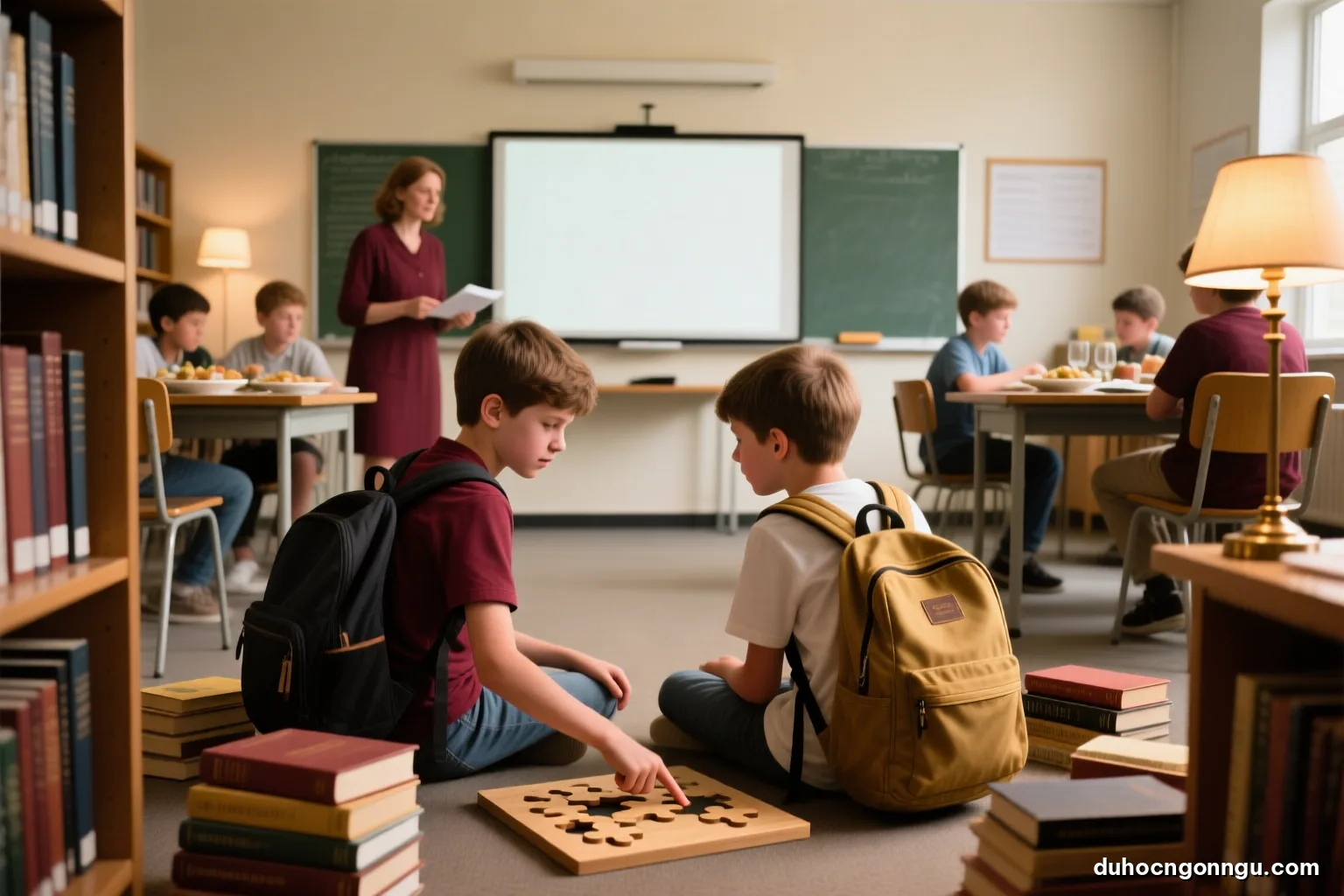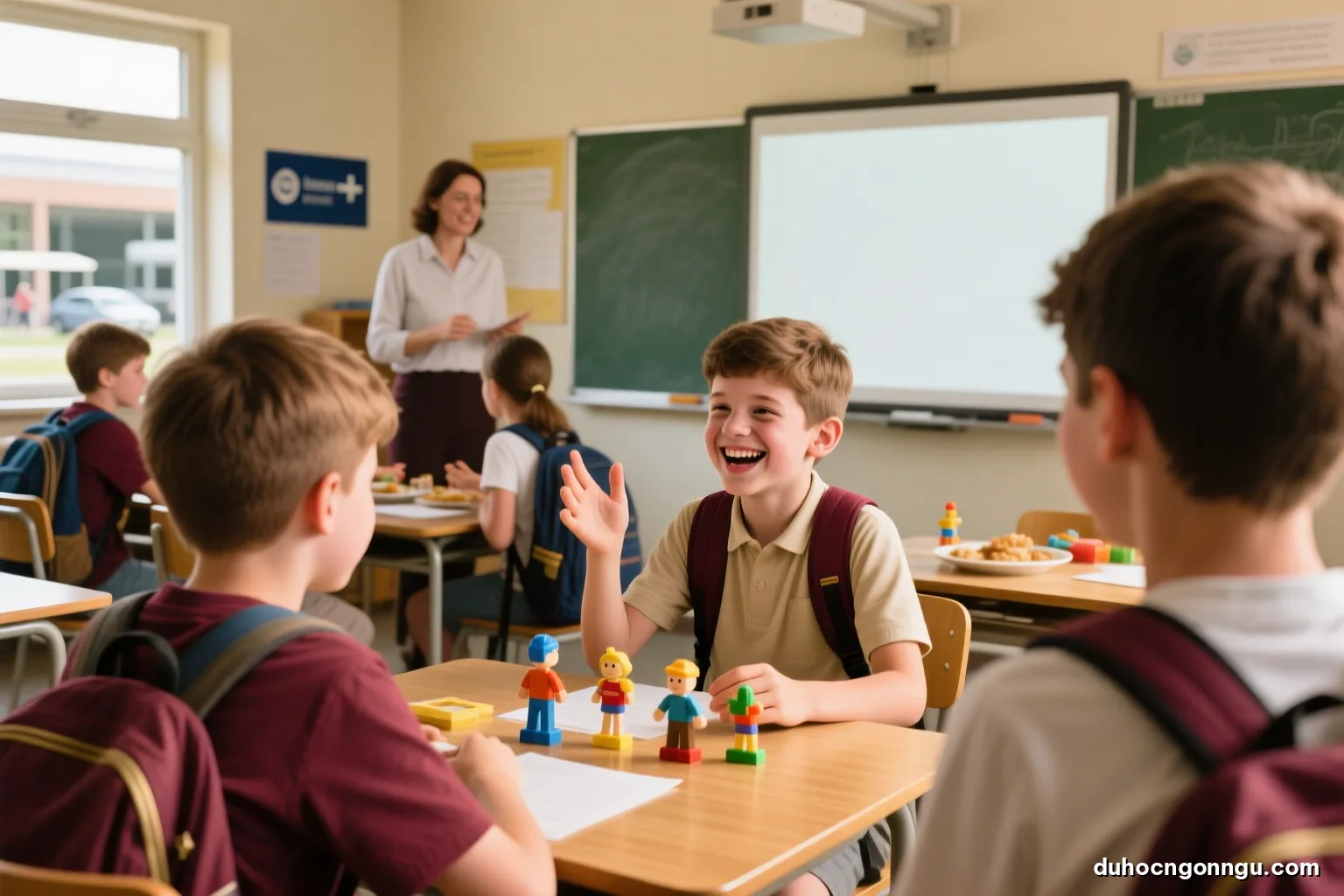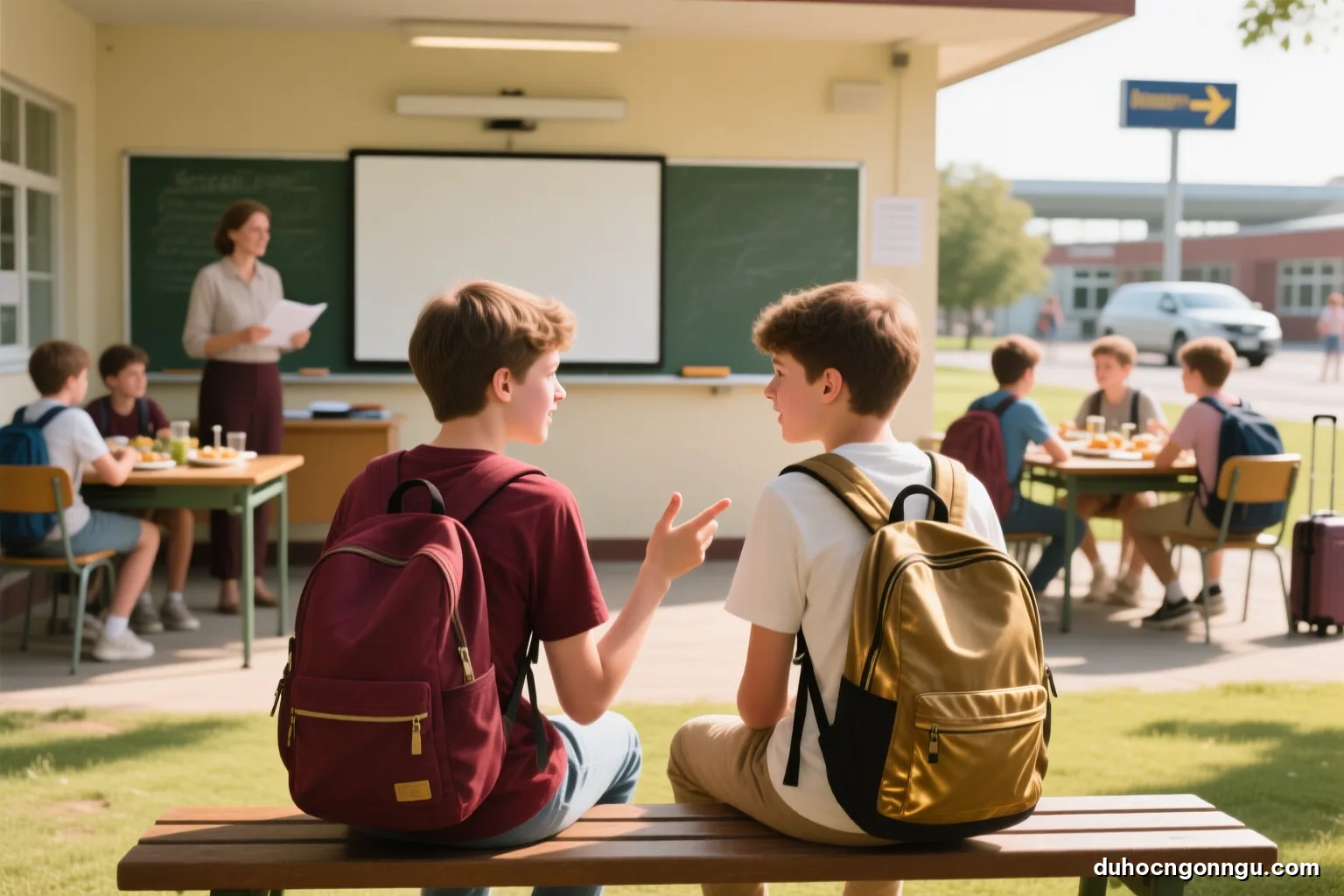
Many students aged 11–17 understand English quite well but do not dare to speak because of a kind of anxiety specific to learning a foreign language: fear of making mistakes, fear of being judged, fear of not being able to express who they are in a language that is still young. This phenomenon has been measured and studied since 1986, and the teenage years, with their heightened sensitivity about self-image in front of peers, are when it is most likely to appear.
Anxiety is not a lack of ability, and it does not simply disappear as level rises. Research shows it can be eased gradually by changing the speaking environment, the way mistakes are corrected and the way learners see themselves in that language. This article presents the three main theoretical frameworks, what is particular about the teenage years, and concrete things parents can do before, during and after a language course.
Horwitz 1986: foreign language anxiety is its own kind of anxiety
In 1986, Elaine Horwitz, Michael Horwitz and Joann Cope published "Foreign Language Classroom Anxiety" in The Modern Language Journal. The paper argued that anxiety in the language classroom is not just general anxiety or test anxiety carried over, but a distinct phenomenon tied to the experience of having to communicate in a language you have not yet mastered. With it came a 33-item scale, known as the FLCAS, later used in a great many studies in many countries.
The authors described three components: communication apprehension, that is, fear of speaking and of not understanding others; fear of negative evaluation by teachers and classmates; and test anxiety. What makes foreign language anxiety different from other anxieties is that learners are put in a position of having to present themselves with a limited tool: a bright student who speaks fluent Vietnamese suddenly feels like a small child when speaking English.
Peter MacIntyre and Robert Gardner, in studies in the early 1990s, showed that foreign language anxiety is linked to poorer results at several stages: taking in information, processing it and producing speech. Anxious learners remember fewer words in tests, speak in shorter turns and are less willing to try new structures. The relationship runs both ways: anxiety leads to poorer learning, and poorer results in turn increase anxiety.
Why teenagers are more prone to anxiety when speaking a foreign language
Not every teenager is anxious, but some developmental features make this age group more sensitive. Developmental psychology describes several points:
- The imaginary audience: in 1967 the psychologist David Elkind described teenagers' tendency to feel that everyone is watching and judging them. With that feeling, making a mistake in front of the class weighs far more heavily than it would for an eight-year-old.
- An identity still forming: at this age your child is building an image of who they are. Speaking a language in which they "don't sound like themselves", cannot joke and cannot show their personality can bother them more than it bothers an adult who is settled.
- Peer pressure: in a group from back home, trying to speak the foreign language may be seen as "showing off", so your child chooses to stay quiet or switch back to Vietnamese. In an international group, on the other hand, fear of being looked down on by foreign classmates can make them withdraw.
- Earlier learning experiences: being corrected in front of the class, or having every spoken sentence marked, can leave a lasting mark. Many anxious students recall one specific memory of this kind.
These features explain why children aged 8–10 are often bolder about speaking in the first few days in a new environment, while students aged 13–15 may stay silent longer even though they understand more. It is not a difference in ability but a difference in how it feels to be seen.
Willingness to communicate: why knowing is not the same as speaking
The concept. In 1998, Peter MacIntyre, Richard Clément, Zoltán Dörnyei and Kimberly Noels proposed in The Modern Language Journal a model of willingness to communicate in a second language (WTC), drawn as a pyramid of several layers. The main idea: whether someone opens their mouth at a given moment depends on many overlapping factors, from personality and motivation to the situation at that very moment.
The situational layer. At the top of the pyramid are immediate factors: wanting to talk to this particular person, and feeling confident in this particular situation. The same student may be happy to talk to a roommate but not dare ask the teacher, or the other way round.
The base layer. At the bottom of the pyramid are long-term factors: personality, relations between groups, attitudes to the community that speaks the language. These change slowly but affect every situation.
What it means in practice. The model shows that raising your child's level alone is not enough to make them speak more. They also need more situations where they feel safe and have a reason to want to speak. Research on study abroad often finds that willingness to communicate rises after the trip, together with the confidence that comes from having spoken successfully.
Motivation: from integration to the ideal self
Robert Gardner, in the socio-educational model he set out in full in 1985, distinguished integrative motivation, wanting to be close to the community that speaks the language, from instrumental motivation, learning to pass exams or get a job. This model drew heavily on the Canadian context, where learners of French or English live alongside the community that speaks the other language. With English as a global language, the idea of "integrating into which community" becomes hard to pin down.
In 2005, Zoltán Dörnyei proposed the L2 Motivational Self System, with three components: the ideal L2 self, the image of the person you want to become, using the language confidently; the ought-to L2 self, what other people expect you to achieve; and the L2 learning experience, how you feel about the class, the teacher and your classmates. Studies using this model in many Asian countries often find that the ideal self is more strongly linked to learning effort than the ought-to self.
This matters for parents: a language trip has motivational value when it helps your child picture more clearly their own future self using the language, as a student who asks for directions on their own, makes friends with foreign classmates, presents in front of an international class. If, on the other hand, the trip only adds another layer of expectation along the lines of "it cost a lot, so you had better be good", it easily pushes up the ought-to self and increases anxiety.
Before, during and after the trip: things that reduce anxiety
Research on anxiety and willingness to communicate suggests some concrete steps. The table below is arranged by timing, with the reasons drawn from the frameworks above.
| When | What to do | Why |
|---|---|---|
| Before the trip | Practise short, predictable situations: introducing yourself, asking the way, ordering food, asking for help | Having a ready script reduces communication apprehension and increases situational confidence |
| Before the trip | Talk about how everyone makes mistakes when learning, and share your own learning experiences as a parent | Reduces fear of being judged and makes mistakes normal |
| Before the trip | Avoid setting expectations in terms of marks or "come back speaking like a native" | Reduces pressure from the ought-to self |
| During the trip | Ask your child what they managed to do, not only what they have not yet managed | Builds experiences of success and feeds the ideal self |
| During the trip | Suggest your child starts with a small group or one friend before speaking in front of many people | Willingness to communicate grows first in safe situations |
| After the trip | Create chances for your child to keep speaking, such as calling international friends or joining a club | Keeps the feeling of "I am someone who speaks this language" |
Parents can also ask the organiser how teachers handle quiet students: are students given time to prepare before speaking, are there small group activities, do teachers avoid harsh correction in front of the class? The answers show whether the programme takes anxiety into account.
Enjoyment and a positive turn in recent research
From around 2014, Jean-Marc Dewaele and Peter MacIntyre extended research to foreign language enjoyment, part of the positive psychology movement in the field. One of their key observations: enjoyment and anxiety are not two ends of a single scale; a student can be both anxious and enjoying themselves in the same class. Factors linked to enjoyment are usually a friendly teacher, sincere praise, creative activities and a feeling of being respected in the group.
This opens up a different approach: instead of only trying to reduce anxiety, you can increase enjoyment. Activities that make your child laugh, feel curious or feel proud, such as games, group projects and excursions with tasks, can help them speak more even if the anxiety has not gone away. This is also why many language programmes for teenagers combine classes with outdoor activities and projects.
One limit to bear in mind: most research on anxiety and enjoyment relies on self-report questionnaires, so it measures how students feel rather than measuring behaviour directly. If your child shows severe, lasting anxiety that affects eating, sleeping and daily life in many areas, not just language learning, that is something to discuss with a psychologist, not simply a language-learning issue.
In the classroom: what teachers do to reduce anxiety
Many suggestions from research on foreign language anxiety and enjoyment are concrete classroom practices. Parents can use this list to ask the organiser, or to ask their child about their class:
- Wait time: after asking a question, the teacher waits a few seconds before calling on someone, instead of immediately picking the first hand up. Slower students get time to think of an answer.
- Rehearsing in pairs: students discuss with the person next to them before sharing with the whole class. An answer that has already been tried out once is less frightening.
- Private or general correction: common errors are noted by the teacher and reviewed with the whole class after the activity, without being tied to one student's name.
- Class agreements: no laughing when someone makes a mistake, encouragement for those who try. Clear agreements reduce fear of being judged by classmates.
- Many ways to take part: not always speaking in front of the class; sometimes writing, drawing or role-playing in a small group. Anxious students have a way in before they have to speak in front of many people.
These practices do not make the class easier; they make trial and error less costly emotionally. From the perspective of Horwitz and MacIntyre, that is exactly the condition anxious students need in order to speak more.
Frequently asked questions
My child understands everything but refuses to speak. Should we switch classes?
First look at the reason: is the class too big, does the teacher correct harshly, or is your child in a phase of listening before speaking? If the class has no small group activities, or your child talks about being criticised in front of the class, moving to a class with a safer atmosphere usually helps.
Will foreign language anxiety go away by itself as my child gets better?
Partly, because there are more experiences of success. But research shows that even advanced learners can be anxious, especially in new situations such as presentations or interviews. Level and anxiety affect each other, so both need attention.
Do introverted children learn languages less well?
Not necessarily. Introverts may start conversations less often, but they usually listen carefully, read a lot and speak with preparation. Small group settings with time to prepare tend to suit them better than large classes that demand quick reactions in front of everyone.
Should my child go with a close friend to feel less anxious?
Going with a close friend makes your child feel more secure, especially the first time away from home. But the two can easily speak Vietnamese to each other the whole time. One way to balance this is to agree with your child beforehand on separate rooms, separate classes and meeting up at set times.
How can I tell whether a course takes anxious students into account?
Ask about class size, whether there are pair and group activities, how teachers correct spoken mistakes, and whether there is a counsellor or someone responsible for students. A good programme usually has specific answers, and has someone who looks after each student outside class.
How should I praise my child without adding pressure?
Praise specific effort and specific achievements, such as "you asked for directions by yourself", rather than general praise like "you're so clever". This kind of praise helps your child see their progress through what they did, and does not add an expectation that they must always be good.