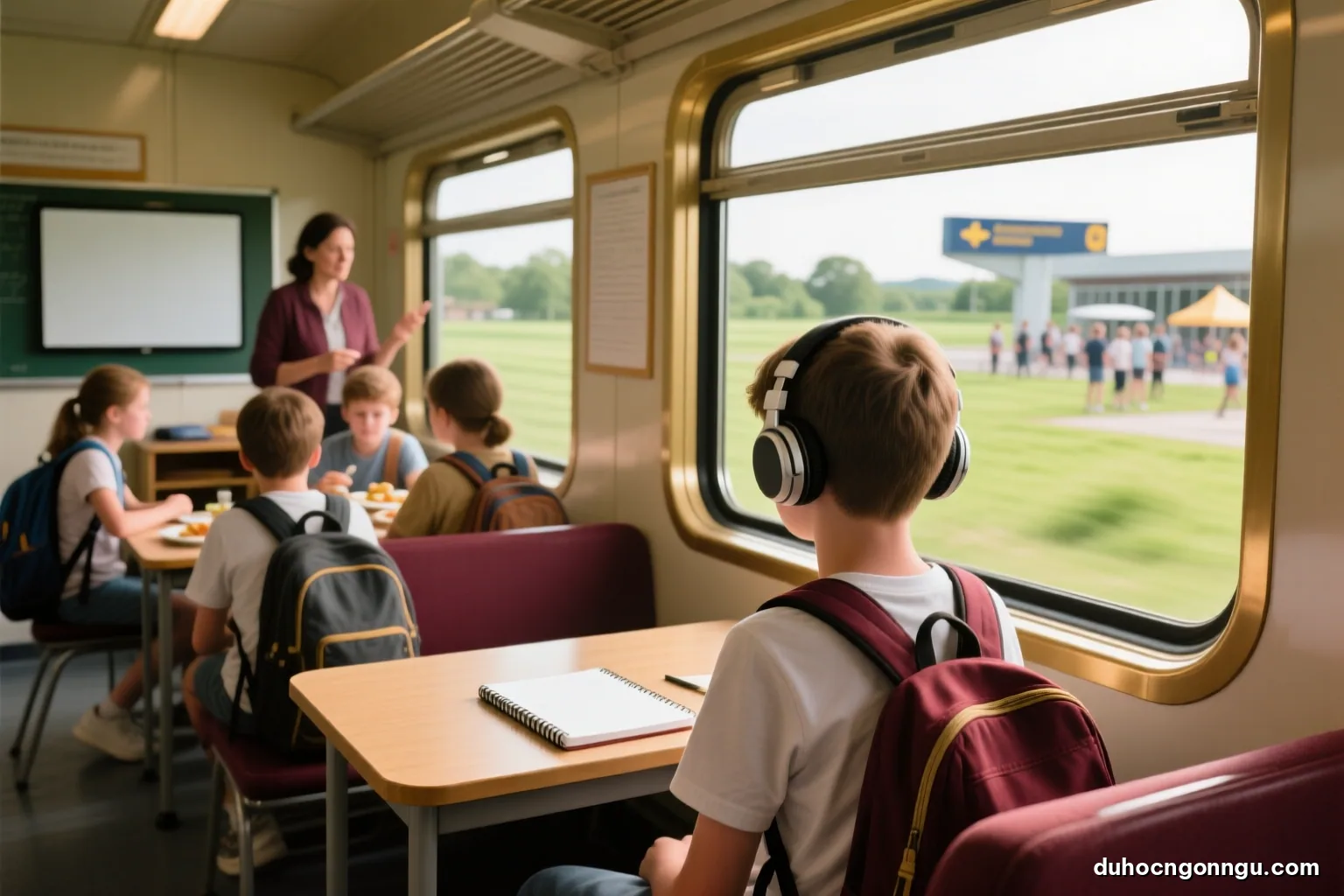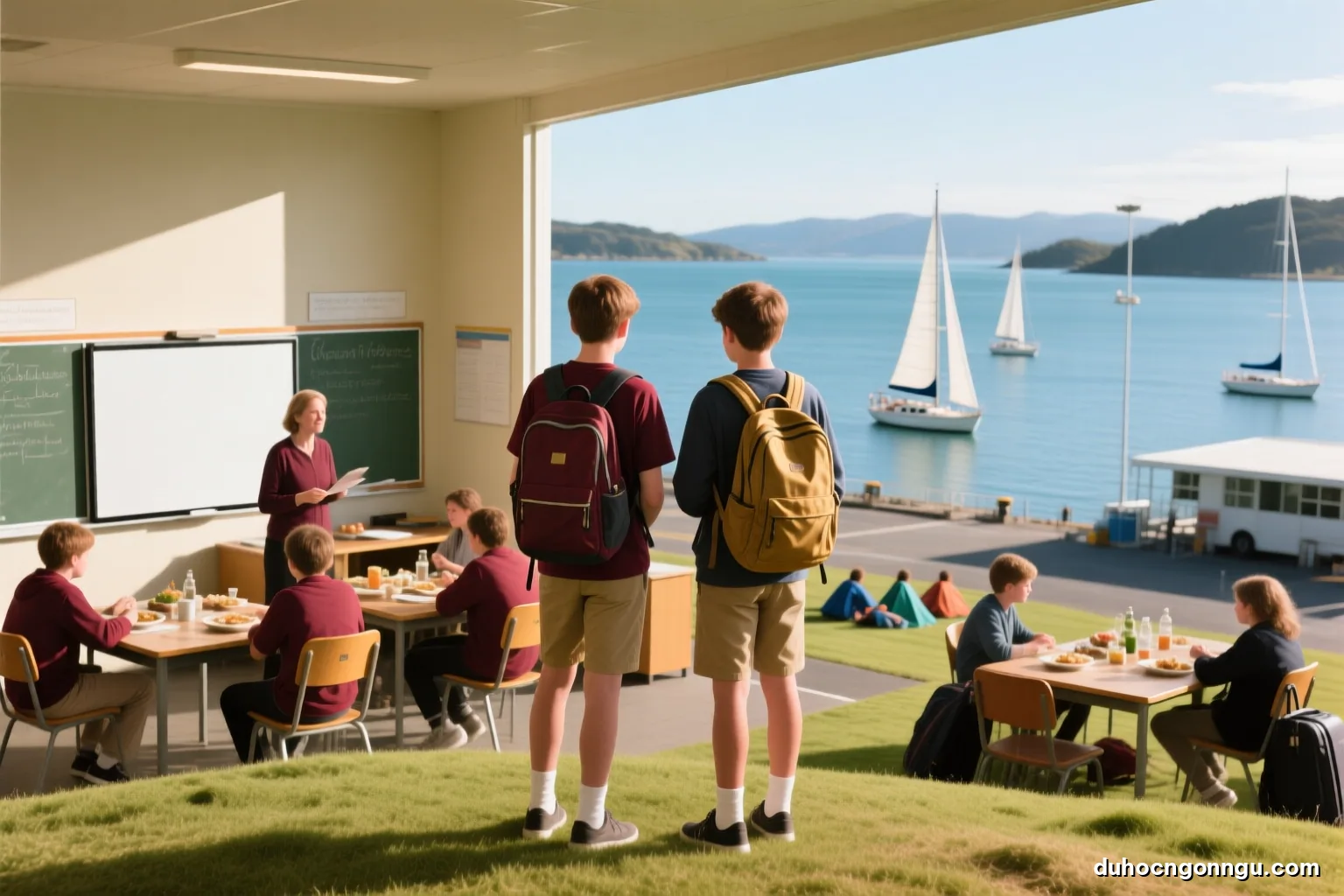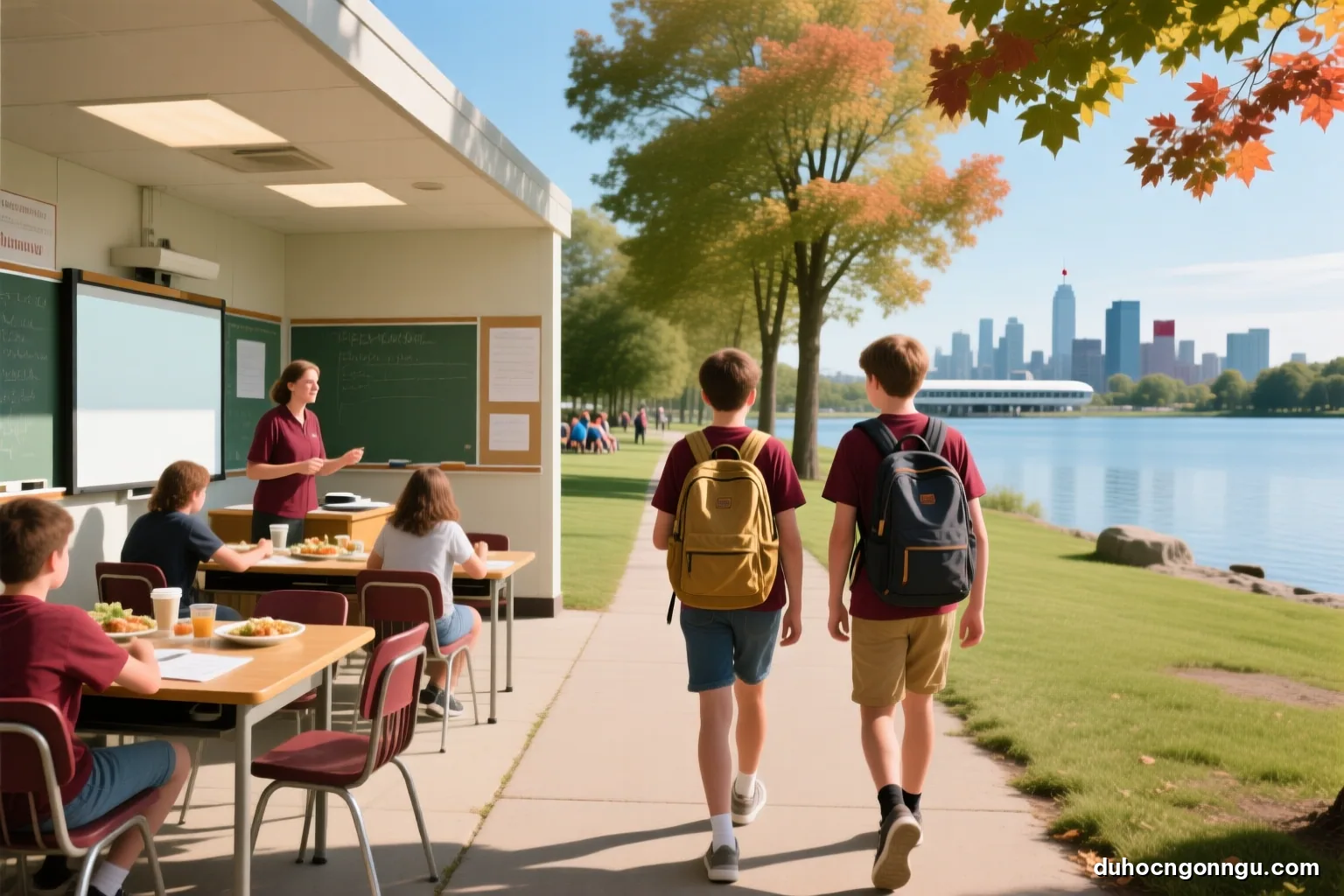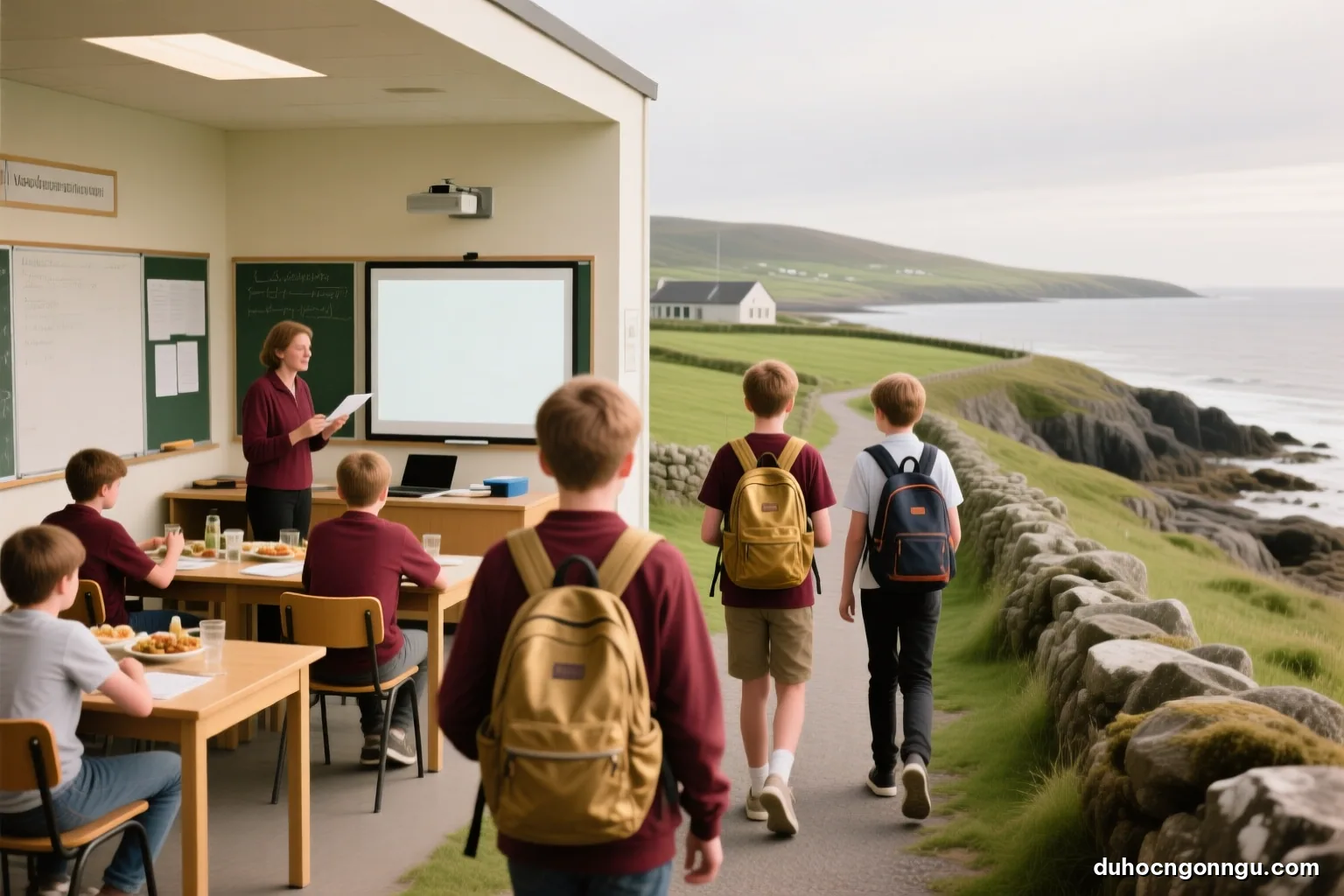
Most English schools in the UK, Ireland, Malta, the US, Canada, Australia and New Zealand divide students into two systems: junior courses for minors, usually accepting students from around 8–10 up to 17, and adult classes, usually accepting students from 16 or 18. The exact limits are set by each school, but the reason for setting them is the same: the duty of care for minors under the law of the host country.
The 16–17 overlap is where parents hesitate most: your child may be accepted into either system, and each has its own advantages. This article explains why age limits exist, how the two systems differ inside and outside class, how to choose at 16–17, and what options remain for children below the minimum age.
Common age limits
The table below shows the limits commonly found in school materials in English-speaking countries. These are not national rules; each school publishes its own limits, which may vary by course:
| System | Ages usually accepted | Usual accommodation | Notes |
|---|---|---|---|
| Junior residential | About 8–17; some schools only from 10 or 12 | Residence on campus | Mostly in summer, 24-hour supervision |
| Junior homestay | About 12–17 | Host family | Escorted travel, or taught to travel independently |
| Adult classes | From 16 at many schools, from 18 at some | Homestay, shared house, independent rental | Year-round, start on any week |
| Family course | Young children travelling with parents | Apartment or homestay for the whole family | Children take junior classes; parents take adult classes or do not study |
| Study in a teacher's home | Depends on the teacher | Living in the teacher's home | One-to-one lessons; some accept children accompanied by a parent |
When comparing two schools, do not compare only the minimum age. Also ask how the school groups junior classes by age, because a class with both 10-year-olds and 16-year-olds is hard for both ends.
Why schools set age limits
In English-speaking countries, organisations that take in minors must comply with laws and guidance on child protection: background checks on staff and on adults in the accommodation, a designated safeguarding lead, a procedure for reporting concerns, and rules on supervision during activities and at night. Accreditation bodies for language schools, such as Accreditation UK in the UK, or New Zealand's code of pastoral care for international learners, also have specific criteria for students under 18.
These requirements cost staff time and money. That is why many schools completely separate junior courses, where the whole system is designed for children, from adult classes, where students are responsible for their own travel and schedule. Schools without a system for caring for minors set the limit at 18 so they do not have to accept students they are not equipped to look after.
The age of majority is also not the same everywhere. Most of these countries use 18, but some Canadian provinces use 19. An 18-year-old student in those provinces may still have the school's rules for minors applied to them. Ask the school which age they use for your child's course.
In class: how junior courses and adult classes differ
Lesson topics. Junior classes revolve around school, hobbies, friends, the environment and group projects; adult classes add work, travel, the news and negotiation. A 16-year-old in an adult class may find the topics unfamiliar, but may also enjoy being treated as an adult.
Teaching style. Junior classes use lots of games, movement and projects with an end product, and switch activities quickly to hold attention. Adult classes spend more time on discussion, reading and writing, and students are expected to study on their own as well.
Who is in the class. Summer junior classes usually have many students of the same age from many countries. Adult classes have university students, working people and retirees, with very different ages and goals; a 16-year-old is sometimes the youngest in the class.
Testing and reporting. Junior courses usually send parents comments at the end of the course; some also send mid-course comments. Adult classes report results to the students themselves; parents only receive them if the student agrees or the school has a separate arrangement for minor students.
Discipline. Junior courses have strict rules on phones in class, lateness and absence. Adult classes record attendance but intervene less, unless visa conditions require a minimum attendance rate.
Outside class: the biggest difference
The clearest difference between the two systems lies outside class hours. Junior courses come with an all-inclusive programme: afternoon activities, evening activities and weekend excursions, all supervised. Students have almost no time when nobody knows where they are. The time for returning to their room or home is set and checked.
Adult classes are the opposite: once lessons end, students are free. The school may organise social activities for those who want to join, but nobody takes a register in the evening. Students travel on their own, sort out their own lunch and plan their own weekends. For a twenty-year-old, that freedom is valuable; for a 16-year-old abroad for the first time, it may be too much.
Many schools handle the 16–17 range by letting students join adult classes while still applying some rules for minors outside class: a curfew, mandatory school-arranged homestay, and parental consent for each activity outside the city. Ask clearly whether the school applies rules like these, because they decide how much freedom your child will have.
Students aged 16–17: which system to choose
For students in the overlap, work through the following questions in order:
- Has your child ever travelled away from home alone? If this is the first time, a junior course gives your child a safety net and a ready-made daily rhythm. If your child has been to camps or studied away from home, adult classes may suit them better.
- What is your child's level of English? Students at upper-intermediate level and above often find summer junior classes slow and full of games; adult classes at the matching level offer more real discussion.
- When is your child going? Outside summer, junior courses usually do not run; for other months, adult classes are almost the only option.
- Does your child have a specific academic goal? If your child is preparing for an exam, exam preparation classes usually exist only in the adult system and accept students from 16.
- What rules does the school apply to under-18s in adult classes? Ask for them in writing. If the school has no rules at all, think carefully or choose another school.
There is no right choice for every 16-year-old. Some do better with the conditional freedom of adult classes; others need a junior summer to get used to things first. Involve your child in the decision and explain the reasons for each option.
Reading a school's age policy: five things to check
The date on which age is counted. Some schools count age on the course start date, others on the arrival date. A student who turns 16 in the middle of a course may be placed in the junior system for the whole course. Ask clearly so the schedule does not come as a surprise.
Whether exceptions are in writing. Some schools accept students below the minimum age if they come with an older sibling or have a high level. An exception like this needs to be written into the confirmation letter, because visa applications and insurance are based on documents, not on promises made over the phone.
Who signs the consent forms. Schools usually have separate consent forms for students under 18: permission to go out, to take part in water activities, for first aid and for photography. Read each item before signing; do not sign everything at once just to get it done.
Whether accommodation is compulsory by age. Many schools require students under 18 to stay in a homestay or the school's residence, and do not allow independent rentals. If your child plans to stay with relatives, ask whether the school accepts this and what documents it needs from those relatives.
Responsibility when your child breaks the rules. Read the disciplinary section: which breaches lead to a warning, which lead to being sent home, and who pays for the changed flight. Teenage students are most often caught out here, so read it together with your child.
Below the minimum age: the remaining options
Children under 8–10 are very rarely accepted on junior courses travelling alone. If the family still wants their child to experience English in an English-speaking country, there are the following options:
- Family courses: the whole family goes; the child takes junior or young learner classes for a few hours a day, and the parents take adult classes or relax. The two classes' timetables should coincide to make drop-off and pick-up easy.
- Courses with a parent accompanying: one adult goes along and rents accommodation near the school, and the child attends a day course. The parent is fully responsible outside class.
- Studying in a teacher's home for the whole family: some teachers take in families to live with them and teach the child, sometimes the parents as well. This is very flexible but depends entirely on one person, so check carefully.
- Day camps for local children: in some countries, international children travelling with their families can register for a local summer day camp. This is not an English class, but it is a real English-speaking environment with local children; check whether the camp accepts children who are not yet fluent.
For young children, a reasonable goal for a trip is familiarity and enjoyment, not a particular level. A few weeks of hearing English while playing with local children can leave more behind than a course packed with hours.
Frequently asked questions
Can a 9-year-old go alone on a junior residential course abroad?
Some junior residential courses accept children from 8 or 9, with an airport transfer service and 24-hour supervision. The more important question is whether your child is ready: can they manage their own personal hygiene, sleep in an unfamiliar place and be away from their parents for a few weeks? If you are not sure, a family course is a safer stepping stone.
Will a 17-year-old in an adult class be managed like a child by the school?
It depends on the school. Many schools apply some of their rules for under-18s, such as a curfew, school-arranged accommodation and parental consent forms. Some apply fewer. Ask in writing before enrolling so that both your child and the family know the limits.
Are there courses where 13-year-olds study with older students?
Junior courses often combine several ages in the same programme but divide classes and activities into age groups, such as 10–13 and 14–17. Ask the school how it groups students, because a gap of a few years at this age makes a big difference to the activities and to friendships.
Can parents receive progress reports if their child is in an adult class?
For students under 18, many schools send reports to parents or allow parents to contact them. For students aged 18 and over, schools usually communicate only with the student, in line with personal data rules. Agree on this beforehand with the school and with your child.
Does a family course take more preparation than a junior course?
Yes, because the whole family applies for visas, finds suitable accommodation and arranges the parents' schedules. In return, the parents look after their child directly and do not depend on the school's supervision outside class. Many families find this a sensible approach for a first trip with a child under 10.
Should we enrol at a school that does not state a minimum age?
If the materials do not state the accepted ages, ask the school directly whether it has a system for caring for students under 18 and a designated safeguarding lead. A school that cannot answer these questions probably does not have a suitable programme for minors.