Before the flight, the family should agree with their child on four things about staying in touch: which device they take, how they connect at the destination, what time and how often they call home, and the safety rules for using the internet. Agreeing early avoids three common situations: a surprise roaming bill, a child losing sleep by calling home in the middle of the night local time, and a child getting absorbed in their phone instead of living in the place where they are studying.
This article does not deal with staying in touch during long-term study abroad; it focuses on language courses of a few weeks for children aged 8–17, when the school or camp usually has its own phone rules and when every day at the destination is valuable for learning the language.
The device: which phone to take and what to set up first
An old phone is often better than a new one. A study trip involves lots of outdoor activities and travel, so the risk of dropping, losing or breaking a phone is higher than at home. An old phone in good condition means less worry for the family and less for your child to look after. Check in advance whether the phone works with a SIM or eSIM from the destination country.
For younger children, consider not sending a personal phone. Many camps let children under twelve call home on the supervisor's phone according to a schedule. This reduces lost belongings and helps your child concentrate. If the family still wants their child to have a phone, a simple phone just for calls and messages may be enough.
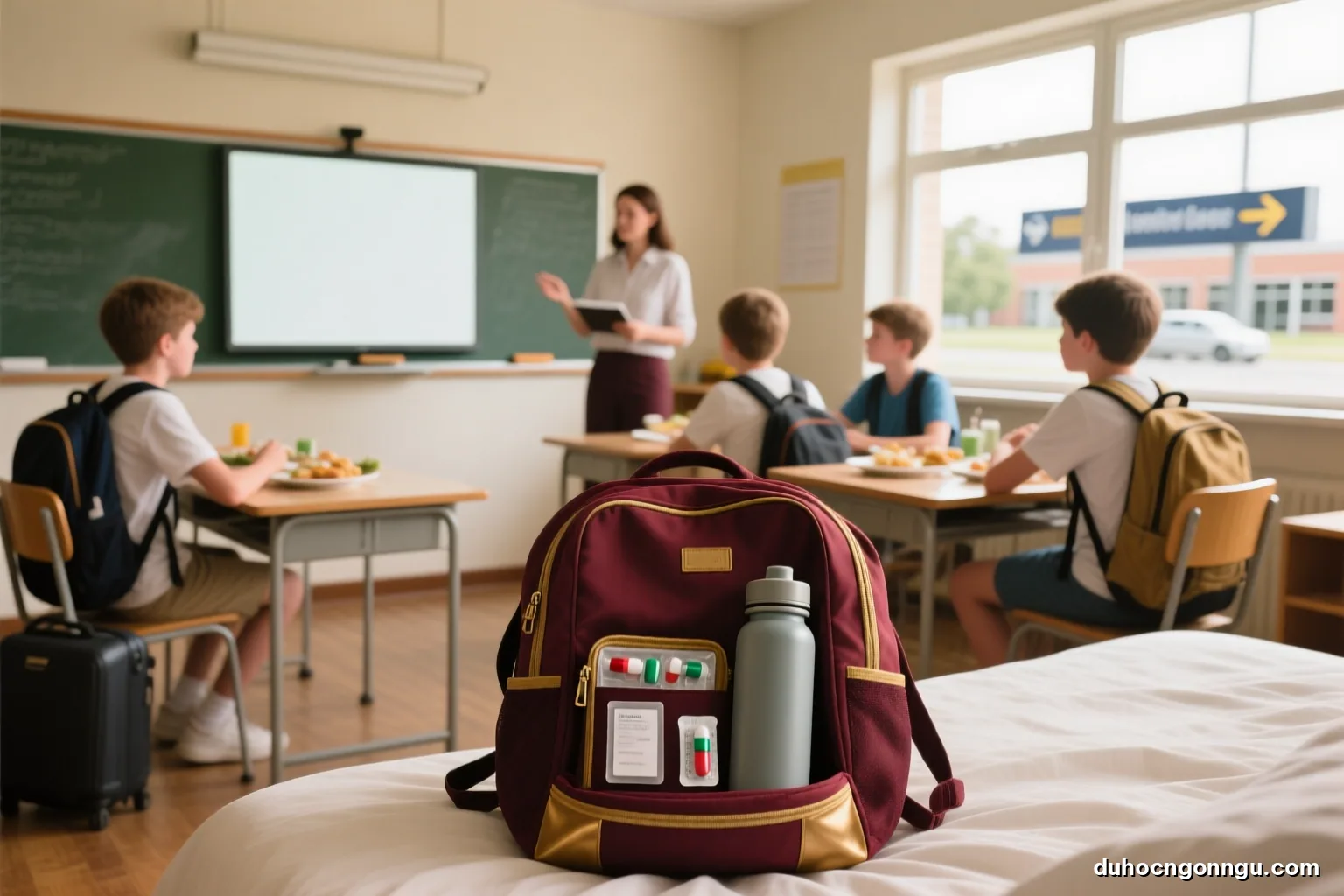
Set things up before departure. Save the numbers of the group leader, the person in charge, the school's emergency line and the insurer. Set a screen lock. Turn on the find-my-device feature. Install the messaging app the family uses and try one call over the internet.
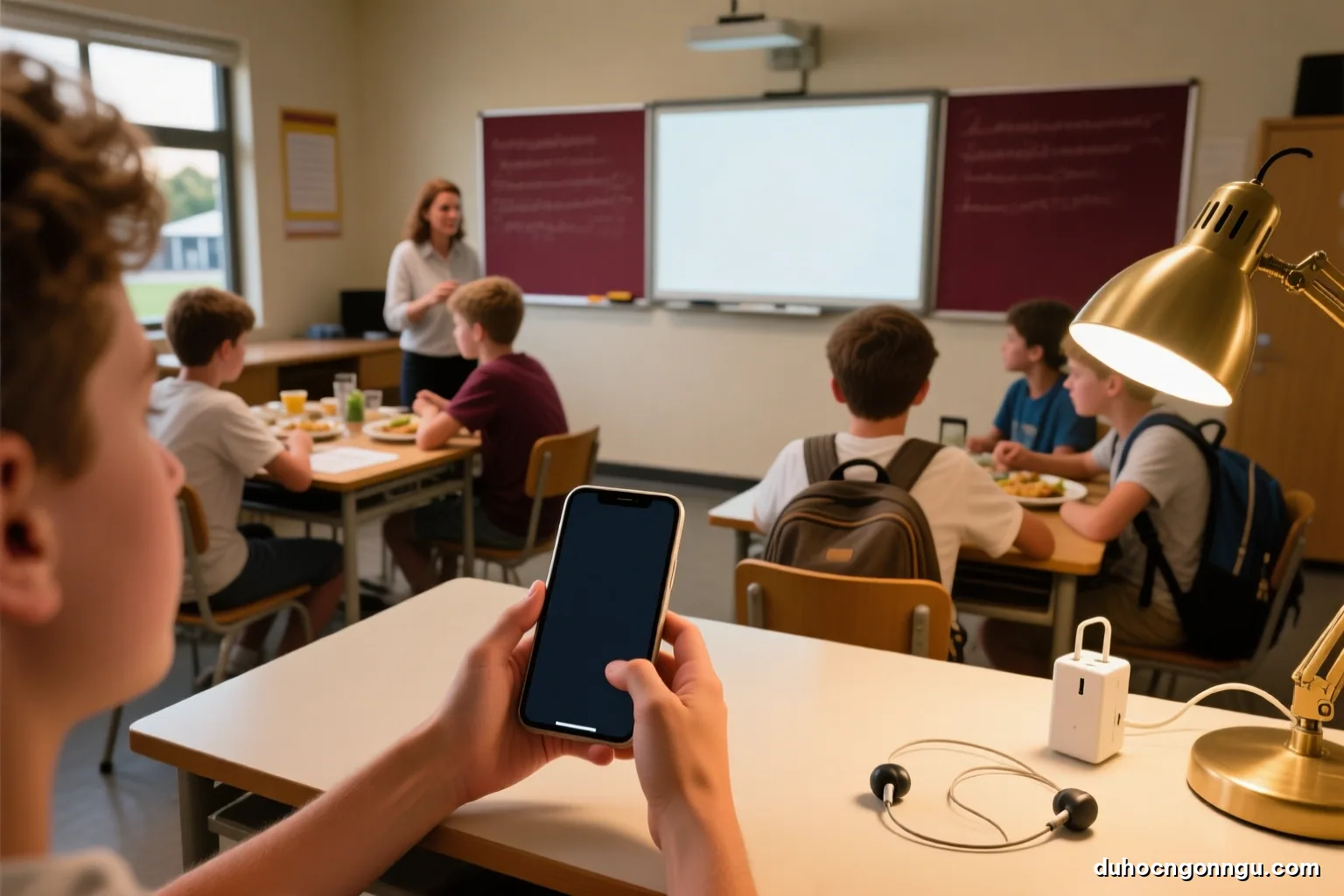
Chargers and sockets. Pack the right plug adaptor for the destination and a small power bank for days out. Power banks must go in hand luggage under airline rules, not in checked suitcases.
Emergency information on the lock screen. Many phones can show medical information and emergency contacts on the lock screen. Fill it in in English: name, allergies, underlying conditions, an adult's number to call. If your child faints or gets lost, a helper can read it without unlocking the phone.
Three ways to connect at the destination
There are three common ways, each suited to a particular situation. Specific prices change by operator and over time, so the comparison is only in principle:
| Option | How it works | Suits | Points to note |
|---|---|---|---|
| International roaming with a Vietnamese operator | Keep the Vietnamese number and sign up for a roaming package before leaving | Very short courses, or when the number is needed to receive the family's bank verification codes | You must sign up for the right package; use outside the package can be expensive. Check the list of supported countries |
| Travel SIM or eSIM bought in advance | Buy a data package for the destination and activate it on landing | Courses of a few weeks, mainly needing data for messaging and internet calls | The phone must support eSIM if you choose eSIM; usually data only, with no local number for calls |
| Local SIM bought at the destination | Buy at the airport or an operator's shop, with a local phone number | Longer courses, when a local number is needed so the school or hosts can call | Some countries require registration with a passport; minors may need an adult to register it |
Whichever you choose, turn off data roaming on the phone until a package is active, and show your child how to connect to the school's wifi. Many programmes have wifi in the accommodation, so your child only needs mobile data when out and about.
Time zones: choosing call times that keep everyone sleeping
Vietnam is on UTC+7 and does not change its clocks by season. Many destinations switch to summer time, so the difference changes over the year. A reference table for summer, when most courses take place:
| Where your child is studying | Difference from Vietnam around June to August | Call window that usually suits both sides |
|---|---|---|
| Philippines | The destination is 1 hour ahead of Vietnam | The evening after lessons, almost the same time as at home |
| United Kingdom, Ireland | Vietnam is 6 hours ahead | Late afternoon or evening at the destination, which is late night in Vietnam; or early morning at the destination, which is early afternoon in Vietnam |
| Malta | Vietnam is 5 hours ahead | Late afternoon at the destination, which is evening in Vietnam |
| East coast of the United States, Canada | Vietnam is 11 hours ahead | Early morning at the destination, which is evening in Vietnam; or evening at the destination, which is early the next morning in Vietnam |
| West coast of the United States, Canada | Vietnam is 14 hours ahead | Evening at the destination, which is the next morning in Vietnam |
| Australia (Sydney, Melbourne) | The destination is 3 hours ahead of Vietnam | Evening at the destination, which is late afternoon in Vietnam |
| New Zealand | The destination is 5 hours ahead of Vietnam | Evening at the destination, which is afternoon in Vietnam |
Australia and New Zealand switch to summer time during the southern hemisphere summer, around the end of the year, so if your child goes on a course in December or January, the difference increases by one hour. Check again for the actual travel dates.
A sensible call rhythm for a course of a few weeks
There is no call rhythm that is right for every family, but a few principles help you choose. First, the schedule must be agreed by both your child and the parents before departure, written down and kept by both sides. A fixed schedule means your child does not have to wait around and parents do not have to worry when their child is quiet outside the schedule.
Second, the arrival day should have a short message confirming they are safe, which can be sent by the group leader or the school, followed by a short call once your child has rested. In the first few days, calls should be shorter and less frequent than parents would like, because this is when your child needs to put their energy into connecting with the new place. From the second week, once your child has settled, many families choose two or three calls a week, with messages and photos in between each day.
Third, what you talk about matters more than how often. Ask your child about a new friend, a new word they have learned, an unusual dish, something that made them laugh; avoid turning calls into homework checks or into hearing about everything they are missing at home. A good call ends while your child still wants to say a little more, not when both of you have run out of things to say.
Fourth, have an emergency channel separate from the call schedule. Your child knows that when something real happens, they can call at any time; parents know that when the school needs to tell them something urgent, it has a number to call. A clear emergency channel lets the everyday call schedule be sparse without anyone feeling uneasy.
Online safety rules to discuss with your child before the trip
Far from home, children are more likely than usual to feel lonely and to trust strangers online. Rules worth agreeing on, explained in a way suited to your child's age:
- Do not post your real-time location, the accommodation address or the school's name on public social media while you are there. Posting photos after you have left is safer.
- Do not take or send photos of roommates or classmates without their permission.
- Do not meet in person anyone you know only online, even someone who says they are a student of the same age.
- Do not send private photos to anyone, and if anyone asks for them or makes threats, tell an adult straight away.
- Do not tap unfamiliar links sent by message, and do not enter passwords on unknown sites.
- If any adult, including someone from the school, messages you privately in a way that makes you uncomfortable, tell the person in charge and your family.
- Respect the school's phone-free times; they are rules with a reason, not a punishment.
On location sharing, many families turn on the phone's location-sharing feature during the trip. With teenagers, make it clear that the purpose is safety, agree with your child when parents will look, and respect their privacy. Secret tracking easily destroys trust, and trust is what makes your child tell you of their own accord when something happens.
Two moments when contact is easily lost: landing and leaving for the airport home
Most cases of parents losing contact with their child for hours fall at two moments: just after landing and on the day of departure. On landing, your child is tired, the phone battery is flat, the SIM is not yet active and airport wifi requires registration, while the family at home has been awake waiting for a long time. On the way home, your child is busy packing and saying goodbye to friends, and then boards the plane forgetting to send a message.
The simple fix is to assign who sends the news in advance. For groups with a group leader, agree that the leader posts in the parents' group at three moments: when the whole group has passed through immigration, when they have reached the accommodation, and when the whole group has boarded the flight home. For a child travelling alone, agree that the person meeting them at the airport or the school office sends a confirmation that they have collected your child, independently of whether your child messages.
Tell your child to charge the phone fully before boarding, keep the charger in their hand luggage, and know that if there is no connection yet, the first thing to do is go with the person meeting them rather than stop to look for wifi. The family should also have the flight number to track the landing time themselves on the airline's website, rather than just waiting for their child's message.
When the school collects phones or limits their use
Many camps and programmes for students under 18 have phone rules: collecting phones at bedtime, banning them during lessons, or only allowing them in an evening time slot. Some language programmes even encourage students not to use their mother tongue for certain periods, and messaging in Vietnamese all day works against that goal.
Many parents' first reaction is worry: what if something happens and my child has no phone? The answer lies in the emergency channel: during the hours your child does not have their phone, they must be able to find the person in charge immediately, and the person in charge must be able to call the family. Ask the school specifically: where are phones kept, who keeps them, and how does your child get theirs back in an emergency?
When those questions have clear answers, phone rules usually benefit your child. They sleep better, pay more attention in class and have more time to talk in the foreign language with international friends, which is exactly what the family is paying for. The family should support these rules in front of their child rather than looking for ways to help them get around them.
Frequently asked questions
Should we buy our child a new phone before the trip?
There is no need, unless the current phone will not work at the destination. An old phone in good condition causes less worry if lost or broken, and your child is not distracted by a new gadget. If a new phone is needed, buy it early so your child gets used to it at home, especially the safety features such as find-my-device and emergency information.
Does our child need a local phone number?
On a course of a few weeks, most contact happens through messaging apps over data or wifi. A local number is useful when the school, hosts or group leader need to reach your child by ordinary call, or when your child needs to call services at the destination. Ask the school whether it needs this number.
How can we stop our child losing their phone?
Tell your child not to leave the phone on tables in public places or hold it carelessly on crowded streets, and to use a lanyard or a bag with a zip. Turn on find-my-device and note down the IMEI number. Be prepared for it to be lost, and keep the important numbers on a piece of paper in their wallet.
Should continuous location sharing apply to a sixteen-year-old?
Many families turn on location sharing for the trip and turn it off on return, with their child's agreement. At sixteen, talking openly about the reasons and limits usually works better than imposing it. The aim is safety when something happens, not monitoring your child's every step.
What should we do if our child is using social media too much during the trip?
Remind them of the agreement made beforehand, and talk about why they are using it so much: are they sad, lonely, or is it just habit? If they are sad or lonely, that is a sign you need to help them connect at the destination, possibly with the help of the person in charge. Avoid threatening to confiscate the phone from a distance, because parents cannot actually do that.
How should the family react if the school reports that our child broke the phone rules?
Listen to the school and to your child, then support the school's response if it is reasonable and set out in the rules. Defending your child in front of the school when they clearly broke the rules will make them take other rules lightly, including safety rules.