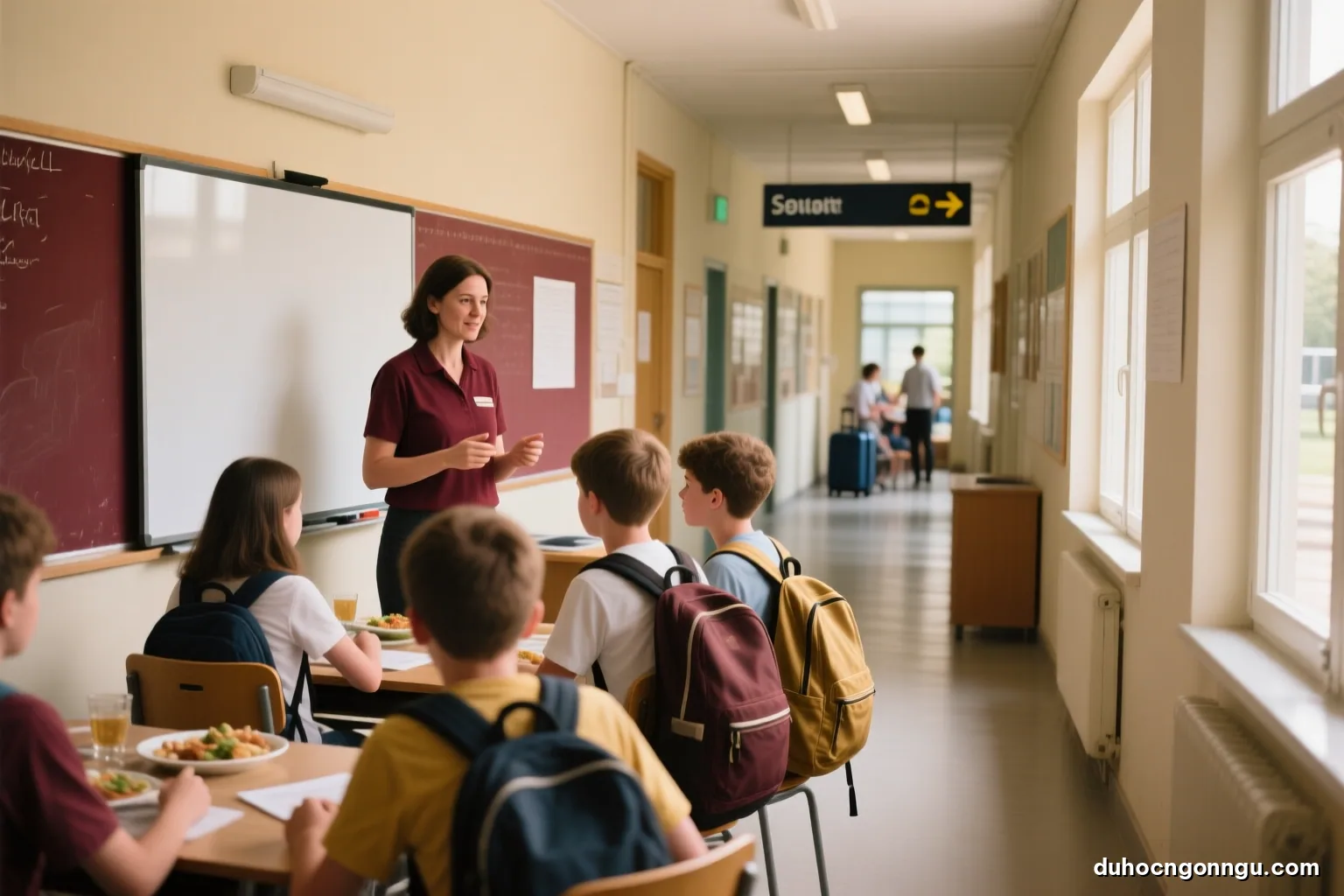
Safeguarding is everything an organisation does to prevent, detect and deal with the risk of harm to the children it is responsible for, from how it recruits people, how it arranges accommodation and the rules on contact between adults and children, to the procedure when abuse or bullying is suspected. In English-speaking countries, schools that take students under 18 are usually required to have a written policy and a named person in charge.
For parents, the safeguarding policy is the document that tells you how the school thinks about your child's safety before anything happens. A policy that is genuinely in operation has a named lead, specific procedures and evidence of staff training; a policy that exists only on paper is usually a few generic paragraphs not tied to any particular school. This article explains how to read that document and check it against reality.
Where the concept comes from and why language schools must have it
The term safeguarding is widely used in the United Kingdom in documents on child protection, with a broader meaning than "child protection": not just responding when a child is harmed, but organising everything so that the risk is less likely to arise in the first place. This understanding has spread to education systems and organisations working with children in Ireland, Australia, New Zealand and Canada.
Language schools taking students under 18 fall within this scope because the students are far from their families, are not yet fluent in the local language, and depend on the school's adults for everything. These are exactly the things that make children more vulnerable than usual: not knowing who to tell, not having the words to describe what happened, being afraid of being sent home if they speak up.
In many countries, quality accreditation schemes for language schools include the care of under-18 students in their criteria. For example, Accreditation UK, the scheme run by the British Council together with the association English UK, has specific criteria for providers that take students under 18. So the question is not whether the school has a policy, but whether that policy is actually put into practice.
The sections of a complete safeguarding policy
When the school sends its policy, look for the following sections. If any is missing, ask about it specifically:
- The safeguarding lead (in the UK usually called the Designated Safeguarding Lead): a name, job title and contact details, and a deputy for when they are away.
- Safer recruitment: background checks, reference checks, interviews that include questions about working with children.
- Training: every member of staff in contact with under-18s is trained to recognise signs and report concerns, with regular refreshers.
- Code of conduct for adults: no being alone with one child in a closed room, no private messaging through personal social media, no driving one child alone in a private car.
- Accommodation: how homestays are vetted, who living in the house must be checked, residences separated by age and gender.
- Procedure when there is a concern: who staff report to and how quickly, when local authorities are informed, when parents are informed.
- Anti-bullying and online safety: how the school deals with students bullying each other, including by message.
- Missing students: how long before a student is treated as missing, the search steps, when the police are called.
A good policy is written in everyday language, with examples and named people. A policy made up only of sentences like "the school is committed to the highest standards of student protection", without saying how, does not help parents at all.
Background checks for people working with children in some countries
Each country has its own system for checking people who work with children. Knowing the name of the system helps parents ask the right question:
| Country | Common name of the system | Question to ask the school |
|---|---|---|
| United Kingdom | DBS check issued by the Disclosure and Barring Service; for people working with children usually at the enhanced level | Do staff and homestay hosts have enhanced DBS checks, and how often are they re-checked? |
| Ireland | Garda vetting through the National Vetting Bureau, under the law on vetting people who work with children and vulnerable persons | Has every adult living in the homestay been through Garda vetting? |
| Australia | Working with Children Check, issued by each state and territory | Do guardianship staff and hosts hold a valid card in the state where the school is located? |
| Canada | Criminal record check, for people working with children usually with a vulnerable sector check | Do homestay hosts have a vulnerable sector check? |
| United States | No single national system; schools and camps carry out their own background checks under state law and the standards of accreditation bodies | How does the school check staff backgrounds, and against which standard? |
Background checks only catch people who already have a criminal record or have been reported. They are necessary but not sufficient; that is why a good policy also includes training, a code of conduct and a reporting procedure.
Signs that a policy exists only on paper
No named lead. A policy in operation always has a specific person responsible. If it only says "the management", ask for a name and contact details.
The document never mentions the school itself. Generic paragraphs can be copied from anywhere. A real policy refers to the school's own facilities, buildings and arrangements.
Staff do not know the policy. When you ask an admissions officer "if my child said an adult was bothering them, what would the procedure be?", someone who has been trained will be able to describe the main steps.
No rules on online contact. This is the part many older policies leave out. An up-to-date policy must say whether staff may connect with students on personal social media.
Nothing about students harming themselves. Anxiety, depression and self-harm occur among teenagers, and being away from home can make them worse. A complete policy has a section on mental health: how staff recognise the signs, where they take the student for professional help, and when parents are told.
No review date. A policy needs regular review as laws or arrangements change. A document with no year, or a year long past, is a sign to ask the school when it was last reviewed.
The homestay policy only talks about facilities. A private room, meals and wifi are matters of comfort. The safety section must say who lives in the house, whether they have been checked, and whether there are other lodgers.
The homestay section: lines to read slowly
For students in a homestay, the safeguarding policy matters twice as much, because most of their time outside lessons is spent in the home of a family the parents have never met. Schools that vet homestays well usually describe the steps: a staff member visits the house before accepting students, checks that the bedroom has a safe door and window, checks the backgrounds of adults living in the house, and visits again regularly or when there is a complaint.
Questions to look for in the document, or to ask if you cannot find them: do under-18 students have their own room or share, and if they share, with whom; does the household take other adult lodgers at the same time; may the hosts leave the student alone at home overnight; who takes the student to school in the first few days; how does the student contact the school if they feel uncomfortable in the house?
A school with a quick procedure for moving a student who does not feel safe has thought about the bad scenario. Tell your child that asking to change homestay is not rude to the hosts, and that they do not need to prove something serious to be moved. A feeling of unease that lasts a few days is reason enough to tell the person in charge.
Checking the policy against reality in four steps
Reading the document is only the first step. To find out whether the policy is alive, parents can also:
- Check accreditation status on the accreditation body's own website, rather than trusting the logo on the school's site. Some schemes also publish inspection reports.
- Email the safeguarding lead a specific question relating to your child's age. The speed and quality of the reply say a lot.
- Ask about a situation that has happened, without needing private details: the last time the school had to deal with a student who got lost or was seriously ill, what did it do? An honest school can usually describe a procedure.
- Talk with your child before the trip about what adults are not allowed to do with them, and that they can tell the person in charge or the group leader, or call home, at any time without being punished.
The last step is the most important. However good a policy is, it only works when the child dares to speak up.
Talking with your child about boundaries without frightening them
Many parents hesitate to raise this because they are afraid their child will worry before the trip. An effective way to talk about it is to treat it as a normal part of preparing, like reminding your child to pack their medicine, not as a warning about something terrible.
With children aged eight to ten, keep the message short: your body belongs to you; no adult is allowed to ask you to keep secrets from your parents; if anything makes you feel uncomfortable, tell the staff member in charge or call home, and you will not be told off. With children aged eleven to thirteen, add online safety: do not send private photos to anyone, do not meet people you know only online. From fourteen upwards, talk more directly about alcohol, peer pressure, and adults who take advantage of young people who are alone in an unfamiliar country.
The core at every age is that your child believes reporting something bad will never get them into trouble with their parents. If they are afraid of being brought home early for speaking up, they will stay silent. Make it clear: telling your parents is the right thing to do, and you will decide what happens next together.
Frequently asked questions
Should we send our child to a school that has no written safeguarding policy?
For students under 18, this is a worrying sign. Schools taking minors in countries with accreditation systems are usually required to have such a policy. If the school says it has one but cannot send it, or only sends a generic paragraph, parents should consider another programme, especially when the child is young.
Does a DBS check expire?
The DBS certificate itself records information as of the date of issue and has no official expiry date, but organisations usually set rules for regular re-checks. It is possible to subscribe to an update service so that the information is checked continuously. Parents should ask the school how often it re-checks staff and hosts.
If the homestay hosts have young children, do their children need background checks?
Usually only adults living in the house have to be checked. Some systems set an age threshold, for example people aged 16 or 18 and over living in the house. Ask the school which threshold it applies and how it deals with a new household member moving in partway through.
If my child says a roommate is bullying them, is that a safeguarding matter?
Yes. A complete safeguarding policy covers risks from other students too, not just from adults. Tell the school's person in charge and the group leader if there is one. The school can usually change rooms, talk with the students involved and keep an eye on the following days.
If we suspect our child has been abused while abroad, what should we do first?
Contact the school's safeguarding lead and the group leader immediately, and ask for your child to be separated from the suspected person and taken somewhere safe. The school is responsible for reporting to the local authorities under that country's law. Also contact the Vietnamese diplomatic mission in that country for consular protection support.
Is it normal for a school not to let parents contact the homestay hosts directly?
Some schools prefer all contact to go through the office to avoid misunderstandings and keep to procedure, so this is not necessarily a bad sign. What matters is that the office responds quickly and has an out-of-hours emergency number. The school should still tell you the hosts' names, address and household members before your child arrives.