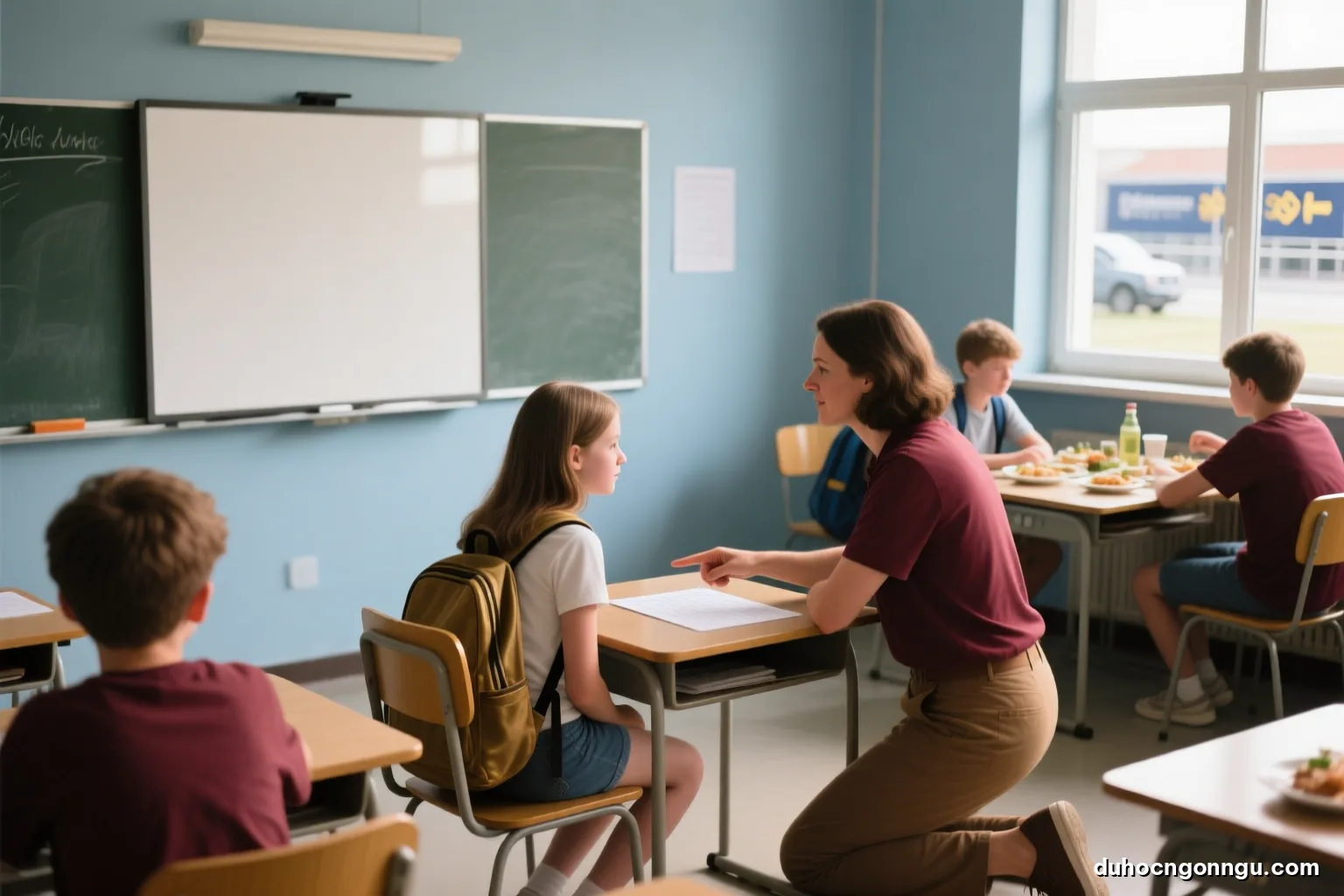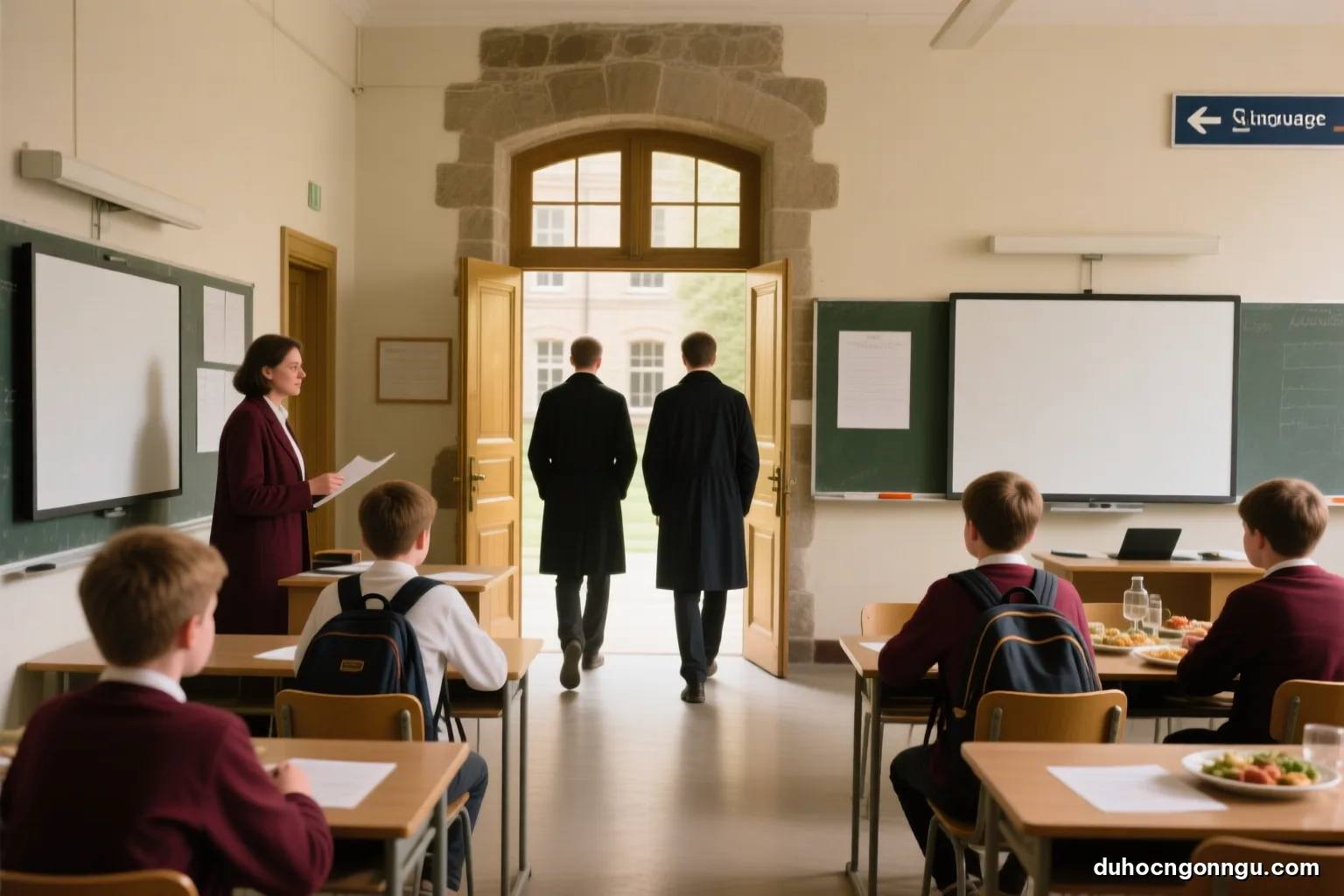
There is no class size that is right for every child. One-to-one lessons give your child the most speaking time and the closest correction, but there are no classmates to debate with or imitate. Small groups of 4–6 keep a fair amount of speaking time while still providing interaction. Standard classes of 10–15 students, common at language schools in the UK, Ireland, Malta, Australia and Canada, give your child many classmates from many countries, but each person speaks less.
The sensible way to choose is to start from your child's goals and personality, then check the real class size in the exact month your child will go, and finally look at the nationality mix, because in a class of ten where eight share the same mother tongue, few people have to use English outside lessons.
How class size decides your child's speaking time
Sitting in a language class is not necessarily learning. What produces the clearest progress on a short course is when your child has to speak themselves, is misunderstood, rephrases, hears the teacher point out mistakes and tries again. Language acquisition researchers call this interaction with negotiation of meaning, an idea linked to Michael Long's interaction hypothesis from the early 1980s, while Merrill Swain's output hypothesis from the mid-1980s argued that having to speak and write makes learners notice the gaps in their knowledge. Both are still debated as to their extent, and Stephen Krashen's school stresses comprehensible input more than output, but all sides agree on one point: for learners who already have a foundation, just sitting and listening leads to much slower progress than listening and having to use the language.
Speaking time is divided by class size. A hypothetical example: in a 60-minute lesson, the teacher talks for about a third of the time, and the rest is shared among the students. In a class of 15, counting only speaking in front of the whole class, each person gets a little over two minutes. In a class of 5, each gets eight minutes. One-to-one, your child has nearly forty minutes. The real figures vary a lot because large classes include pair work, but the calculation shows why the same "one hour of lessons" can give several times more speaking practice. It is also why one-to-one lessons cost much more than group lessons: parents are paying for a teacher's time devoted to one person.
Three common class models and who each one suits
The table below does not rank any model as better. Each model is strong at one thing and pays for it in another.
| Model | Strong at | Weak at | Suits |
|---|---|---|---|
| One-to-one | Maximum speaking time, close correction of pronunciation and grammar, pace set by your child | Little interaction with peers, tiring, heavily dependent on one teacher | Shy children who need momentum, children with specific gaps, those with narrow goals |
| Small group of 4–6 | Still plenty of speaking time, with pair work and debate | Hard to run classes at exactly the right level in the quiet season | Most teenagers at intermediate level |
| Standard class of 10–15 | Many classmates from many countries, many communication situations, a stable class rhythm | Each person speaks less, shy students easily stay silent | Confident children at B1 or above going to experience an international environment |
| Combination of group and one-to-one | A general class in the morning, individual lessons to address weak points | A busy timetable, requires the school to genuinely assign an individual teacher | Children with clear goals such as pronunciation or writing who want both |
Many schools in English-speaking countries sell combination packages: group study in the morning plus a few one-to-one lessons a week. In the Philippines, the model is reversed: one-to-one is the core and small groups are the extra. These two approaches reflect two different markets rather than one being right and the other wrong. What parents need is to know which model they are buying and why it suits their child at this point.
Nationality mix: a figure as important as class size
A language class in an English-speaking country is especially valuable because English is the only common language among the students. When one group with the same mother tongue is in the majority, breaks, lunch and afternoon outings take place in that mother tongue. For teenagers, most of their waking hours are outside class, so the nationality mix decides whether your child really lives in English or just studies English for a few hours each morning.
This mix changes sharply by season. During each country's summer holidays, students from that country arrive at the same time. Many schools have policies limiting the proportion of one nationality in a class or in the whole centre, but whether such a limit exists and how strictly it is applied depends on the school. A question worth asking: "In the month my child will go, roughly what proportion of students did the largest nationality group make up last year, and how many were Vietnamese?". Travelling with a large Vietnamese group has safety and emotional advantages, but ask whether the school places the children in different classes.
Large classes are not always worse
Large classes have more real situations. A class of twelve from five or six countries makes your child hear many English accents, many ways of expressing things and many kinds of misunderstanding. That is something one-to-one does not have, and it is what your child will meet when using English in real life.
Good teachers turn a large class into many small groups. Classes taught communicatively are constantly divided into pairs and groups of three or four. Each student's real speaking time is then much higher than in the calculation above. Asking the school how a lesson is organised is as important as asking about class size. A suggested question: in a 90-minute lesson, how long do students spend working in pairs or small groups?
One-to-one all day easily backfires with young children. Eight hours facing an adult with no peers of the same age can exhaust and bore children aged 9–11. For young children, alternating individual lessons with group activities usually keeps their interest longer.
Small classes in the quiet season may come with mixed-level classes. When there are not enough students, a school may combine two levels in one class. The class gets smaller but is no longer at the right level. Ask the school how it handles not having enough people to run a class at your child's level, and if it combines levels, the maximum gap between the two levels in one class. Combining B1 with B1+ is very different from combining A2 with B2.
How to find out the real class size before paying
Send the following questions by email, numbered for easy reference:
- What is the school's maximum class size for the type of course my child is enrolling in? Is it stated in the terms?
- In the same month last year, what was the average class size at my child's expected level?
- When there are not enough students at one level, does the school merge classes, switch to small-group lessons with fewer hours, or keep the same number of hours?
- For a combination package, are the one-to-one lessons with a fixed teacher, and can the teacher be changed if it is not a good match?
- Does the school limit the proportion of one nationality in a class, and what is the limit?
- Are afternoon activities grouped by age, and do they mix nationalities?
Specific answers with figures are a good sign. Answers like "classes are usually small" or "very international" without figures need asking about once more.
Signs that the class model should change after the first week
The first week at a language school is a week of adjustment, so do not judge too early. But at the end of the first week or the start of the second, the following signs are worth discussing between parents, your child and the academic department:
- Your child says they have hardly said a sentence in class for several days, just listening and copying. In a large class, this is a sign your child needs extra individual lessons or a move to a smaller group to build momentum.
- Your child finds the work too easy, with whole lessons spent reviewing what they already know. The placement test may have underestimated your child; ask the school about re-testing before thinking about changing model.
- Your child is studying one-to-one but complains of boredom, sleepiness and having nobody their age to talk to. Adding a group lesson or activity with peers usually solves this.
- The class is dominated by one nationality group, and almost nobody speaks English during breaks. Ask the school whether there is another class at the same level with a more diverse mix.
- Your child and the individual teacher do not get on with each other's way of working. Many schools allow a change of teacher, but raise it early, because teachers' schedules are full in peak season.
Changing model mid-course usually involves a price difference and depends on available places. Asking about this policy before the trip means parents do not have to decide in a hurry while their child is far away.
Choosing by your child's personality and goals
An outgoing 13-year-old who has studied English for a few years and is going to gain the confidence to speak and make friends will benefit a lot from a standard class with a wide nationality mix, plus afternoon activities. A child of the same age who is shy and afraid of making mistakes may need a few weeks of one-to-one or a very small group to build momentum before entering a crowded environment. A 16–17-year-old preparing for a qualification exam may suit a combination package, studying in a group to keep up their reflexes with extra individual lessons for weak skills.
If you are not sure which model suits your child, ask the school whether it allows a change from group to adding individual lessons after the first week, and how the fee is calculated for the change. Also talk with your child beforehand: do you prefer studying with friends or having your own teacher, and can you cope with the feeling of not understanding anything for the first few days? These questions have no right or wrong answers, but answering them makes it much easier for parents to choose a model than just looking at the class size on paper.
Frequently asked questions
Is one-to-one study in an English-speaking country worth more than one-to-one online lessons at home?
In terms of speaking time during lessons, the two can be equivalent. The difference lies outside lessons: in an English-speaking country your child has to use English to eat, get around, make friends and handle situations. If you only need speaking practice in lessons, online study may be enough. If you want your child to live in a language environment, only the trip provides that.
Should we avoid classes where adults and teenagers study together?
Many schools separate junior courses from adult courses, especially for students under 16, because topics, pace and supervision requirements differ. If your 16–17-year-old takes an adult course, ask about the school's policy for students under 18, in class and outside lessons.
The school says the maximum class size is 15, but our child is in a class of 17. What should we do?
That is a breach of commitment if the figure of 15 is in the terms. Your child or the group leader should tell the academic department straight away, noting the date and the class name. If the school does not deal with it, parents have grounds to complain under the school's procedure and then to the accreditation body.
Should we choose a class of only Vietnamese students so our child feels less lost?
An all-Vietnamese class helps your child feel less anxious for the first few days but loses the most valuable part of the trip: having to use English as the common language. A balance is to travel with a group so there are familiar faces outside lessons, but ask the school to put the children in different classes.
Does a small group slow our child down if the others in the group are weaker?
It can, if the group mixes levels. In a group at the right level, explaining things to others or debating with them is also a way of learning. Ask the school how groups are formed and whether your child can change group after the first progress test.
Does the nationality mix change while our child is studying?
Yes. At schools that take new students every Monday, the class make-up changes each week. One week may be diverse, the next dominated by a group from a country whose holidays have just begun. Asking about the mix for the exact weeks your child will study is more accurate than asking for the year-round average.